Explore the Major Differences Between Simd And Mimd
SIMD and MIMD are two fundamental parallel processing architectures that shape how modern computers handle data. SIMD executes one instruction across multiple data points simultaneously, while MIMD allows different instructions to run on different data independently. Understanding the differences between SIMD and MIMD helps you choose the right architecture for your computing needs, whether you are building a GPU cluster or a multicore CPU system.
Computer architecture has evolved dramatically over the past few decades. Two terms you will encounter again and again are SIMD and MIMD. These acronyms stand for Single Instruction Multiple Data and Multiple Instruction Multiple Data. They represent two fundamentally different ways processors handle parallel tasks. If you have ever wondered why your graphics card renders images so fast or why your multicore CPU handles multitasking so well, the answer lies in these architectures.
The differences between SIMD and MIMD matter more than most people realize. Whether you are a developer optimizing software, a student studying computer science, or simply a tech enthusiast, understanding these concepts gives you a deeper appreciation for how modern computers work. This guide breaks everything down in plain language. No jargon. No fluff. Just clear, actionable insights.
Parallel processing is at the heart of nearly every device you use today. From smartphones to servers, processors rely on parallel execution to deliver speed and efficiency. SIMD and MIMD represent two distinct strategies for achieving this parallelism. Each has its strengths, its weaknesses, and its ideal use cases. By the end of this article, you will understand exactly how they differ and why those differences matter.
Key Takeaways
- SIMD processes one instruction across multiple data elements: ideal for repetitive tasks like image rendering and video encoding.
- MIMD allows independent instruction execution: perfect for complex, varied workloads like multitasking and distributed computing.
- Flynn’s taxonomy classifies both architectures: giving engineers a clear framework for choosing the right processor design.
- Modern processors often combine both approaches: hybrid designs deliver the best of SIMD and MIMD capabilities.
- GPU computing relies heavily on SIMD: while CPUs typically use MIMD for flexible, general-purpose processing.
- Choosing the right architecture impacts throughput and latency: understanding trade-offs leads to better system performance.
📑 Table of Contents
What Is SIMD Architecture?
SIMD stands for Single Instruction Multiple Data. In a SIMD architecture, a single instruction controls multiple processing elements at the same time. Each element operates on different pieces of data. Think of it like a teacher giving one instruction to a classroom of students, and each student works on a different problem using the same method.
How SIMD Works
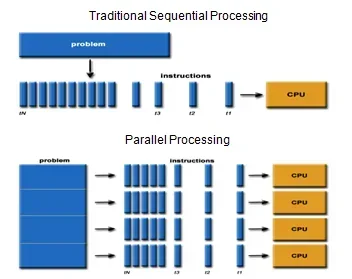
In SIMD processing, one instruction stream flows through multiple execution units. All units perform the same operation but on different data elements. This approach is incredibly efficient for tasks that require the same operation applied repeatedly across large datasets.
For example, imagine you need to add 1,000 numbers to another set of 1,000 numbers. In a traditional scalar processor, you would add them one pair at a time. In a SIMD processor, you can add hundreds of pairs simultaneously. This dramatically reduces processing time and increases throughput.
Common Uses of SIMD
SIMD architecture shines in specific types of workloads. Here are the most common applications:
- Graphics and image processing: Applying the same filter to millions of pixels simultaneously.
- Video encoding and decoding: Processing video frames using identical operations across all pixels.
- Scientific simulations: Running the same mathematical operation across large datasets in physics or weather modeling.
- Machine learning inference: Applying the same weights to multiple input vectors at once.
- Audio processing: Applying effects or transformations to multiple audio channels simultaneously.
Graphics Processing Units (GPUs) are the most famous SIMD engines. They contain thousands of small cores that all execute the same instruction on different data. This is why GPUs excel at rendering graphics and training neural networks. You can learn more about how different computing approaches affect everyday tools in our guide on the advantages and disadvantages of word processors, which highlights how processor architecture impacts software performance.
Strengths and Limitations of SIMD
SIMD offers significant advantages, but it also has clear limitations. On the positive side, SIMD delivers exceptional throughput for uniform workloads. It uses hardware efficiently because all execution units stay busy performing the same operation. Power consumption per operation tends to be lower as well.
However, SIMD struggles with irregular or divergent workloads. If different data elements need different operations, SIMD cannot handle them efficiently. All elements must follow the same instruction stream. This limitation makes SIMD less suitable for general-purpose computing where tasks vary widely.
What Is MIMD Architecture?
MIMD stands for Multiple Instruction Multiple Data. Unlike SIMD, MIMD allows different processors to execute different instructions on different data independently. Each processor core operates autonomously, making its own decisions about what to compute and when.
How MIMD Works
In an MIMD system, multiple processors run simultaneously. Each processor has its own instruction stream and its own data. They may communicate with each other through shared memory or message passing, but they do not need to execute the same operation.
Think of it like a team of specialists in an office. Each person receives different tasks, uses different methods, and works on different problems. Yet together, they accomplish far more than any single person could alone. This flexibility is the defining strength of MIMD architecture.
Common Uses of MIMD
MIMD architecture powers a wide range of computing environments. Here are the most prominent use cases:
- Multicore CPUs: Modern processors like Intel Core and AMD Ryzen use MIMD to run multiple threads independently.
- Distributed computing clusters: Servers in data centers coordinate to solve large, complex problems.
- Database servers: Handling multiple queries with different structures and requirements simultaneously.
- Web servers: Serving thousands of different web requests, each requiring unique processing.
- Scientific computing: Running simulations where different parts of the model require different calculations.
MIMD is the backbone of general-purpose computing. When you run a web browser, a word processor, and a video call all at the same time, your MIMD processor handles each task with a different instruction stream. For more context on how modern technology shapes computing choices, check out our article on the advantages and disadvantages of new technology, which explores how innovations like MIMD and SIMD reshape everyday computing.
Strengths and Limitations of MIMD
MIMD offers unmatched flexibility. Different processors can handle completely different tasks without waiting for each other. This makes MIMD ideal for complex, varied workloads. You also get better latency handling because processors do not need to synchronize on every operation.
The downside is complexity. Managing multiple independent instruction streams requires sophisticated scheduling and coordination. Communication between processors introduces overhead. Power consumption can be higher because not all processors may be equally busy at all times. Hardware design for MIMD systems is also more expensive and intricate.
Key Differences Between SIMD and MIMD
The differences between SIMD and MIMD become clear when you compare them side by side. Let us break down the most important distinctions across several dimensions.
Instruction and Data Flow
In SIMD, one instruction controls multiple data elements. All processing units follow the same operation. In MIMD, multiple instructions control multiple data elements. Each processing unit follows its own operation. This single difference cascades into every other distinction between the two architectures.
Workload Suitability
SIMD excels at homogeneous workloads. These are tasks where the same operation repeats across large datasets. MIMD excels at heterogeneous workloads. These are tasks where different processors need to perform different operations on different data.
Hardware Complexity
SIMD hardware is relatively simple. Identical execution units repeat the same operation, so control logic stays straightforward. MIMD hardware is more complex. Each processor needs its own control unit, instruction decoder, and execution pipeline. This complexity increases cost and design effort.
Scalability
SIMD scales well within a single operation domain. Adding more execution units helps as long as the workload remains uniform. MIMD scales well across diverse task domains. Adding more processors helps because each can tackle a different problem independently.
Power Efficiency
SIMD tends to be more power-efficient for its target workloads. Because all units execute the same instruction, there is less control overhead. MIMD uses more power per operation in some cases because of the overhead of managing multiple independent instruction streams.
Synchronization Requirements
SIMD requires tight synchronization. All processing units must stay in lockstep. If one unit lags, the entire system stalls. MIMD requires less synchronization. Processors work independently and only coordinate when necessary, reducing bottlenecks.
| Feature | SIMD | MIMD |
|---|---|---|
| Instruction Stream | Single | Multiple |
| Data Stream | Multiple | Multiple |
| Workload Type | Homogeneous | Heterogeneous |
| Hardware Complexity | Low | High |
| Flexibility | Low | High |
| Throughput | High for uniform tasks | High for varied tasks |
| Power Efficiency | Higher for target workloads | Lower due to overhead |
| Synchronization | Tight, frequent | Loose, on-demand |
| Best For | Graphics, media, ML inference | General computing, servers |
How SIMD and MIMD Work in Modern Processors
Modern processors rarely fit neatly into just one category. Most contemporary CPU designs blend elements of both SIMD and MIMD architectures. Understanding how this works in practice helps you appreciate why both approaches remain relevant today.
Hybrid Designs in Modern CPUs
Today’s multicore CPUs use MIMD at the core level. Each core runs its own instruction stream independently. But within each core, SIMD units handle vector operations. Intel’s AVX (Advanced Vector Extensions) and ARM’s NEON are examples of SIMD units embedded inside MIMD cores.
This hybrid approach gives you the flexibility of MIMD for varied tasks and the speed of SIMD for repetitive operations. A single core might run a complex branch-heavy program using its MIMD capabilities while simultaneously processing multimedia data through its SIMD unit.
The Role of GPU Computing
GPUs represent pure SIMD (or more precisely, SIMT — Single Instruction Multiple Threads) architecture at scale. Modern GPUs contain thousands of small cores organized into groups called streaming multiprocessors. Each group executes the same instruction across many threads.
This design makes GPUs incredibly powerful for parallel workloads. Training artificial intelligence models, rendering 3D graphics, and cryptocurrency mining all rely on GPU SIMD capabilities. However, GPUs struggle with tasks that require heavy branching or irregular memory access, where MIMD CPUs perform better.
FPGA and Specialized Accelerators
Field-Programmable Gate Arrays (FPGAs) offer another interesting angle. They can be configured to behave like SIMD units for specific workloads or like MIMD systems for more flexible processing. This reconfigurability makes FPGAs valuable in hardware acceleration scenarios where fixed architectures fall short.
Workload Distribution Strategies
How work gets distributed differs significantly between the two architectures. In SIMD systems, the workload is automatically divided across lanes or processing elements. Each element gets a slice of the data. In MIMD systems, the operating system or runtime environment schedules tasks across processors. This scheduling introduces more flexibility but also more overhead.
Effective workload distribution is critical for maximizing performance in both architectures. Poor distribution leads to idle processors, wasted cycles, and degraded throughput. Modern schedulers use sophisticated algorithms to balance loads and minimize latency.
Advantages and Disadvantages of Each Approach
Every architecture has trade-offs. Understanding these helps you make informed decisions about system design and software optimization.
Advantages of SIMD
- High throughput for uniform operations: SIMD processes large datasets with minimal overhead.
- Simple hardware design: Identical execution units reduce complexity and cost.
- Energy efficient: Less control logic means lower power consumption per operation.
- Excellent for media and graphics: Image, video, and audio processing all benefit enormously.
- Predictable performance: Because all units execute in lockstep, timing is more predictable.
Disadvantages of SIMD
- Limited flexibility: Cannot handle divergent workloads where different data needs different operations.
- Wasted capacity: If some data elements do not need processing, the entire vector unit may idle.
- Programming complexity: Writing SIMD-optimized code requires specialized knowledge and careful data alignment.
- Poor for branching code: Conditional logic that diverges across data elements kills SIMD efficiency.
Advantages of MIMD
- Maximum flexibility: Each processor can run completely different code on different data.
- Handles complex workloads: Ideal for general-purpose computing and multitasking.
- Better for irregular problems: Branching, dynamic memory access, and varied computations all work well.
- Scales across diverse domains: From web serving to scientific computing, MIMD adapts easily.
Disadvantages of MIMD
- Higher hardware cost: More complex control logic and more transistors per processor.
- Increased power consumption: Managing multiple independent instruction streams requires more energy.
- Synchronization overhead: Coordinating between processors introduces latency and complexity.
- Programming challenges: Multithreaded programming requires careful handling of race conditions and deadlocks.
For a broader perspective on how different computing technologies present trade-offs, you might find our article on the advantages and disadvantages of access control systems insightful. It explores how system architecture choices impact real-world performance and security, much like the trade-offs between SIMD and MIMD designs.
Which Architecture Should You Choose?
The right choice depends entirely on your workload. There is no universal winner. Here is a practical guide to help you decide.
Choose SIMD When
- Your workload involves repetitive operations on large, uniform datasets.
- You need maximum throughput for media processing, graphics, or machine learning inference.
- Power efficiency is a top priority, such as in mobile or embedded devices.
- Your data access patterns are regular and predictable.
- You can structure your algorithm to minimize branching and divergence.
Choose MIMD When
- Your workload involves varied, unpredictable tasks running simultaneously.
- You need to handle multiple independent processes or threads.
- Your application requires heavy branching or dynamic decision-making.
- You are building a general-purpose server or desktop system.
- Flexibility and adaptability matter more than raw throughput on a single operation type.
Quick Tips for Optimization
- Profile your code first: Identify whether your bottleneck is compute-bound or memory-bound before choosing an architecture.
- Use compiler intrinsics: Modern compilers offer SIMD intrinsics that make vectorization easier without writing assembly.
- Align your data: SIMD performs best when data is properly aligned in memory.
- Minimize thread contention: In MIMD systems, reduce shared resource conflicts to maximize parallelism.
- Consider hybrid approaches: Many modern frameworks automatically use both SIMD and MIMD under the hood.
Common Mistakes to Avoid
- Assuming SIMD always wins: SIMD is not faster for all workloads. Irregular or branching code often runs slower on SIMD.
- Ignoring data alignment: Misaligned data can cause significant SIMD performance penalties.
- Over-parallelizing MIMD workloads: Too many threads competing for limited resources actually slows things down.
- Neglecting memory bandwidth: Both architectures can be bottlenecked by memory access, not just compute.
- Writing architecture-specific code too early: Start with clean, portable code and optimize for a specific architecture only after profiling.
The Future of SIMD and MIMD
The boundaries between SIMD and MIMD continue to blur. Modern processors increasingly combine both approaches in a single chip. This trend toward heterogeneous computing reflects the reality that no single architecture dominates all workloads.
Instruction-level parallelism and data-level parallelism are both evolving. New SIMD extensions like AVX-512 and ARM SVE offer wider vector units. Meanwhile, MIMD systems grow more sophisticated with advanced synchronous processing and cache coherence protocols.
Emerging technologies like neuromorphic computing and quantum processing may eventually introduce entirely new paradigms. But for the foreseeable future, the differences between SIMD and MIMD will remain central to computer architecture. Engineers who understand both will be best positioned to design systems that deliver optimal performance for any given task.
The key is to match the architecture to the workload. SIMD gives you raw, focused power for repetitive tasks. MIMD gives you flexibility and adaptability for complex, varied problems. Together, they form the foundation of modern computing.
Conclusion
The differences between SIMD and MIMD define how modern processors handle parallel work. SIMD delivers high throughput for uniform operations by executing one instruction across multiple data elements. MIMD provides flexibility and adaptability by allowing multiple processors to run independent instructions on independent data. Each architecture has its ideal use cases, its strengths, and its limitations.
Understanding these differences empowers you to make better decisions about hardware, software optimization, and system design. Whether you are building a GPU cluster for AI training, configuring a multicore server for web hosting, or simply trying to understand why your computer handles multitasking so well, the SIMD vs MIMD distinction gives you valuable insight.
Modern processors blend both approaches, giving you the best of both worlds. As technology evolves, these hybrid designs will only become more sophisticated. The differences between SIMD and MIMD will remain a foundational concept in computer architecture for years to come. Embrace the knowledge, apply it wisely, and you will see immediate improvements in how you think about computing performance.
Frequently Asked Questions
What is the main difference between SIMD and MIMD?
SIMD uses a single instruction to process multiple data elements simultaneously, while MIMD allows multiple processors to execute different instructions on different data independently. SIMD excels at uniform, repetitive tasks, whereas MIMD handles varied, complex workloads with greater flexibility.
Is SIMD faster than MIMD?
It depends on the workload. SIMD delivers higher throughput for uniform operations like image processing and video encoding. MIMD performs better for varied, branching tasks like general-purpose computing and multitasking. Neither is universally faster — each has its ideal use case.
Can modern CPUs use both SIMD and MIMD?
Yes, absolutely. Modern multicore CPUs use MIMD at the core level for independent thread execution, while embedding SIMD vector units within each core for repetitive operations. This hybrid approach maximizes both flexibility and throughput.
What is Flynn’s taxonomy in relation to SIMD and MIMD?
Flynn’s taxonomy is a classification framework that categorizes computer architectures based on instruction and data streams. SIMD falls under the “Single Instruction, Multiple Data” category, while MIMD falls under “Multiple Instruction, Multiple Data.” This framework helps engineers choose the right architecture for specific workloads.
Which processors use SIMD architecture?
Graphics Processing Units (GPUs) are the most prominent SIMD engines. However, modern CPUs also include SIMD units like Intel’s AVX and ARM’s NEON. These vector processing units accelerate multimedia, scientific computing, and machine learning workloads within otherwise MIMD-based processors.
Why does MIMD use more power than SIMD?
MIMD systems require more complex control logic for each processor, including independent instruction decoders and execution pipelines. This additional hardware consumes more power. SIMD systems share a single control unit across multiple execution elements, resulting in lower power consumption per operation for uniform workloads.