Can Usb Outlets Be Gfci Here Is What You Need To Know
Yes, USB outlets can absolutely be GFCI-protected. These combo devices give you the convenience of USB charging ports and the life-saving safety of a ground fault circuit interrupter in one outlet. They are perfect for kitchens, bathrooms, and outdoor spaces where moisture and electricity mix, keeping your home safe and code-compliant.
Electricity and water are a dangerous mix. That is why the National Electrical Code requires special protection in areas like kitchens and bathrooms. But what if you also want the convenience of charging your phone or tablet directly from the wall? Can Usb Outlets Be Gfci? The answer is a clear yes. These smart devices combine the power of a USB charging port with the life-saving safety of a ground fault circuit interrupter. In this guide, we will walk you through everything you need to know. You will learn how they work, where to install them, and why they are a smart choice for any modern home.
Many homeowners are switching to GFCI USB outlets because they save space and add safety. Instead of using a bulky adapter, you plug your device directly into the wall. The outlet monitors the electrical current and shuts off power in milliseconds if it detects a ground fault. This prevents serious shocks and can even save lives. Whether you are remodeling a kitchen or building a new deck, understanding these combo outlets is essential. Let us dive into the details and help you make the best choice for your home.
Key Takeaways
- GFCI USB outlets combine USB charging with shock protection: You get two functions in a single receptacle.
- They meet NEC code requirements for wet locations: Bathrooms, kitchens, and garages need this protection.
- DIY installation is possible if you are comfortable with electrical work: But hiring a licensed electrician is always safer.
- They are ideal for kitchens, bathrooms, garages, and outdoor areas: Anywhere moisture or water is present.
- Look for tamper-resistant and weather-resistant features: These add extra safety for homes with kids or outdoor use.
- Always test the GFCI button monthly: This ensures the outlet still trips properly during a fault.
📑 Table of Contents
What Is a GFCI Outlet and Why Does It Matter?
A ground fault circuit interrupter, or GFCI, is a special type of electrical receptacle. It constantly monitors the flow of electricity. If it senses that current is taking an unintended path—like through water or a person—it cuts the power instantly. This happens in a fraction of a second, often faster than a heartbeat.
How GFCI Outlets Work
Inside a GFCI outlet, there is a tiny sensor that compares the incoming and outgoing current. Under normal conditions, the current flowing in equals the current flowing out. But if some current leaks—say, through a wet floor or a faulty appliance—the sensor detects the imbalance. It then trips the internal switch and stops the flow of electricity. This simple mechanism is incredibly effective at preventing electrocution.
Why You Need GFCI Protection
The National Electrical Code requires GFCI outlets in areas where water and electricity are close. These areas include:
- Kitchens
- Bathrooms
- Outdoor outlets
- Basements and crawl spaces
- Laundry rooms
>Garages
Without GFCI protection, a simple mistake like dropping a hair dryer into a sink could be fatal. The outlet acts as a safety net, giving you peace of mind every day.
Quick Tip: Test your GFCI outlets once a month by pressing the “Test” button. If it does not trip, replace it immediately. This simple habit can save lives.
Can Usb Outlets Be Gfci? The Short Answer
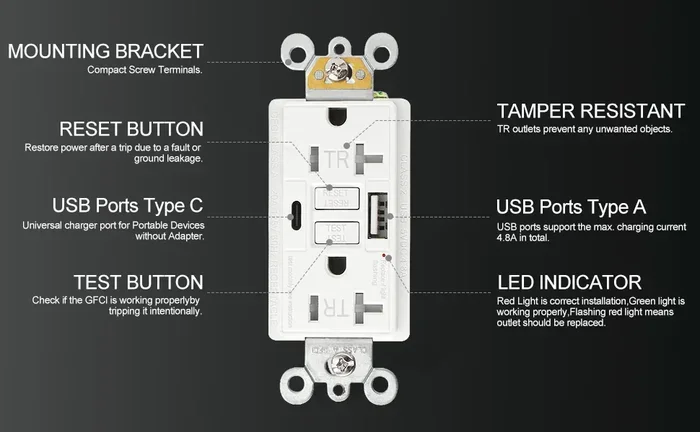
The short answer is yes. You can buy a single receptacle that has both USB ports and GFCI protection. These outlets are often called GFCI USB outlets or USB GFCI receptacles. They look like a standard wall outlet but have one or two USB ports built right into the face plate. You can plug in your phone, tablet, or camera directly without needing a separate charger.
Can Usb Outlets Be Gfci is a common question because many people assume USB outlets are just simple power strips. In reality, the USB ports in these combo units are powered by the same electrical circuit as the AC outlets. The GFCI protection covers both the USB ports and the standard plugs. This means every device you connect is protected.
What Makes a USB Outlet GFCI-Compatible?
Not all USB outlets are GFCI. A standard USB outlet simply provides power through USB-A or USB-C ports. It does not have the internal sensor that detects ground faults. A GFCI USB outlet has the same sensor and reset button as a traditional GFCI, but it also includes the USB charging circuitry. Look for labels like “GFCI Protected” or “GFCI Receptacle with USB” when shopping.
| Feature | Standard USB Outlet | GFCI USB Outlet |
|---|---|---|
| USB Charging Ports | Yes | Yes |
| Ground Fault Protection | No | Yes |
| Test and Reset Buttons | No | Yes |
| Code Compliance for Wet Areas | No | Yes |
| Shock Prevention | No | Yes |
| Average Cost | $10–$20 | $20–$35 |
How Gfci-Protected Usb Outlets Work
Understanding the technology helps you appreciate why these outlets are so valuable. A GFCI USB outlet is essentially two devices in one. The GFCI part monitors electrical current, while the USB part steps down the voltage to safely charge your devices.
The Technology Behind It
The GFCI sensor sits inside the outlet body. It watches the current 24/7. When you plug a device into the USB port, the current flows from the outlet to your phone. If a fault occurs—like water splashing into the port—the sensor detects the leak and trips the circuit. The USB port loses power in less than 1/40th of a second. This is fast enough to prevent serious injury.
Dual Functionality in One Receptacle
These outlets also feature a built-in transformer that converts the 120-volt AC power from your wall into the 5-volt DC power that USB devices need. Some models offer fast-charging capabilities, delivering up to 2.4 amps or more per port. You get the safety of a GFCI and the speed of modern USB charging without any extra gadgets.
Expert Insight: “Many homeowners do not realize that the USB ports on a GFCI outlet are fully protected,” says licensed electrician Maria Torres. “As long as the outlet is wired correctly, every port—USB and AC—enjoys the same ground fault protection.”
Where You Need Gfci-Protected Usb Outlets
The National Electrical Code (NEC) has clear rules about where GFCI protection is required. Since USB outlets with GFCI protection are a type of GFCI outlet, they must be used in these same locations. Here is where you should consider installing them.
Kitchens
The kitchen is full of water and electricity. Countertop outlets near the sink, dishwasher, or refrigerator need GFCI protection. A GFCI USB outlet here lets you charge your phone while making coffee, all with the peace of mind that the outlet will shut off if something goes wrong.
Bathrooms
Bathrooms are wet environments. Hair dryers, electric razors, and toothbrushes all use electricity near water. The NEC requires GFCI outlets within a certain distance of the sink or bathtub. A USB outlet here means you can charge your electric toothbrush or phone without an adapter hanging over the sink.
Outdoor Spaces
Outdoor outlets power everything from holiday lights to power tools. They are exposed to rain, snow, and humidity. A weather-resistant GFCI USB outlet is perfect for decks, patios, and garages. You can charge your phone while gardening or power a speaker for a backyard party safely.
Garages and Basements
Garages and unfinished basements often have concrete floors that can be damp. These areas are prime spots for ground faults. A GFCI USB outlet here protects you while you work on your car or charge your power tools.
Installing Gfci Usb Outlets: DIY vs Professional
Installing a GFCI USB outlet is similar to installing a standard GFCI outlet. It involves working with live electrical wires, so safety is the top priority. Let us look at both DIY and professional options.
Steps for DIY Installation
If you have basic electrical knowledge and feel comfortable working inside an electrical box, you can install a GFCI USB outlet yourself. Here are the basic steps:
- Turn off the power at the circuit breaker.
- Use a voltage tester to confirm the power is off.
- Remove the old outlet from the electrical box.
- Disconnect the wires and note their positions.
- Connect the new GFCI USB outlet according to the manufacturer’s wiring diagram.
- Secure the outlet in the box and attach the faceplate.
- Turn the power back on and test the outlet.
Important: Always follow local electrical codes. If you are unsure, hire a professional.
When to Call a Licensed Electrician
You should call a licensed electrician if:
- You are uncomfortable working with electrical wiring.
- Your home has older wiring that may need upgrading.
- The electrical box is too small for a GFCI USB outlet.
- You are not sure which circuit breaker controls the outlet.
A professional will ensure the installation is safe and code-compliant. This is especially important in older homes where wiring may not have a proper ground.
Common Mistakes:
- Forgetting to turn off the breaker: This can lead to serious shock or electrocution.
- Wiring the GFCI incorrectly: If the load wires are connected to the wrong terminals, the GFCI will not protect downstream outlets.
- Using the wrong size electrical box: A GFCI USB outlet is bulkier than a standard outlet. Make sure the box can fit it.
- Ignoring the “Load” and “Line” labels: These are critical for proper GFCI operation.
Benefits and Safety Considerations
Choosing a GFCI USB outlet offers many advantages beyond just safety. Let us explore the benefits and some important safety tips.
Shock Protection That Saves Lives
The primary benefit of a GFCI outlet is shock protection. Ground faults cause thousands of injuries and hundreds of deaths each year. A GFCI outlet can prevent these tragedies. When you add USB ports to the mix, you get a safer and more convenient way to charge your devices.
Code Compliance
Using a GFCI USB outlet ensures your home meets the NEC code for required locations. This is important if you are selling your home or just want to be a responsible homeowner. Inspectors will check for GFCI protection in kitchens, bathrooms, and outdoor areas.
Tamper-Resistant and Weather-Resistant Features
Many modern GFCI USB outlets come with tamper-resistant shutters. These prevent children from inserting foreign objects into the outlets. For outdoor use, look for weather-resistant models with an “in-use” cover. These features add an extra layer of protection for your family.
Surge Protection Options
Some GFCI USB outlets also include surge protection. This safeguards your electronics from power spikes caused by lightning or grid issues. While not a replacement for a whole-house surge protector, it adds a nice layer of defense for your plugged-in devices.
Expert Insight: “When I do a home safety audit, I always recommend GFCI USB outlets for the kitchen and bathroom,” says home inspector David Chen. “They are a small upgrade that makes a huge difference in safety and convenience.”
Common Mistakes to Avoid
Even with the best intentions, homeowners sometimes make mistakes when dealing with GFCI USB outlets. Here are a few to watch out for:
- Not testing the outlet regularly: The test button should be pressed monthly. If it fails to trip, replace it.
- Using the outlet in a wet location without a weather-rated cover: Even a GFCI outlet needs physical protection from direct water exposure.
- Overloading the circuit: A GFCI outlet has a specific amperage rating. Do not plug in high-wattage devices that exceed the circuit’s capacity.
- Ignoring the “No Load” light: Some models have an LED indicator. If it shows no load, the outlet may not be wired correctly.
Quick Tips for Longevity
To keep your GFCI USB outlet working properly for years, follow these simple tips:
- Dust the outlet gently with a dry cloth.
- Do not yank cords from the outlet by pulling on the wire.
- Replace the outlet if you notice any scorch marks or frequent tripping.
- Keep the USB ports clean and free of debris.
Final Thoughts on GFCI USB Outlets
The answer to Can Usb Outlets Be Gfci is a resounding yes. These combo outlets bring together the convenience of USB charging and the critical safety of ground fault protection. They are an excellent choice for any home, especially in wet areas like kitchens, bathrooms, and outdoor spaces. By installing a GFCI USB outlet, you are investing in the safety of your family and the value of your home.
Whether you install them yourself or hire a professional, the key is to make sure they are wired correctly and tested regularly. Take a few minutes each month to press the test button. This simple habit ensures your outlet will protect you when it matters most. Upgrade your home today and enjoy the peace of mind that comes with modern, safe electrical technology.
Frequently Asked Questions
Are GFCI USB outlets required by code in all homes?
The National Electrical Code requires GFCI protection in specific areas like kitchens, bathrooms, and outdoor outlets. If you install a USB outlet in these locations, it must be GFCI-protected to meet code. Always check your local building codes, as they may have additional requirements.
Can I use a GFCI USB outlet outdoors?
Yes, you can. However, you should use a weather-resistant GFCI USB outlet and install it in a weather-rated electrical box with a cover. This protects the outlet from rain, snow, and moisture, ensuring it continues to work safely over time.
Do GFCI USB outlets protect devices from power surges?
Most GFCI USB outlets protect against ground faults, not power surges. Some models include built-in surge protection, but it is usually limited. For full surge protection, consider using a surge protector strip or a whole-house surge protector installed by an electrician.
How do I know if my GFCI USB outlet is working?
Press the “Test” button on the outlet. The reset button should pop out, and the outlet should lose power. Then press the “Reset” button to restore power. If the outlet does not trip or reset, it needs to be replaced. Test it monthly for safety.
Can a GFCI USB outlet be used with a smart home system?
Some GFCI USB outlets are compatible with smart home systems like Alexa or Google Home. These smart GFCI outlets allow you to monitor energy usage and control the outlet remotely. Check the product specifications to see if it supports smart home integration.
What should I do if my GFCI USB outlet keeps tripping?
If the outlet trips frequently, it could indicate a ground fault in a connected device or a problem with the outlet itself. Unplug all devices and reset the outlet. If it trips again with nothing plugged in, the outlet may be faulty and should be replaced by a licensed electrician.