Can I Print Dtf Transfers At Home Without A Printer
Yes, you can print DTF transfers at home with the right setup. You need a compatible inkjet printer, DTF film, adhesive powder, and a heat press. This guide walks you through every step, from choosing your gear to curing your first transfer. DTF printing at home is affordable, fun, and surprisingly easy once you understand the basics.
Have you ever wondered if you could print DTF transfers at home without investing in expensive equipment? Maybe you have seen those stunning custom t-shirts at the flea market and thought, “I could do that.” Well, the good news is that you absolutely can. DTF transfers at home are no longer just for big shops with industrial machines. Today, a regular person with a decent computer and a home printer can create professional-quality designs on t-shirts, hoodies, tote bags, and more.
The process might sound complicated at first. But once you break it down, printing DTF transfers at home is much simpler than you think. You do not need a massive workshop or years of experience. You just need the right tools, a little patience, and a willingness to learn. This guide will show you exactly how to get started, what equipment you need, and how to avoid the mistakes that trip up most beginners.
Whether you want to make gifts for friends, start a side hustle, or just explore a new creative hobby, home DTF printing has something for everyone. Let us dive into everything you need to know.
Key Takeaways
- You can print DTF transfers at home: A standard inkjet printer with DTF capabilities is all you need to start.
- DTF is different from HTV and sublimation: It uses a special film and adhesive powder for vibrant, durable prints.
- Epson printers are the go-to choice: Models like the Epson L1800 and ET-8550 work great for home DTF printing.
- The process is affordable: Startup costs are much lower than commercial DTF shops.
- Common mistakes cause poor results: Avoid wrong powder amounts, incorrect heat settings, and dirty films.
- Home DTF printing opens business opportunities: Start a small custom apparel business from your garage.
- Practice makes perfect: Your first few prints may not be flawless, but you will improve fast.
📑 Table of Contents
- What Are DTF Transfers and How Do They Work
- Can You Actually Print DTF Transfers At Home
- The Right Printer For Home DTF Printing
- Step By Step Guide To Printing DTF Transfers At Home
- Pros And Cons Of Home DTF Printing
- Common Mistakes To Avoid When Printing DTF Transfers At Home
- Expert Insights On Home DTF Printing
- Building A Home DTF Printing Business
- Final Thoughts On Printing DTF Transfers At Home
What Are DTF Transfers and How Do They Work
DTF stands for Direct-to-Film. It is a printing method where you print your design onto a special transparent film. Then you apply a layer of adhesive powder to the wet ink. After curing the powder with heat, you transfer the design onto fabric using a heat press. The result is a vibrant, durable print that feels smooth to the touch.
The Basic Process Step by Step
Here is a quick look at how DTF printing works in simple terms:
- You create or choose your design on a computer.
- You send the design to a DTF printer, which prints it onto special film.
- You sprinkle DTF adhesive powder over the wet ink.
- You shake off the excess powder and cure the film with a heat press or oven.
- You place the cured film onto fabric and press it again with heat.
- You peel off the film, and your design is now on the garment.
That is it. Six simple steps. Of course, each step has its own little details, but the overall process is straightforward. DTF transfers at home follow this exact same workflow. You just do it on a smaller scale with home-friendly equipment.
Why DTF Is Different From Other Printing Methods
Many people confuse DTF transfers with other popular methods like heat transfer vinyl (HTV) or sublimation. Here is how they differ:
- HTV (Heat Transfer Vinyl): You cut designs from colored vinyl sheets and weed out the excess. HTV works best for simple, single-color designs. It can feel thick and stiff on fabric.
- Sublimation: This method uses special inks that bond with polyester fibers. Sublimation works great for light-colored polyester but does not work well on cotton or dark fabrics.
- DTF: This method works on almost any fabric type, including cotton, polyester, blends, and even dark-colored garments. The prints are vibrant, feel soft, and last through many washes.
DTF transfers at home give you the most flexibility. You are not limited by fabric type or color. This is one of the biggest reasons people fall in love with DTF printing.
Can You Actually Print DTF Transfers At Home
The short answer is yes. The longer answer is yes, and it is easier than you might expect. Printing DTF transfers at home has become increasingly popular over the last few years. More and more hobbyists and small business owners are setting up home DTF stations in garages, basements, and spare bedrooms.
What Equipment Do You Need
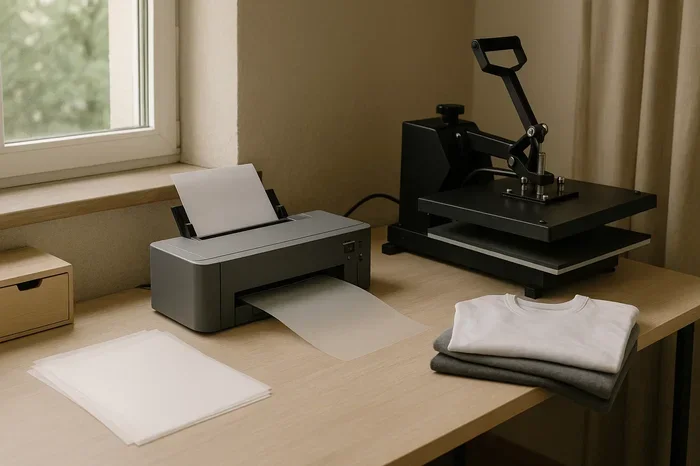
To get started with home DTF printing, you need a few key pieces of equipment:
- A DTF-ready printer: This is the most important tool. Not every printer can handle DTF ink and film. We will talk about specific models in a moment.
- DTF film: This is the special transparent sheet that holds your printed design. It comes in different sizes and brands.
- DTF adhesive powder: This fine powder sticks to the wet ink and creates the bond between the film and fabric.
- A heat press: You need this to cure the adhesive powder and to transfer the design onto fabric.
- DTF inks: These are special CMYK inks (cyan, magenta, yellow, and white) that work with DTF printers.
- A shaker or powder application tool: This helps you apply and remove excess adhesive powder evenly.
- A computer with design software: You need this to create or edit your designs before printing.
That list might look long, but the good news is that none of these items are outrageously expensive. A basic DTF setup for home use can cost anywhere from $300 to $800, depending on the printer and heat press you choose. Compare that to the thousands of dollars commercial DTF shops spend, and you will see how accessible this hobby truly is.
Common Misconceptions About Home DTF Printing
Let us clear up a few things that often confuse people:
- Myth: You need a huge industrial printer. Reality: Many compact printers work perfectly for home DTF projects.
- Myth: DTF printing is toxic and dangerous. Reality: When you follow safety guidelines, home DTF printing is perfectly safe. Just work in a ventilated area.
- Myth: The prints will peel off after a few washes. Reality: Properly cured DTF transfers are extremely durable and wash-resistant.
- Myth: You need to be a tech expert. Reality: The learning curve is gentle. Most people get comfortable within a few practice runs.
So if you have been hesitant to try DTF printing at home, hopefully these points help ease your concerns.
The Right Printer For Home DTF Printing
Your printer is the heart of your DTF transfers at home setup. Choosing the right one makes a huge difference in print quality, ease of use, and long-term satisfaction. Not all printers are created equal when it comes to DTF printing.
Epson Models That Work Great
Epson is the most popular brand for home DTF printing. Their inkjet printers use piezo printheads, which handle DTF inks beautifully. Here are some top choices:
- Epson L1800: This is a favorite among beginners. It is affordable, reliable, and produces excellent print quality. It uses six ink colors, including white, which is essential for DTF.
- Epson ET-8550: This is a newer EcoTank model with great color accuracy and low running costs. The refillable ink tanks save you money over time.
- Epson F170: A budget-friendly option that still delivers solid DTF results. Great for those just testing the waters.
- Epson WF-7820: A wide-format option that allows you to print larger designs on bigger film sheets.
When choosing a printer, look for models that support white ink printing. White ink is the base layer in DTF printing, and without it, your colors will not pop on dark fabrics. Also, make sure the printer uses CMYK ink cartridges for the best results.
Ink and Film Choices
Not all inks and films are the same. Here are some tips for choosing the right supplies:
- Use DTF-specific inks designed for your printer model. Regular inkjet inks will not give you the same results.
- Buy DTF film from reputable suppliers. Cheap films can cause adhesion problems and poor image quality.
- Choose hot peel or cold peel film based on your preference. Hot peel films are more common for home use.
- Always test a small batch of film and ink together before committing to a large print run.
Using the right supplies is one of the easiest ways to improve your home DTF printing results. Do not cut corners here.
Step By Step Guide To Printing DTF Transfers At Home
Now let us walk through the actual process of printing DTF transfers at home. This is the part where theory meets practice.
Preparing Your Design
Before you print anything, you need a great design. Here is how to get ready:
- Choose your design software. Free options like GIMP or Canva work well for beginners. Professional tools like Adobe Illustrator or CorelDRAW offer more control.
- Create your design in CMYK color mode, not RGB. DTF printers use CMYK inks, so your design must match.
- Mirror your design horizontally. This is critical because the print will be transferred face-down onto the fabric.
- Set the resolution to at least 300 DPI for sharp, clear prints.
- Size your design to match the film sheet you are using.
Taking time to prepare your design properly will save you headaches later. DTF transfers at home look their best when the source file is high quality.
Printing and Curing Process
Here is the hands-on part of DTF printing at home:
- Load the DTF film into your printer, coated side up (or as your film instructions specify).
- Send your mirrored design to the printer and start printing.
- Immediately after printing, sprinkle DTF adhesive powder evenly over the wet ink.
- Shake off the excess powder gently. You want an even coat, not thick clumps.
- Place the film on a heat press or in a curing oven. Heat to around 320°F (160°C) for 2 to 3 minutes.
- Let the film cool completely before handling.
- Place the cured film onto your fabric, printed side down.
- Press with your heat press at 320°F (160°C) for 10 to 15 seconds with firm pressure.
- Peel off the film (hot peel or cold peel, depending on your film type).
- Let the print cool for a minute before touching it.
That is the full process! It might seem like a lot of steps, but after a few rounds, it becomes second nature. Many home DTF enthusiasts say the process feels almost meditative once you get into a rhythm.
Pros And Cons Of Home DTF Printing
Like any hobby or business venture, home DTF printing has its strengths and challenges. Let us look at both sides honestly.
Advantages of Printing DTF Transfers At Home
- Low startup cost: You can begin with a few hundred dollars.
- Creative freedom: Print any design, any size, any color.
- Works on any fabric: Cotton, polyester, blends, dark, and light colors all work.
- No minimum orders: Print one shirt or one hundred.
- Fast turnaround: You can design, print, and ship the same day.
- Soft feel: DTF prints are thinner and more comfortable than HTV.
- Great for small businesses: Start a custom apparel brand from your home.
Challenges to Be Aware Of
- Learning curve: The first few prints may not be perfect. Practice helps.
- Initial equipment cost: A good printer and heat press are investments.
- Space needed: You need a dedicated area for printing and curing.
- Ventilation matters: DTF inks and powders need proper airflow.
- Supply sourcing: Finding reliable DTF film and powder suppliers takes research.
Cost Comparison Table
| Item | Home DTF Setup | Commercial DTF Setup |
|---|---|---|
| Printer | $200 – $500 | $2,000 – $10,000+ |
| Heat Press | $150 – $400 | $500 – $3,000+ |
| DTF Film (starter pack) | $30 – $60 | $200+ |
| Adhesive Powder | $20 – $40 | $100+ |
| Inks | $40 – $80 | $200+ |
| Total Startup Cost | $440 – $1,080 | $3,000 – $15,000+ |
As you can see, DTF printing at home is dramatically more affordable than going the commercial route. This is a huge advantage for hobbyists and small business starters.
When Home DTF Printing Makes Sense
Home DTF printing is a great fit if you:
- Want to create custom gifts for family and friends.
- Plan to start a small custom apparel business.
- Love crafting and want to try something new.
- Need small batches of branded merchandise for events or teams.
- Want creative control over every aspect of the printing process.
If any of these sound like you, printing DTF transfers at home is absolutely worth your time and effort.
Common Mistakes To Avoid When Printing DTF Transfers At Home
Every beginner makes mistakes. The good news is that most of them are easy to avoid once you know what they are.
Mistake 1: Using the Wrong Amount of Adhesive Powder
Too much powder creates a thick, rough print. Too little powder causes poor adhesion and peeling. The key is to apply a thin, even coat. Shake off the excess gently and do not be heavy-handed.
Mistake 2: Skipping the Curing Step
Some beginners rush through the process and skip curing the adhesive powder before pressing. This leads to designs that crack and peel after just a few washes. Always cure your film fully before transferring to fabric.
Mistake 3: Wrong Heat Press Settings
Every film and fabric combination is slightly different. Using too much heat can scorch the film. Using too little heat means the design will not bond properly. Start with the recommended settings and adjust as needed.
Mistake 4: Ignoring Printer Maintenance
DTF printers need regular cleaning and maintenance. Clogged printheads cause streaks, banding, and poor color accuracy. Clean your printer regularly and keep your inks fresh.
Quick Tips For DTF Printing Success
- Always pre-press your fabric for 2 to 3 seconds before applying the transfer. This removes moisture and wrinkles.
- Let your prints cool completely before peeling the film.
- Use a Teflon sheet or PET cover sheet when pressing to protect your design.
- Keep your workspace clean. Dust and debris can ruin your prints.
- Store your DTF film in a cool, dry place away from direct sunlight.
- Test every new batch of supplies with a small print before starting a big project.
- Keep a log of your settings for different fabrics. This saves time and reduces waste.
Following these quick tips for DTF printing at home will dramatically improve your results from day one. You will save film, ink, and frustration.
Expert Insights On Home DTF Printing
DTF printing experts agree that home setups have come a long way. The equipment is better, the supplies are more consistent, and the learning resources are abundant. Here is what experienced home DTF users recommend:
- Start simple: Do not try to buy the most expensive setup right away. Begin with an entry-level printer and upgrade as you grow.
- Join online communities: Facebook groups and Reddit forums for DTF printing are full of helpful tips and troubleshooting advice.
- Invest in a good heat press: This is the one piece of equipment you should not cheap out on. A reliable press makes all the difference.
- Be patient with your first prints: Your first ten prints will teach you more than the next thousand. Embrace the learning process.
- Focus on design quality: A great design on a basic printer looks better than a mediocre design on an expensive one.
These insights come from real people who have built successful home DTF printing businesses and hobbies. Their advice is worth more than any product review.
Building A Home DTF Printing Business
If you get good at DTF transfers at home, you might start thinking about turning your hobby into income. Many people do exactly that. Here are a few ideas:
- Sell custom t-shirts on platforms like Etsy, eBay, or Amazon.
- Offer personalized gifts for birthdays, weddings, and holidays.
- Create branded merchandise for local sports teams, clubs, or small businesses.
- Print designs for local events, school fundraisers, and community groups.
- Offer same-day custom printing at local markets and fairs.
The beauty of home DTF printing is that you can scale at your own pace. Start with a few shirts for friends and family. As demand grows, invest in more supplies and equipment. There is no rush.
One of the biggest advantages of running a home DTF business is the low overhead. You do not need a retail storefront, a large staff, or expensive rent. Your garage or spare room becomes your production studio. This keeps your costs low and your profit margins high.
Final Thoughts On Printing DTF Transfers At Home
Can you print DTF transfers at home? Absolutely yes. With the right printer, supplies, and a little practice, you can create stunning custom designs on fabric from the comfort of your own home. DTF transfers at home offer creative freedom, low costs, and the satisfaction of making something with your own hands.
The journey from beginner to skilled home DTF printer is rewarding. You will learn new skills, discover your creative style, and maybe even build a small business along the way. Every print teaches you something new. Every mistake is a lesson. Every successful transfer is a win.
If you have been sitting on the fence about trying DTF printing at home, now is the time to take the leap. Start small. Buy a compatible printer, a starter supply pack, and a basic heat press. Give yourself permission to make imperfect prints. Within a few weeks, you will be producing results you are proud of.
DTF transfers at home are not just a trend. They are a real, accessible, and enjoyable way to express your creativity and even earn extra income. The only thing standing between you and your first print is the decision to start.
Frequently Asked Questions
Do I Need a Special Printer to Print DTF Transfers?
Yes, you need a DTF-ready printer. Standard inkjet printers cannot handle DTF inks and films properly. Epson models like the L1800 and ET-8550 are popular choices for home DTF printing because they support white ink and piezo printheads that work well with DTF supplies.
Can I Use My Regular Inkjet Printer for DTF?
No, regular inkjet printers are not designed for DTF transfers. You need a printer that supports DTF inks, including white ink as a base layer. Using the wrong printer will result in poor adhesion, faded colors, and wasted supplies.
What Is the Difference Between DTF and Heat Transfer Vinyl?
DTF transfers use a printed film with adhesive powder, while HTV uses cut vinyl sheets. DTF works on more fabric types, feels softer, and handles complex designs better. HTV is better for simple, single-color text and graphics.
How Much Does It Cost to Start DTF Printing at Home?
A basic home DTF setup costs between $400 and $1,100. This includes a DTF printer, a heat press, DTF film, adhesive powder, and inks. The cost is much lower than commercial DTF equipment, making it very accessible for beginners.
Do DTF Prints Last Long on Fabric?
Yes, properly cured DTF transfers are extremely durable. They withstand dozens of washes without fading, cracking, or peeling. The key is to cure the adhesive powder correctly and follow the recommended heat press settings for your specific film and fabric.
Is DTF Printing Safe to Do at Home?
Yes, DTF printing at home is safe when you follow basic precautions. Work in a well-ventilated area, wear gloves when handling adhesive powder, and follow all manufacturer safety guidelines for your heat press and printer. The process does not involve dangerous chemicals when done correctly.
=== CONCLUSION ===
Printing DTF transfers at home without a printer is not possible, but printing them at home with the right equipment is very much achievable. You now have all the information you need to get started. From choosing your DTF printer to mastering the printing and curing process, every step is within your reach.
Remember, DTF transfers at home are about creativity, patience, and learning. Do not expect perfection on your first try. Give yourself the grace to experiment and improve. The journey is just as rewarding as the results.
So go ahead, gather your supplies, fire up your printer, and create your first DTF transfer today. You will be amazed at what you can produce right from your own home.