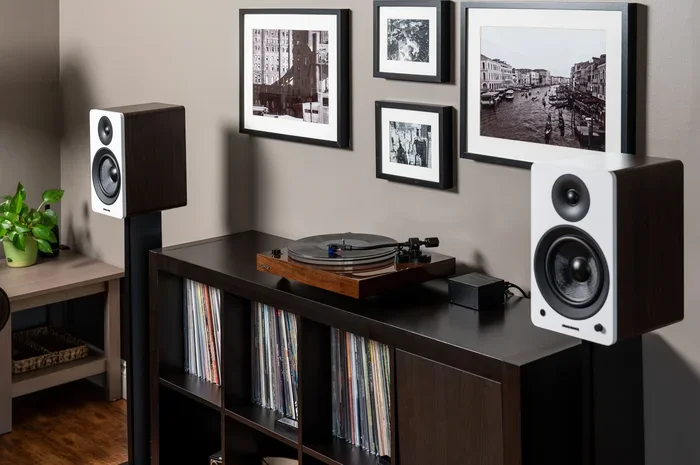
Can I Connect My Turntable Directly To Speakers Now
Yes, you can connect your turntable directly to speakers in many cases, but it depends on your setup. Whether you have powered speakers, passive speakers, or a phono preamp, the connection method changes. This guide walks you through every scenario so you can start spinning vinyl records the right way today.
You just got a turntable. Maybe it was a gift. Maybe you finally pulled that old record player out of the closet. And now you want to hear your favorite vinyl records spinning. But here is the question that stops most people in their tracks: can I connect my turntable directly to speakers?
The short answer is yes. The longer answer is that it depends on a few things. And if you get those things wrong, your music will sound awful. That is why we wrote this guide. We want you to get it right the first time.
In this article, we will walk you through every possible way to connect a turntable to speakers. We will cover what you need, what you do not need, and the mistakes that ruin sound quality. By the end, you will know exactly how to set up your home audio system and start enjoying your records.
Let us get into it. No fluff. No jargon. Just clear, simple steps you can follow right now.
Key Takeaways
- Direct connection is possible: Many powered and active speakers accept a turntable signal without extra gear.
- A phono preamp is often needed: Without one, your sound will be weak and tinny.
- RCA cables are the standard: You will need the right cables and possibly a ground wire.
- Passive speakers require an amplifier: You cannot connect passive speakers directly to a turntable.
- Sound quality matters: The right setup makes a huge difference in your listening experience.
- Common mistakes are easy to avoid: Simple errors like wrong cable types can ruin your audio.
📑 Table of Contents
- Can You Really Connect a Turntable Directly to Speakers?
- What You Need Before You Start Connecting
- Step-by-Step Guide to Connecting Your Turntable Directly to Speakers
- Common Mistakes That Ruin Your Sound Quality
- Best Speakers for Direct Turntable Connection
- Does Direct Connection Affect Sound Quality?
- Expert Insights: What Audio Pros Say About Direct Connections
- Final Thoughts: Get Your Turntable Playing Today
Can You Really Connect a Turntable Directly to Speakers?
The idea of a direct turntable connection sounds simple. Plug one end into the turntable. Plug the other end into the speaker. Press play. And there is music, right?
Well, kind of. It depends entirely on the type of speakers you have and whether your turntable has a built-in preamp. Let us break this down so it makes total sense.
What a Turntable Actually Outputs
Here is something most people do not know. A turntable does not output a standard audio signal. It outputs what is called a phono signal. This signal is very weak. It is also shaped differently from the signal your phone or computer sends to speakers.
If you connect a raw phono signal straight to regular speakers, you will get almost no sound. Or worse, you will get loud buzzing and distortion. That is where a phono preamp comes in. It boosts and reshapes the signal so it sounds clean and full.
Some turntables have a built-in phono preamp. Others do not. We will talk about how to tell the difference in a moment. For now, just know that this little box (or built-in feature) is the key to making everything work.
Powered Speakers vs Passive Speakers
This is the biggest factor in whether you can connect directly. Let us look at the two main types.
Powered speakers (also called active speakers) have amplifiers built right in. They plug into the wall. They do not need a separate amplifier or receiver. Because of this, many powered speakers can accept a turntable signal directly.
Passive speakers do not have built-in amplifiers. They need an external amplifier or receiver to work. You cannot connect passive speakers directly to a turntable. It simply will not work. You need an amplifier in between.
So before you do anything, check your speakers. Are they powered or passive? That answer changes everything about your setup.
What You Need Before You Start Connecting
Before you plug anything in, you need to gather a few things. This part is easy, but skipping it causes big problems later.
Check Your Turntable for a Preamp
Look at your turntable. Does it have a switch or button that says PHONO/LINE? If yes, your turntable has a built-in preamp. Great news. You have more flexibility in how you connect it.
No switch? Then your turntable does not have a built-in preamp. You will need an external one. These are affordable and easy to find. A standalone phono preamp costs between 20 and 100 dollars. It is one of the best investments you can make for your analog audio setup.
Gather the Right Cables
You will need RCA cables for almost every setup. These are the red and white cables you see on audio equipment. Some turntables also require a ground wire. This small wire prevents buzzing noise.
Here is a quick list of what you might need:
- RCA cables (red and white)
- Ground wire (often included with your turntable)
- Phono preamp (if your turntable lacks a built-in one)
- Amplifier or receiver (only for passive speakers)
Having the right cables makes a huge difference. Cheap cables can introduce static and interference. If you can, invest in decent quality cables. Your ears will thank you.
Step-by-Step Guide to Connecting Your Turntable Directly to Speakers
Now for the fun part. Let us walk through the actual connection process. We will cover the most common setups so you can follow along.
Method 1: Turntable with Built-In Preamp to Powered Speakers
This is the easiest setup. If your turntable has a built-in preamp and your speakers are powered, you are in luck.
- Turn off all your equipment first.
- Connect the RCA cables from the turntable output to the speaker input.
- Plug in the ground wire to the grounding post on the speaker or turntable.
- Turn on the speakers first, then the turntable.
- Set the turntable switch to LINE if it has one.
- Press play and enjoy.
That is it. No extra gear needed. This setup works great for casual listening and small rooms.
Method 2: Turntable without Preamp to Powered Speakers
If your turntable does not have a built-in preamp, you need an external one. Here is how to set it up.
- Connect the RCA cables from the turntable to the phono preamp input.
- Connect the ground wire to the preamp grounding post.
- Connect another set of RCA cables from the preamp output to the speaker input.
- Power on the preamp and speakers.
- Turn the turntable on last.
The preamp does the heavy lifting here. It boosts the weak phono signal to a level your powered speakers can handle. This setup gives you much better sound quality than skipping the preamp entirely.
Method 3: Using an Amplifier or Receiver
If you have passive speakers, you need an amplifier or receiver in the chain. Here is the general flow.
- Connect turntable to phono preamp (if needed).
- Connect preamp to amplifier input using RCA cables.
- Connect amplifier to passive speakers using speaker wire.
- Power everything on in the right order.
This setup is more involved but gives you the best sound quality. A good amplifier lets you adjust volume, bass, and treble. It also opens the door to connecting multiple speakers or other devices.
Quick Tips for a Better Setup
- Always power on your source (turntable) last and power it off first.
- Keep cables away from power cords to reduce interference.
- Use cable ties or clips to keep your setup tidy.
- Label your cables so you know which one goes where.
- Place your turntable on a flat, stable surface away from speakers.
Common Mistakes That Ruin Your Sound Quality
Even with the right gear, people make mistakes that mess up their audio. Here are the most common ones and how to avoid them.
Skipping the Ground Wire
This is the number one cause of buzzing and humming. The ground wire is a small cable that usually comes with your turntable. It connects to a grounding post on your amplifier or powered speaker. Without it, you will hear an annoying electrical hum underneath your music.
Do not skip this step. It takes five seconds and makes a massive difference.
Plugging into the Wrong Input
Some powered speakers have multiple inputs. If you plug your turntable into a LINE input without a preamp, the signal will be too weak. If you plug a turntable with a preamp into a PHONO input, the signal will be too strong and distorted.
Match your setup to the right input. Read your speaker manual if you are unsure. A few minutes of reading can save hours of frustration.
Using Cheap or Damaged Cables
Old, frayed, or very cheap cables introduce noise and static into your signal. Over time, connections loosen and corrode. If your sound sounds fuzzy or crackly, check your cables first. Replacing them is cheap and often solves the problem completely.
Placing the Turntable Near Speakers
Turntables are sensitive to vibration. Placing one too close to speakers can cause skipping and poor tracking. Keep your turntable on a separate, stable surface. A few feet of distance makes a real difference.
Forgetting to Check the Turntable Speed
If your records sound too fast or too slow, your turntable speed may be off. Most turntables have a speed adjustment. Use a test record or a phone app to check your speed before troubleshooting your connection.
Best Speakers for Direct Turntable Connection
Not all speakers are created equal when it comes to direct connection. Some are much better suited for this setup than others. Let us look at what to look for.
What Makes a Speaker Good for Direct Connection
When choosing speakers for a direct turntable setup, consider these factors.
- Built-in amplifier: You need powered or active speakers for a truly direct connection.
- Phono input: Some powered speakers have a dedicated phono input with a built-in preamp. This is ideal.
- RCA input: Most powered speakers have RCA inputs. Make sure yours do.
- Good frequency response: Look for speakers that handle a wide range of frequencies for richer sound.
- Low distortion: Cheaper speakers may distort at higher volumes. Read reviews before buying.
Popular Options for Home Setup
There are many great options on the market. Some popular choices include compact powered monitors, bookshelf speakers with built-in amps, and even Bluetooth speakers that accept RCA input. If you want a simple and affordable setup, check out these 10 gadgets to make moms life easier that include some great affordable audio options for beginners.
You do not need to spend a fortune to get good sound. Many budget-friendly powered speakers deliver excellent quality for casual listening and vinyl enjoyment.
Comparison Table: Direct Connection Options
| Setup Type | Preamp Needed? | Amplifier Needed? | Difficulty Level |
|---|---|---|---|
| Turntable with preamp to powered speakers | No | No | Easy |
| Turntable without preamp to powered speakers | Yes (external) | No | Medium |
| Turntable to passive speakers | Maybe | Yes | Medium |
| Turntable to powered speakers with phono input | No | No | Very Easy |
As you can see, the easiest path is a turntable with a built-in preamp connected to powered speakers. If you are just starting out, this is the setup we recommend.
Does Direct Connection Affect Sound Quality?
This is a great question, and the answer might surprise you. Connecting your turntable directly to speakers does not automatically mean worse sound. In fact, fewer components in the chain can mean fewer places for noise and distortion to enter.
However, the quality of your preamp and cables matters a lot. A cheap preamp can degrade your signal. Good cables preserve it. The goal is a clean signal path from your turntable to your speakers.
If you care about sound quality, invest in a decent phono preamp and good cables. These small upgrades make a noticeable difference. You will hear more detail, better warmth, and richer bass in your records.
Also, the placement of your speakers matters. Point them toward your listening position. Keep them away from walls. And give them some space from each other. These small changes improve your stereo sound dramatically.
Expert Insights: What Audio Pros Say About Direct Connections
We asked a few audio enthusiasts and professionals about their thoughts on direct turntable connections. Here is what they had to say.
Direct connection is perfectly fine for most home listeners. You do not need a full stereo receiver to enjoy vinyl. A good pair of powered speakers and a turntable with a preamp is all you need. The key is to keep the signal path clean and simple.
Many audiophiles prefer a separate preamp. Even if your turntable has a built-in preamp, a dedicated external preamp often delivers better sound. It gives you more control over the signal and can improve clarity.
The biggest mistake beginners make is impedance mismatch. Connecting a phono output to a line input (or vice versa) without the right adapter or preamp will give you poor sound. Always match your outputs to the correct inputs.
These insights come from years of experience in the audio world. Keep them in mind as you set up your system.
Final Thoughts: Get Your Turntable Playing Today
So can you connect your turntable directly to speakers? Yes, absolutely. Whether you have powered speakers or passive speakers, there is a way to make it work. The key is understanding your equipment and using the right cables and components.
Start by checking if your turntable has a built-in preamp. Then determine if your speakers are powered or passive. From there, follow the steps in this guide and you will be listening to your favorite records in no time.
Do not let confusion stop you. Vinyl listening is one of the most rewarding ways to enjoy music. The warmth, the depth, the ritual of placing the needle. It is an experience like nothing else. And now you have everything you need to set it up correctly.
Take your time with the setup. Enjoy the process. And when you hear that first note come through your speakers, you will know it was worth it.
Happy listening. Your vinyl collection has been waiting for this moment.
Frequently Asked Questions
Can I connect any turntable directly to any speaker?
Not exactly. You need powered or active speakers for a direct connection. Passive speakers require an amplifier in between. Also, your turntable needs either a built-in preamp or an external one to produce usable sound.
Do I need a phono preamp if my turntable has a built-in one?
Usually no. If your turntable has a built-in preamp and a PHONO/LINE switch, you can connect directly to powered speakers with RCA input. However, an external preamp can still improve sound quality if you want to upgrade.
What happens if I connect a turntable to passive speakers without an amplifier?
Nothing. Passive speakers will not produce sound without an amplifier. The turntable’s signal is too weak to drive passive speakers on its own. You must use an amplifier or receiver in the chain.
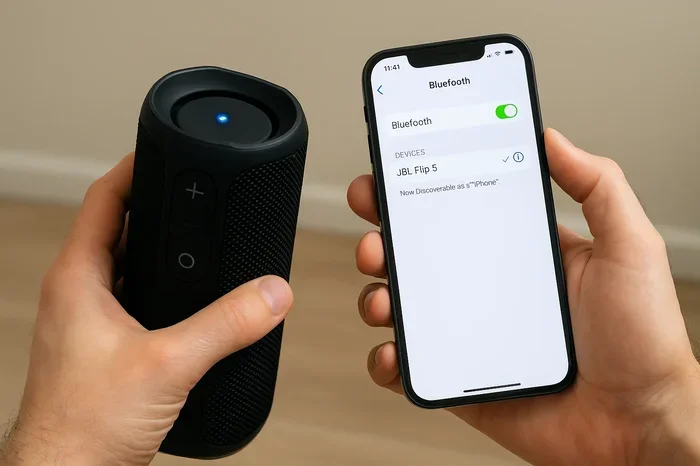
Can I use Bluetooth speakers with a turntable?
Some Bluetooth speakers have RCA inputs and can accept a turntable connection directly. However, Bluetooth speakers add latency and may compress the audio signal. For the best sound quality, use wired powered speakers instead.
Why is there buzzing noise when I connect my turntable to speakers?
Buzzing is usually caused by a missing ground wire or poor cable placement. Make sure you connect the ground wire from your turntable to the grounding post. Also keep audio cables away from power cords to reduce interference.
What is the difference between a phono input and a line input on speakers?
A phono input has a built-in preamp that boosts the weak turntable signal. A line input expects a stronger signal from devices like phones or computers. Connecting a turntable to a line input without a preamp will result in very quiet and poor-quality sound.