How Can I Project A Movie Outside Without A Projector
You can project a movie outside without a traditional projector by using creative alternatives like your phone, laptop, flashlight, or even the sun. Whether you want a backyard movie night or a camping trip screening, these methods are affordable and surprisingly effective. This guide walks you through every method step by step so you can pick the best option for your setup.
Ever wanted to watch a movie under the stars but didn’t have a projector? You are not alone. Many people dream of an outdoor movie night but think they need expensive equipment. The good news is that you can project a movie outside without a projector using things you probably already own. Whether it is a phone, a laptop, or even a flashlight, there are several clever ways to turn any outdoor space into your own personal theater. In this guide, we will walk you through every method so you can pick the one that works best for you.
Outdoor movie nights are one of the best ways to enjoy entertainment with family and friends. They create memories that last a lifetime. And the beauty of these methods is that they cost little to nothing. You do not need technical skills or fancy gear. Just a bit of creativity and some simple household items. Let us dive into the different ways you can enjoy outdoor movies without a projector.
Key Takeaways
- Multiple Methods Available: You can use your phone, laptop, flashlight, or even a magnifying glass to project movies outdoors without buying a projector.
- Simple Materials Needed: A white sheet, wall, or portable screen works great as an outdoor display surface.
- Affordable Alternative: These methods save you hundreds of dollars compared to buying a traditional projector.
- Easy Setup: Most outdoor projection hacks take less than 15 minutes to set up.
- Works for Any Occasion: From backyard parties to camping trips, these techniques fit any outdoor setting.
- Quality Varies by Method: Some methods produce better image quality than others, so choose based on your needs.
📑 Table of Contents
Why You Should Try Projecting Movies Outdoors Without a Projector
There are many reasons to skip buying a projector and try these alternative methods instead. First, cost is a huge factor. A decent projector can cost several hundred dollars. If you only plan to watch movies a few times a year, that is a lot of money to spend. Second, convenience matters. These methods use devices you already have, so there is nothing extra to carry or set up.
Another big reason is flexibility. You can set up an outdoor movie night anywhere. At the beach, in the backyard, or even while camping. Traditional projectors need power outlets and flat surfaces. These alternative methods give you much more freedom. They let you create a backyard movie experience almost anywhere you go.
Saving Money on Outdoor Entertainment
Let us talk numbers for a moment. A basic projector costs anywhere from 100 to 500 dollars. Add in an outdoor projection screen, cables, and maybe a speaker, and you are quickly past 300 dollars. Now compare that to using your phone or laptop, which you already own. The savings are significant. You can spend that money on popcorn, snacks, and cozy blankets instead.
Setting Up Anywhere
One of the biggest advantages of these projector-free methods is portability. You are not tied to a power outlet or a specific location. You can set up in your yard, on a balcony, or even in a park. As long as you have a flat surface and some light source, you are good to go. This makes these methods perfect for outdoor entertainment on the go.
Methods to Project Movies Outside Without a Projector
Now let us get into the fun part. There are several tried-and-true methods for projecting movies outdoors without a traditional projector. Each has its own strengths and weaknesses. We will cover them all so you can choose the best one for your situation.
Method 1: Use Your Phone as a Projector
Your smartphone is one of the most powerful tools you already carry. With a few simple tricks, you can turn it into a movie projector alternative. The most common method involves using a magnifying glass to enlarge your phone’s screen onto a surface.
Here is how it works. You place your phone face up on a flat surface. Then you hold a magnifying glass a few inches above the phone screen. Adjust the distance until the image comes into focus on your wall or sheet. The result is a projected image that is much larger than your phone screen.
Quick Tips for Phone Projection:
- Turn your phone brightness all the way up for the best visibility.
- Use a black background on your phone to improve contrast.
- Set up your projection after sunset for the clearest image.
- Use a tripod or stand to keep your phone steady.
- Place the magnifying glass as close to the screen as possible for a sharper image.
This method works best for short movies or clips. It is not perfect for long viewing sessions because the phone battery drains quickly. However, for a quick movie under the stars, it is surprisingly effective. If you want to learn more about using everyday items as projection tools, check out our article on can I use my flashlight as a projector for another creative alternative.
Method 2: Use a Laptop with a White Sheet
Using a laptop is one of the simplest ways to enjoy outdoor movies without a projector. You just need a laptop, a white sheet or wall, and a dark environment. This method gives you a much larger image than a phone and better battery life for longer movies.
To set this up, find a flat surface to place your laptop. Drape a white sheet over a clothesline, fence, or even a large cardboard frame. Position your laptop so the screen faces the sheet. Move the laptop closer or farther away until the image fills the sheet nicely. Then dim the surrounding lights or wait for it to get dark.
What You Need for Laptop Projection:
- A laptop with a bright screen
- A white bed sheet or portable screen
- A dark or dimly lit area
- A stable surface for the laptop
- A power bank if you want to avoid being near an outlet
If you want to make your setup cable-free, consider using a wireless projector setup approach with your laptop. This keeps things simple and untangled for your outdoor setup. The image quality with a laptop is much better than with a phone because the screen is larger and brighter.
Method 3: Use a Flashlight or Small Light Source
This is one of the most creative methods on our list. You can actually use a flashlight to create a basic projection effect. While it will not give you a movie-quality image, it is a fun and easy experiment that works great for casual viewing.
The idea is simple. You place a transparent image or a phone screen with a very bright display behind the flashlight lens. The light passes through and projects a larger version of the image onto a surface. For movies, you can use a phone with the screen brightness turned all the way up and hold it close to the flashlight.
Quick Tips for Flashlight Projection:
- Use a focused beam flashlight for sharper results.
- Keep the distance between the light source and the screen short.
- Use a white wall or a black sheet for projector screen to improve contrast.
- This works best in complete darkness.
This method is more of a fun trick than a reliable movie-watching solution. But it is a great conversation starter at parties and a cool project for kids. If you want to explore this idea further, our article on using a flashlight as a projector goes into more detail.
Method 4: Use a Tablet or iPad
Tablets are another great option for outdoor movie projection. They have larger screens than phones and brighter displays. An iPad or Samsung tablet can produce a surprisingly good projected image when paired with a magnifying glass or a white surface.
The setup is similar to the phone method. You place the tablet face up, hold a magnifying glass above it, and adjust the distance until the image focuses on your screen or wall. The larger screen size of a tablet means a bigger projected image and more detail.
Advantages of Using a Tablet:
- Larger screen than a phone for better image quality
- Longer battery life than phones
- Many tablets have high brightness for outdoor use
- Lightweight and easy to carry
One thing to keep in mind is that tablets can overheat if you run them at maximum brightness for a long time. Take breaks and keep your device in a cool, shaded spot during setup.
What You Need for the Best Outdoor Movie Setup
No matter which method you choose, there are a few essentials that make any outdoor movie setup better. Let us go through the key items you should have on hand.
Choosing the Right Screen
The screen is just as important as the projection source. You need a surface that reflects light well and shows a clear image. A plain white bed sheet is the most popular choice. Hang it taut between two poles, trees, or a clothesline. The smoother the sheet, the better the image will look.
Other options include a white wall, a portable projector screen, or even a white tarp. Avoid textured or colored surfaces because they distort the image. If you are looking for a budget-friendly screen solution, check out our guide on using a black sheet for projector screen which covers screen material tips that apply to outdoor setups too.
Power and Sound Considerations
Most phones and tablets will not have enough battery to last through a full movie outdoors. Bring a power bank to keep your device charged. A portable speaker also makes a big difference. Built-in device speakers are weak and get lost in outdoor noise. A small Bluetooth speaker can fill the space with clear sound.
Essential Gear Checklist:
- White sheet or portable screen
- Phone, tablet, or laptop
- Power bank for charging
- Portable Bluetooth speaker
- Magnifying glass (for phone/tablet methods)
- Extension cord if using a laptop
- Blankets and chairs for comfort
- Snacks and drinks for the full experience
Finding the Perfect Location
Location makes or breaks your outdoor movie experience. Look for a flat, open area with a wall or surface you can project onto. Your backyard is ideal. Make sure there are no bright lights nearby that will wash out the image. The darker the area, the better your projected picture will look.
Consider the wind too. If it is breezy, your sheet screen might flutter and distort the image. Use clips or weights to keep it steady. Also think about seating. Lay out blankets, chairs, or even build a pillow fort for a cozy viewing experience.
Tips for the Best Outdoor Movie Experience
Getting the image to project is only half the battle. The overall experience matters just as much. Here are some tips to make your outdoor movie night unforgettable.
Timing Is Everything
Start your movie after full dark. Sunset times vary by season, so check the weather and sunset time before your event. A good rule of thumb is to start about 30 minutes after the sun goes down. This gives you enough darkness for a clear image while still leaving time to set up and settle in.
Keep Your Device Cool
Phones, tablets, and laptops can overheat when running video for a long time, especially in warm weather. Keep your device in the shade during projection. If it gets too hot, take a short break to let it cool down. Overheating can cause your device to slow down or shut off mid-movie.
Test Everything Before Guests Arrive
Nothing ruins a movie night faster than technical problems. Set up and test your entire system before your guests arrive. Check the image size, focus, sound quality, and battery life. Make adjustments as needed. This way, when it is showtime, everything runs smoothly and everyone can relax and enjoy the show.
Add Ambient Touches
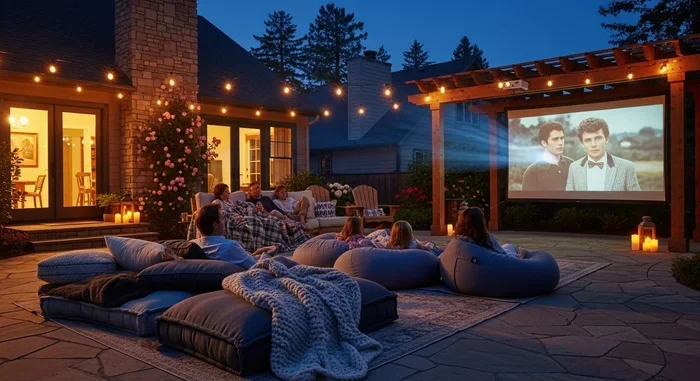
Small details make a big difference. String up some fairy lights around the viewing area. Set up a snack table with popcorn and drinks. Add some comfortable seating with blankets and cushions. These touches turn a simple movie screening into a real outdoor cinema experience.
Common Mistakes to Avoid
Even with the best setup, there are a few common mistakes that can ruin your outdoor movie experience. Here is what to watch out for.
- Using a colored or textured sheet: This distorts the image and reduces brightness. Always use a white, smooth surface.
- Not darkening the area enough: Even small ambient lights can wash out your projected image. Turn off all nearby lights.
- Placing the device too far from the screen: This makes the image blurry and dim. Keep the source close enough for a sharp picture.
- Forgetting about sound: A great picture means nothing if the audio is too quiet. Bring a proper speaker.
- Ignoring battery life: Nothing is worse than a dead device mid-movie. Bring a power bank and start with a full charge.
- Choosing a windy spot: Wind can move your screen and shake your setup. Find a sheltered area if possible.
Comparing Outdoor Projection Methods
Not all methods are created equal. Here is a quick comparison to help you decide which approach fits your needs best.
| Method | Image Quality | Setup Difficulty | Cost | Best For |
|---|---|---|---|---|
| Phone + Magnifying Glass | Fair | Easy | Free | Quick short clips |
| Laptop + White Sheet | Good | Easy | Free | Full-length movies |
| Flashlight Projection | Poor | Moderate | Free | Fun experiments |
| Tablet + Magnifying Glass | Good | Easy | Free | Medium-length movies |
As you can see, the laptop and tablet methods offer the best balance of image quality and ease of setup. The phone method is great for quick setups, and the flashlight method is more of a fun novelty. Choose based on what you have available and how long your movie is.
Final Thoughts
Projecting a movie outside without a projector is easier than you might think. With just a phone, laptop, tablet, or flashlight and a few household items, you can create an amazing outdoor movie experience for very little cost. The key is to pick the right method for your situation, set up in a dark location, and focus on the overall experience.
Whether you are planning a backyard movie night with friends or a quiet evening under the stars with family, these methods make it possible. You do not need expensive gear or technical expertise. Just a bit of creativity and the willingness to try something new. So grab your device, find a white sheet, and start planning your next outdoor cinema event tonight.
The beauty of these projector-free methods is that anyone can do them. No special skills required. No expensive purchases needed. Just simple, fun, and memorable outdoor entertainment. Now that you know all the options, pick your favorite method and get started. Your next movie night is going to be one to remember.
Frequently Asked Questions
Can I project a movie outside using just my phone?
Yes, you can use your phone to project a movie outside by placing it face up and using a magnifying glass to enlarge the image onto a white wall or sheet. This method works best in complete darkness and for shorter movies since your phone battery will drain quickly.
What is the cheapest way to project a movie outdoors?
The cheapest way is to use your phone or laptop with a white bed sheet as a screen. You already own these items, so the cost is zero. Add a magnifying glass if you want a larger image, and a power bank to keep your device charged throughout the movie.
Do I need a special screen to project outside?
No, you do not need a special screen. A plain white sheet hung taut works perfectly. You can also use a white wall, a white tarp, or even a cardboard frame covered with a white bed sheet. The key is to use a smooth, light-colored surface for the best image quality.
How can I improve the image quality of my outdoor projection?
To improve image quality, set up in complete darkness, use the brightest setting on your device, keep the projection source close to the screen, and use a smooth white surface. A magnifying glass can also help focus and enlarge the image for sharper results.
Can I connect my phone to a projector for outdoor movies?
If you do have a projector, you can connect your phone using an HDMI adapter or wirelessly through compatible projectors. For more details on connecting your phone to a projector, check out our guide on connecting my phone to projector with HDMI for step-by-step instructions.
What if it is not dark enough outside for projection?
Try projecting onto a darker surface or wait until it is fully dark. You can also create shade over your screen area using a canopy or tarps to block ambient light. Avoid setting up near streetlights or other bright sources that can wash out your projected image.