Can You 3d Print Water And Discover The Surprising Answer
So, can you 3D print water? The answer is yes, but not in the way you might think. Scientists and engineers have developed incredible methods to shape, hold, and even sculpt water using advanced 3D printing techniques. This guide breaks down the science, the technologies, and the surprising real-world applications behind this mind-blowing innovation.
Imagine holding a 3D printed shape made entirely of water. Sounds impossible, right? Yet, researchers and innovators have found ways to do exactly that. The question “can you 3D print water” has sparked curiosity and amazement across the tech world. And the surprising answer opens up a world of possibilities that go far beyond what most people expect.
3D printing has come a long way from printing plastic toys and phone cases. Today, scientists are working with liquids, gels, and even water itself. The idea of using additive manufacturing to shape water into solid-like forms is not just cool — it is genuinely transforming fields like medicine, art, and materials science. In this article, we will dive deep into how this works, what the methods are, and why it matters.
Whether you are a tech enthusiast, a curious beginner, or someone exploring 3D printing as a hobby, this guide has something for you. We will break down the complex science into simple, easy-to-understand concepts. By the end, you will have a clear picture of how water goes from a free-flowing liquid to a structured 3D object. Let us get started.
Key Takeaways
- Yes, you can 3D print water: Using specialized hydrogel techniques and liquid-based inks, water can be shaped into stable 3D structures.
- Hydrogel printing is the key: Water trapped inside a gel matrix can hold its shape and be used for medical and scientific purposes.
- Multiple methods exist: From underwater extrusion to freeze-based techniques, several approaches make water 3D printing possible.
- Medical applications are huge: 3D printed water structures help deliver drugs, grow cells, and create tissue scaffolds.
- Art and design benefit too: Artists use water-based 3D printing to create stunning, temporary sculptures and installations.
- Challenges remain: Stability, scalability, and material limitations still hold back widespread adoption of water 3D printing.
- The future looks bright: Ongoing research is pushing the boundaries of what we can do with liquid materials in additive manufacturing.
📑 Table of Contents
What Does It Mean to 3D Print Water?
When we talk about 3D printing water, we are not pushing a glass of water through a nozzle and hoping for the best. That would just make a mess. Instead, scientists use clever techniques to trap and shape water into stable forms. The water itself becomes part of a larger structure that holds its shape.
The core idea behind this is hydrogel-based 3D printing. A hydrogel is a network of polymer chains that can hold a huge amount of water. Think of it like a sponge at the molecular level. When water is mixed into or trapped inside a hydrogel, the result can be printed into specific shapes. The water stays in place because the gel matrix surrounds and supports it.
This process falls under the broader category of liquid-based additive manufacturing. It is a branch of 3D printing that deals specifically with fluids and soft materials. The goal is to create structures that are mostly water but can maintain a defined shape for a period of time.
Why Would Anyone Want to 3D Print Water?
You might wonder why anyone would want to go through all this trouble. The answer lies in the unique properties of water and hydrogel combinations. Here are some compelling reasons:
- Biocompatibility: Water-based structures are gentle on living tissues. This makes them perfect for medical uses like drug delivery and tissue engineering.
- Controlled release: Hydrogel structures can slowly release water and embedded substances over time. This is valuable for sustained drug delivery systems.
- Environmental responsiveness: Some hydrogels change shape or release water in response to temperature, pH, or light. This opens up smart material applications.
- Art and design: Water-based 3D printing allows artists to create temporary, biodegradable sculptures that are both beautiful and eco-friendly.
- Scientific research: Researchers use 3D printed water structures to study fluid dynamics, cell behavior, and material interactions in controlled environments.
The Science Behind 3D Printing Water
Understanding the science of 3D printed water requires a basic look at how hydrogels work and how additive manufacturing handles liquids. It is fascinating stuff, and it is easier to grasp than you might think.
Hydrogels: The Backbone of Water Printing
Hydrogels are the secret sauce behind water 3D printing. These are cross-linked polymer networks that can absorb and retain enormous amounts of water. Some hydrogels are made from natural materials like alginate, gelatin, or hyaluronic acid. Others are synthetic, built from materials like polyacrylamide or polyethylene glycol.
When a hydrogel is mixed with water, it creates a soft, jelly-like material. This material can be extruded through a 3D printer nozzle just like regular filament or resin. As each layer is deposited, the hydrogel holds the water in place. The result is a 3D structure that is mostly water by volume but has a stable shape.
The key challenge is keeping the water from leaking out. The cross-linked polymer network acts like a microscopic cage, trapping water molecules inside. The stronger the cross-linking, the more stable the structure. But too much cross-linking can make the gel too rigid. Finding the right balance is a big part of the science.
How Additive Manufacturing Handles Liquids
Traditional 3D printers are designed for solid materials. Filament-based printers melt plastic and lay it down layer by layer. Resin-based printers use light to cure liquid into solid form. But printing water requires a completely different approach.
One common method is extrusion-based printing. A syringe filled with hydrogel-water mixture is pushed through a nozzle. The printer moves the nozzle in X, Y, and Z coordinates to build up layers. Each layer bonds to the one below, creating a stable 3D object.
Another method is stereolithography with water-based resins. In this process, a UV light cures a liquid resin that contains water-soluble components. The result is a water-rich structure that can be further processed or used directly.
Freeze-Based Water Printing
Here is one of the most surprising methods: using freezing to 3D print water. In this technique, water is extruded onto a cold surface or into a cold environment. The outer layer of water freezes almost instantly, creating a solid shell. The printer then adds another layer of water on top, and the process repeats.
This method is sometimes called freeze-form extrusion fabrication. It has been used to create ice structures and even temporary water-based scaffolds. The frozen shell holds the shape while the inner water remains liquid. Once the structure is complete, it can be used as-is or allowed to thaw for specific applications.
Methods and Technologies Used in Water 3D Printing
Several distinct technologies make it possible to 3D print water. Each has its own strengths, limitations, and ideal use cases. Let us explore the main methods in detail.
Hydrogel Extrusion Printing
This is the most common and widely studied method for 3D printing water. A hydrogel precursor solution is loaded into a syringe printer. As the gel is extruded, it can be cross-linked chemically or physically to solidify each layer.
Common materials used include:
- Alginate: Derived from seaweed, alginate is one of the most popular hydrogel materials. It is biocompatible, affordable, and easy to work with.
- Gelatin: Made from collagen, gelatin hydrogels are soft and biodegradable. They are often used in biomedical research.
- Polyacrylamide: A synthetic hydrogel that offers strong mechanical properties. It is used in industrial and laboratory settings.
- Methacrylated gelatin (GelMA): A modified gelatin that can be UV-cured. It offers excellent control over stiffness and degradation.
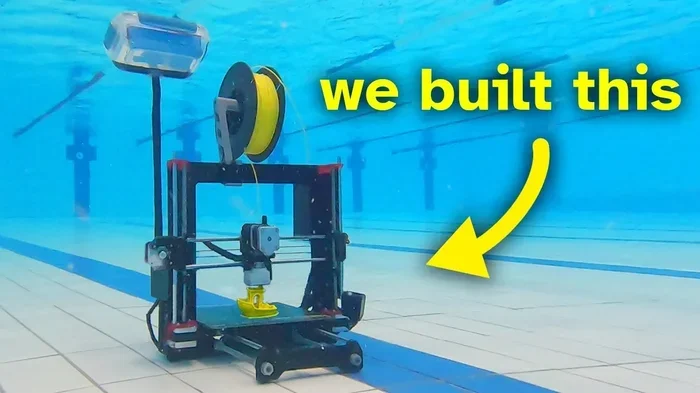
Underwater 3D Printing
Underwater 3D printing is a fascinating technique where structures are built directly in a water environment. The printer operates inside a water tank, depositing materials that solidify on contact or through chemical reactions.
This method is particularly useful for creating soft, water-rich structures that would collapse in air. The surrounding water provides support during the printing process. It also allows for the creation of structures that are meant to function in aquatic environments, such as artificial coral reefs or underwater sensors.
Microfluidic 3D Printing
Microfluidic techniques involve printing at a very small scale, often at the microscopic level. Water droplets or thin streams of water-based fluid are precisely deposited to create tiny structures. This method is heavily used in biology and medicine for creating cell scaffolds and microreactors.
The precision of microfluidic printing is remarkable. Researchers can create structures with channels as narrow as a human hair. These tiny water channels can mimic blood vessels or nutrient pathways in living tissues.
Comparison of Water 3D Printing Methods
| Method | Best For | Water Content | Stability | Complexity |
|---|---|---|---|---|
| Hydrogel Extrusion | Medical scaffolds, drug delivery | High (70-95%) | Moderate to High | Medium |
| Underwater Printing | Aquatic structures, soft robotics | Very High | Moderate | High |
| Microfluidic Printing | Cell scaffolds, microreactors | Very High | Low (small scale) | Very High |
| Freeze-Based Printing | Temporary structures, ice art | Very High | Low (melts over time) | Medium |
| Stereolithography (Water Resin) | Precision water-rich parts | Moderate to High | High | High |
Real-World Applications and Uses
The ability to 3D print water is not just a laboratory curiosity. It has real, practical applications that are already making an impact in several industries. Let us look at some of the most exciting uses.
Medical and Biomedical Applications
The medical field is arguably the biggest beneficiary of water 3D printing technology. Hydrogel-based structures are used to create scaffolds for tissue engineering. These scaffolds provide a supportive framework where cells can grow and organize into functional tissues.
For example, researchers have 3D printed water-based scaffolds that mimic the structure of human cartilage. These scaffolds are seeded with cells and placed in bioreactors. Over time, the cells grow into new tissue, and the hydrogel gradually dissolves, leaving behind living tissue.
Drug delivery is another major application. Hydrogel structures can be loaded with medications and printed into shapes that release the drug slowly over days or weeks. This means patients could take fewer doses while still receiving consistent treatment. It is a game-changer for chronic conditions and long-term therapies.
Art, Design, and Architecture
Artists and designers are finding creative ways to use water 3D printing. The technology allows for the creation of temporary sculptures and installations that are both visually striking and environmentally friendly. Since the structures are mostly water and biodegradable hydrogel, they leave almost no waste behind.
Architects have also experimented with water-based 3D printing for creating temporary models and prototypes. These models can be dissolved or recycled after use, reducing material waste in the design process. Some designers are even exploring the idea of using water-based structures as temporary building components in emergency shelters.
Environmental and Agricultural Uses
Water 3D printing has potential applications in agriculture and environmental conservation. Hydrogel-based structures can be printed to serve as seed carriers, slowly releasing water and nutrients to help plants grow in arid environments.
Researchers are also exploring the use of 3D printed water structures for water purification and filtration. The porous nature of hydrogels makes them ideal for trapping contaminants while allowing clean water to pass through. These structures could be customized for specific water quality challenges in different regions.
Quick Tips for Understanding Water 3D Printing
- Start with hydrogels: If you are new to this topic, learn about hydrogel materials first. They are the foundation of most water 3D printing methods.
- Think in layers: Just like regular 3D printing, water-based printing builds objects layer by layer. Understanding this layering process helps you grasp how the final structure forms.
- Consider the environment: Temperature, humidity, and pH all affect how water-based prints behave. Always control these factors during printing.
- Explore the research: Universities and labs around the world are actively publishing papers on water 3D printing. Reading recent studies gives you the latest insights.
Limitations and Challenges of 3D Printing Water
While the idea of 3D printing water is exciting, there are significant challenges that limit its current applications. Understanding these limitations is important for anyone exploring this technology.
Stability and Structural Integrity
The biggest challenge is keeping water-based structures stable over time. Water is, well, wet. It flows, drips, and evaporates. Even when trapped in a hydrogel, the structure can degrade, shrink, or collapse if conditions are not carefully controlled.
Temperature is a major factor. Warm environments cause hydrogels to lose water and shrink. Cold environments can cause freeze-thaw cycles that damage the structure. Humidity affects evaporation rates. All of these factors must be managed to maintain print quality.
Scalability Issues
Most water 3D printing methods work well at small scales. But scaling up to larger objects is much harder. Larger structures require more material, longer print times, and more precise control over the printing environment. The cost and complexity increase significantly as size grows.
Material Limitations
Not all hydrogels are created equal. Some are too soft for practical applications. Others degrade too quickly or are too expensive to produce at scale. Finding the right material that balances cost, strength, and biocompatibility is an ongoing challenge for researchers.
Common Mistakes to Avoid
- Ignoring environmental conditions: Printing in an uncontrolled environment leads to failed prints and wasted materials.
- Using the wrong hydrogel: Not all hydrogels are suitable for every application. Always match the material to your specific goal.
- Overlooking post-processing: Many water-based prints require additional steps like cross-linking, washing, or drying to achieve the desired final properties.
- Underestimating drying time: Hydrogel structures need time to set and stabilize after printing. Rushing this process can compromise the final product.
What Does the Future Hold for Water 3D Printing?
The future of 3D printing water is incredibly promising. Researchers are constantly finding new ways to improve stability, increase scalability, and expand the range of applications. Here are some exciting developments on the horizon.
One area of active research is smart hydrogels that can respond to external stimuli. Imagine a 3D printed water structure that changes shape when exposed to heat or light. This could lead to dynamic, adaptive materials for robotics, medicine, and architecture.
Another exciting direction is the integration of living cells into water-based prints. Scientists are working on creating 3D structures that contain living organisms within a water-hydrogel matrix. These bio-printed structures could eventually be used to create functional organs or implantable tissues for medical treatments.
The development of multi-material 3D printers is also opening new possibilities. These printers can handle multiple materials simultaneously, including water-based and solid materials. This allows for more complex and functional objects that combine the properties of different substances.
As the technology matures, we can expect to see water 3D printing move from specialized labs into broader commercial and consumer applications. The possibilities are limited more by our imagination than by the technology itself.
Key Takeaways
- Yes, you can 3D print water: Using hydrogels and specialized techniques, water can be shaped into stable 3D structures.
- Hydrogel printing is the most common method: Water trapped in a polymer network can be extruded and built into complex shapes.
- Multiple technologies exist: From underwater printing to freeze-based methods, each approach has unique advantages.
- Medical uses are leading the way: Drug delivery, tissue engineering, and cell scaffolds are among the most impactful applications.
- Challenges remain: Stability, scalability, and material costs are ongoing hurdles that researchers are actively working to overcome.
- The future is bright: Smart hydrogels, living cell integration, and multi-material printing are pushing the boundaries of what is possible.
Conclusion
The question “can you 3D print water” has a resounding yes as its answer. Through hydrogel technology, underwater printing, freeze-based methods, and microfluidic techniques, scientists and engineers have found remarkable ways to shape water into stable, functional 3D structures. The science behind it is fascinating, and the real-world applications are already making a difference in medicine, art, agriculture, and environmental conservation.
While challenges like stability, scalability, and material costs remain, the progress in this field is impressive. Every year brings new breakthroughs that push the boundaries of what is possible with liquid materials in additive manufacturing. The technology is still young, but its potential is enormous.
If you are curious about 3D printing or looking to explore new frontiers in technology, water 3D printing is a topic worth watching closely. It represents the intersection of creativity, science, and innovation in a way that is truly unique. Keep an eye on this space, because the future of 3D printed water is only just beginning.
Frequently Asked Questions
Can you 3D print pure water without any additives?
Pure water cannot hold a 3D shape on its own because it lacks structural integrity. However, when combined with hydrogel materials or printed in freezing conditions, water can be shaped into stable 3D forms. The additives or environmental conditions are what make the printing possible.
Is 3D printed water safe for medical use?
Yes, when the right hydrogel materials are used, 3D printed water structures are biocompatible and safe for medical applications. Materials like alginate and gelatin are widely used in biomedical research and have been approved for various medical uses.
How long does a 3D printed water structure last?
The lifespan depends on the hydrogel used and the storage conditions. Some structures can last for weeks or months, while others may degrade within hours. Researchers can control the degradation rate by adjusting the cross-linking density and material composition.
Can you buy a 3D printer that prints water at home?
Not yet. Most water 3D printing technologies are currently limited to research labs and specialized facilities. However, as the technology develops, more accessible options may become available for hobbyists and home users in the future.
What is the difference between 3D printing water and regular 3D printing?
Regular 3D printing uses solid materials like plastic filament or resin that are melted or cured into shape. Water 3D printing involves trapping liquid water within a gel matrix or using freezing techniques to hold water in a defined shape. The processes and materials are fundamentally different.
Are there any environmental benefits to 3D printing water?
Yes, water-based 3D printing can be more environmentally friendly than traditional methods. Hydrogel materials are often biodegradable and non-toxic. Temporary structures made from water and hydrogel produce minimal waste, making them a sustainable choice for prototyping and artistic applications.