Can I Connect Thunderbolt Display To Usb C Explained
Yes, you can connect a Thunderbolt Display to a USB-C port, but compatibility depends on your specific devices and cable type. Thunderbolt 3 and Thunderbolt 4 use the same USB-C connector, making the connection possible in most modern setups. This guide breaks down everything you need to know about cables, adapters, bandwidth limits, and troubleshooting to get your display working perfectly.
Have you ever sat down at your desk, plugged in a new cable, and hoped for the best? That is exactly the moment when the question can I connect Thunderbolt Display to Usb C starts spinning in your head. You bought a sleek Thunderbolt monitor, you have a laptop with a USB-C port, and you just want it to work. The good news is that in most cases, it does. But there are a few things you need to know before you plug anything in.
Connecting a Thunderbolt display to a USB-C port is not always a simple yes or no answer. It depends on the version of Thunderbolt, the type of USB-C port your device has, the cable you use, and sometimes even the adapter you need. This guide walks you through every detail so you do not waste time guessing. Whether you are setting up a home office, a creative workstation, or a dual-monitor desk setup, you will find everything you need right here.
Let us start with the basics and then dive into the technical details in a way that actually makes sense. By the end, you will feel confident about your connection and know exactly what to do if something does not work. No jargon overload, no confusing manuals, just clear and practical advice.
Key Takeaways
- USB-C and Thunderbolt Are Related but Not the Same: Thunderbolt uses the USB-C connector but offers much faster speeds and better display support.
- Thunderbolt 3 and 4 Displays Work with USB-C Ports: As long as your port supports Thunderbolt or DisplayPort Alt Mode, the connection should work.
- The Right Cable Matters: Using a quality Thunderbolt or USB-C cable ensures stable video output and data transfer.
- Adapters Can Bridge Compatibility Gaps: If your port is not Thunderbolt, a DisplayPort or HDMI adapter can still get the job done.
- Daisy Chaining Is a Game Changer: Thunderbolt allows you to connect multiple devices in a single chain from one port.
- Power Delivery Simplifies Your Setup: USB-C carries power, so your display can charge your laptop while showing content.
📑 Table of Contents
- Understanding Thunderbolt and USB-C
- Can You Connect a Thunderbolt Display to a USB-C Port?
- The Right Cable for the Job
- Setting Up Your Thunderbolt Display with USB-C
- Display Resolution and Performance
- Using Adapters and Hubs
- Thunderbolt Display vs USB-C Monitors
- Expert Tips for the Best Experience
- Common Mistakes to Avoid
- Final Thoughts
Understanding Thunderbolt and USB-C
Before we answer the main question, it helps to understand what Thunderbolt and USB-C actually are. These two terms get mixed up all the time, and for good reason. They share the same connector shape, but they are not the same thing.
What Is USB-C?
USB-C is a type of connector. It is small, reversible, and can carry data, video, and power all through a single cable. Many modern laptops, tablets, and phones use USB-C. But not every USB-C port is created equal. Some USB-C ports only support basic data transfer and charging. Others support video output too. The key difference is in what the port can actually do.
What Is Thunderbolt?
Thunderbolt is a technology developed by Intel and Apple. It combines data transfer, video output, and power delivery into one connection. Thunderbolt 3 uses the USB-C connector and offers speeds up to 40 Gbps. Thunderbolt 4 builds on that with even better security and performance features. So when you see a Thunderbolt port, it looks like a regular USB-C port but does a whole lot more.
Why the Confusion?
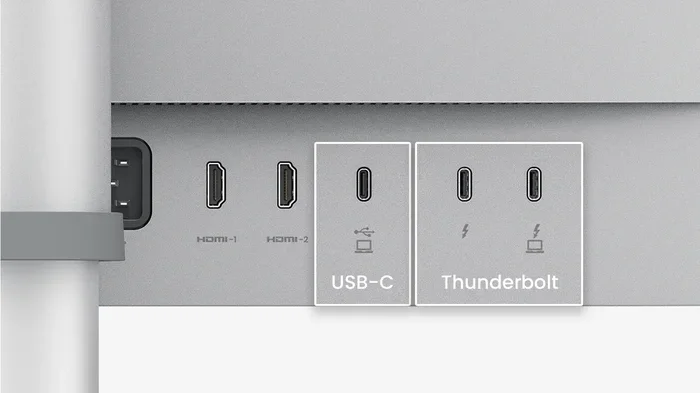
Here is where things get tricky. A Thunderbolt port looks identical to a standard USB-C port. The only way to tell them apart is by the little lightning bolt icon next to the port. If your laptop has a USB-C port without that lightning bolt, it might not support Thunderbolt. This distinction matters a lot when you are trying to connect a Thunderbolt display to your device.
Now, can you still connect a Thunderbolt display to a plain USB-C port? In many cases, yes. But the features you get may be limited. Let us look at exactly what happens in different scenarios.
Can You Connect a Thunderbolt Display to a USB-C Port?
The short answer is yes. A Thunderbolt display will typically work when connected to a USB-C port. But the experience depends on a few factors that are worth understanding before you start.
When It Works Perfectly
If your USB-C port supports Thunderbolt 3 or Thunderbolt 4, you are in great shape. The display will work at full resolution, and you can take advantage of features like daisy chaining and high-speed data transfer. This is the ideal setup for anyone who wants the best performance from their Thunderbolt monitor.
When It Works with Limitations
If your USB-C port supports DisplayPort Alt Mode but is not Thunderbolt, the display will usually still work for video output. However, you might lose some features. Data transfer speeds could be slower, and you might not be able to daisy chain other devices through the display. For most people just wanting a second screen, this is perfectly fine.
When It Does Not Work
If your USB-C port only supports basic charging and data transfer with no video output capability, a Thunderbolt display will not work. You would need an adapter or a different connection method. This is less common on modern devices but still happens with some older or budget laptops.
A Quick Compatibility Check
Here is a simple way to figure out where you stand. Look at your laptop or device manual, check the port for the lightning bolt symbol, or search your device model online. Once you know whether your port is Thunderbolt, DisplayPort Alt Mode, or basic USB-C, you will know exactly what to expect from your display connection.
The Right Cable for the Job
Not all USB-C cables are the same. This is one of the biggest surprises people run into when setting up a new display. The cable you choose directly affects your connection quality, speed, and whether the display works at all.
Thunderbolt Cables
A Thunderbolt cable is the best choice for connecting a Thunderbolt display. It supports the full 40 Gbps bandwidth of Thunderbolt 3 and Thunderbolt 4. These cables also carry up to 100 watts of power, which means your display can charge your laptop while showing content. Look for cables that are certified Thunderbolt 3 or Thunderbolt 4 for the best results.
USB-C Cables
A standard USB-C cable can work for video output if it supports USB 3.1 or higher and DisplayPort Alt Mode. However, not all USB-C cables are built for video. Some are designed only for charging and data. Using the wrong cable can lead to a blank screen or flickering display. Always check the cable specifications before you buy.
How to Tell the Difference
Thunderbolt cables usually have the lightning bolt icon on the connector. USB-C cables may have a USB trident symbol. If you are shopping online, read the product description carefully. Look for terms like “40 Gbps,” “Thunderbolt certified,” or “DisplayPort compatible.” A quality cable makes a real difference in your daily experience.
Quick Tips for Cable Selection
- Always use the cable that came with your Thunderbolt display if possible.
- If you need a longer cable, make sure it is rated for Thunderbolt or high-speed USB-C.
- Avoid cheap, unbranded cables. They often do not support video output.
- Keep your cables under 2 meters for best performance without signal loss.
Setting Up Your Thunderbolt Display with USB-C
Now that you understand the basics, let us walk through the actual setup process. Whether you are connecting a Thunderbolt display to a MacBook, a Windows laptop, or a desktop, the steps are similar.
Step-by-Step Connection Guide
- Check your port: Confirm that your device has a Thunderbolt or USB-C port that supports video output.
- Grab the right cable: Use a Thunderbolt cable or a high-quality USB-C cable that supports video.
- Connect the cable: Plug one end into your laptop and the other end into the Thunderbolt display.
- Power on the display: Turn on your monitor and wait for it to recognize the input signal.
- Adjust display settings: Go to your device display settings to configure resolution, arrangement, and mirroring options.
That is it. In most cases, the display should be recognized immediately. Your laptop should automatically detect the external monitor and extend or mirror your screen based on your settings.
Troubleshooting Common Issues
If your display does not turn on or shows no signal, do not panic. Try these simple steps first:
- Unplug the cable and plug it back in firmly.
- Try a different USB-C port on your device if you have one.
- Restart your laptop and the display.
- Check if the cable is damaged or bent at the connector.
- Update your display drivers or firmware if available.
Sometimes the fix is as simple as a loose connection. Other times, you might need to update your system software. Most Thunderbolt displays work plug-and-play, but a quick restart often solves the stubborn issues.
Daisy Chaining with Thunderbolt
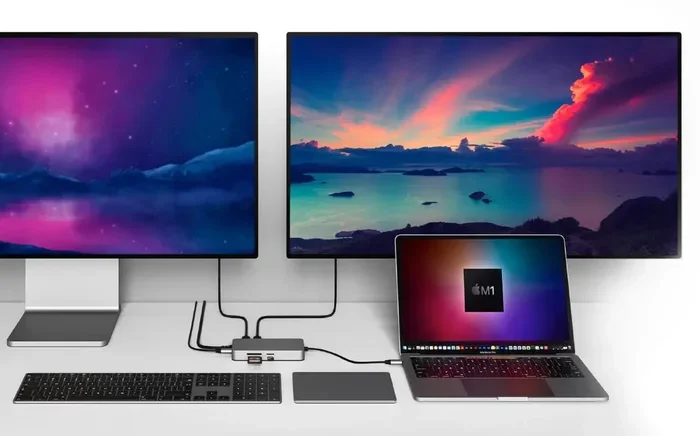
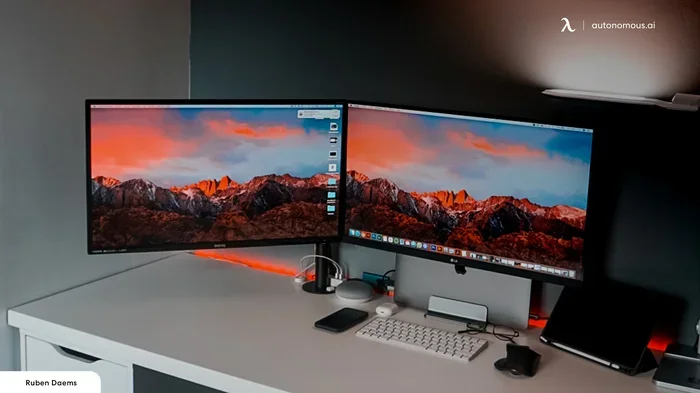
One of the coolest features of Thunderbolt is daisy chaining. This means you can connect multiple devices to a single Thunderbolt port by linking them together through your display. Your Thunderbolt monitor acts as a hub. You plug your laptop into the display, then connect a hard drive, a webcam, or even another monitor to the display’s downstream Thunderbolt port.
This is incredibly useful for desk setups where you want to reduce cable clutter. Instead of plugging five different cables into your laptop, you use one Thunderbolt cable to the display and let the display handle the rest. It is clean, organized, and surprisingly fast.
If you are interested in other accessories that can simplify your tech setup, check out 10 Gadgets To Make Moms Life Easier for some creative ideas on streamlining your workspace.
Display Resolution and Performance
When you connect a Thunderbolt display to a USB-C connection, the resolution and refresh rate you get depend on several factors. Understanding these helps you set realistic expectations for your setup.
Resolution Support
Thunderbolt 3 supports up to two 4K displays at 60 Hz or one 5K display at 60 Hz. Thunderbolt 4 maintains the same support but adds better security features. When connected via a standard USB-C port with DisplayPort Alt Mode, you might be limited to one 4K display at 60 Hz or lower resolutions for multiple monitors.
Bandwidth Matters
Bandwidth is the amount of data that can travel through your connection per second. Thunderbolt 3 and 4 offer 40 Gbps, which is plenty for high-resolution displays. Standard USB-C 3.1 offers 10 Gbps, which is still good for most display setups but might limit you with multiple high-resolution monitors.
Color Accuracy and Bit Depth
For creative professionals, color accuracy is everything. Thunderbolt displays are known for their excellent color reproduction and wide color gamut. When connected properly, you get the full visual quality the display was designed to deliver. This makes Thunderbolt displays a popular choice for photographers, video editors, and graphic designers.
What Affects Performance?
- Cable quality: A cheap or damaged cable reduces bandwidth.
- Port type: Thunderbolt ports outperform standard USB-C ports.
- Display settings: Higher resolutions and refresh rates use more bandwidth.
- Device drivers: Outdated drivers can cause performance issues.
If you want to get the most out of your display, invest in a good Thunderbolt cable and make sure your device drivers are up to date. These small steps make a big difference in daily performance.
Using Adapters and Hubs
Not every device has a Thunderbolt port. If your laptop has a mix of USB-C, HDMI, and USB-A ports, you might need an adapter or hub to connect your Thunderbolt display. This is where things can get a little complicated, but it is very manageable once you know what to look for.
Types of Adapters
- USB-C to DisplayPort adapter: Converts a USB-C signal to DisplayPort for monitors that need it.
- USB-C to HDMI adapter: Useful if your display has an HDMI input.
- Thunderbolt to USB-C adapter: Bridges Thunderbolt and standard USB-C devices.
- USB-C hub with DisplayPort output: Adds multiple ports including video output in one compact device.
Choosing the Right Adapter
When picking an adapter, look for one that supports the resolution and refresh rate you need. A basic adapter might work for a 1080p monitor but struggle with a 4K display. Always check the adapter specifications for bandwidth support and compatibility with your specific devices.
Do You Need a Hub or Just an Adapter?
If you only need to connect one display, a simple adapter works fine. But if you also need to connect a keyboard, mouse, external hard drive, and your display, a USB-C hub is a better choice. Hubs let you connect everything through one port on your laptop, keeping your desk tidy and your setup simple.
For those who manage multiple devices and need to keep things organized, learning how to Adding Prefixes To Numbers On Iphone might come in handy when labeling and sorting your connected devices and accessories.
Thunderbolt Display vs USB-C Monitors
It is worth taking a moment to compare Thunderbolt displays with standard USB-C monitors. Both connect via the USB-C connector, but they offer different capabilities that might matter depending on your needs.
| Feature | Thunderbolt Display | Standard USB-C Monitor |
|---|---|---|
| Data Transfer Speed | Up to 40 Gbps | Up to 10 Gbps (USB 3.1) |
| Daisy Chaining | Yes | Usually No |
| Power Delivery | Up to 100W | Varies by model |
| Resolution Support | 5K at 60Hz | 4K at 60Hz typically |
| Price Range | Higher | More Affordable |
| Best For | Professionals, Creators | General Use, Budget Setups |
A Thunderbolt display gives you the full package. High-speed data transfer, video output, power delivery, and the ability to daisy chain. A standard USB-C monitor focuses on display quality and basic connectivity. For most people, either option works well. The choice comes down to your specific needs and budget.
Expert Tips for the Best Experience
Keep Your Firmware Updated
Both your laptop and your Thunderbolt display receive firmware updates from time to time. These updates often include bug fixes, performance improvements, and new feature support. Checking for updates once a month can prevent connection issues and keep everything running smoothly.
Use a Dedicated Thunderbolt Dock
If you connect multiple devices regularly, a Thunderbolt dock is a lifesaver. It gives you a central connection point for your display, peripherals, and charging cable. You plug one Thunderbolt cable into your laptop, and everything else connects to the dock. It is clean, efficient, and incredibly convenient.
Label Your Cables
With so many cables on your desk, it is easy to grab the wrong one. Labeling your Thunderbolt cable and USB-C cables helps you avoid confusion. A small piece of tape or a cable tag can save you minutes of frustration every week.
Consider Cable Length Carefully
Longer cables can lose signal strength, especially at high resolutions. If you need a cable longer than 2 meters, consider an active Thunderbolt cable that boosts the signal. For shorter runs, a passive cable works perfectly and costs less.
Common Mistakes to Avoid
Setting up a Thunderbolt display with USB-C is straightforward, but a few common mistakes can cause headaches. Here is what to watch out for.
- Using the wrong cable: Not every USB-C cable supports video. This is the number one reason for connection failures.
- Ignoring port capabilities: Plugging a Thunderbolt display into a basic USB-C port without video support will not work.
- Skipping driver updates: Outdated drivers can cause display flickering, resolution issues, or no signal at all.
- Overlooking power requirements: Some Thunderbolt displays need their own power source even when connected via USB-C.
- Forcing a connection: If the cable does not fit easily, do not force it. Check the port and cable type before trying again.
Avoiding these mistakes saves time and protects your devices. A little patience goes a long way when setting up new technology.
Final Thoughts
So, can I connect Thunderbolt Display to Usb C? The answer is a confident yes in the vast majority of cases. Whether your USB-C port supports Thunderbolt or just basic video output, a Thunderbolt display can work beautifully with the right cable and a little know-how.
The key takeaways are simple. Use a quality cable, check your port capabilities, and do not be afraid to use an adapter if needed. Once your display is connected, you will enjoy a crisp, high-resolution screen that makes your work and entertainment more enjoyable.
Setting up a Thunderbolt display is one of those upgrades that makes a real difference in your daily routine. You get more screen space, better color accuracy, and a cleaner desk setup. It is a small change that pays off every single day. So go ahead, plug in that display, and enjoy the upgrade.
Frequently Asked Questions
Can I connect a Thunderbolt Display to a regular USB-C port?
Yes, in most cases you can. A regular USB-C port that supports DisplayPort Alt Mode will usually output video to a Thunderbolt display. However, you may lose some features like high-speed data transfer and daisy chaining that are available with a Thunderbolt port.
What kind of cable do I need for a Thunderbolt Display?
A Thunderbolt 3 or Thunderbolt 4 cable is the best choice for connecting a Thunderbolt display. If you do not have a Thunderbolt cable, a high-quality USB-C cable that supports video output and at least USB 3.1 will also work for most setups.
Why is my Thunderbolt Display not showing up on my USB-C laptop?
This can happen for several reasons. The most common causes are using the wrong cable, a faulty port, or outdated display drivers. Try using a different USB-C cable, checking your port for the lightning bolt icon, and updating your laptop’s display software.
Can I daisy chain devices through a Thunderbolt Display?
Yes, Thunderbolt displays support daisy chaining. You can connect your laptop to the display, then plug other Thunderbolt devices like hard drives or additional monitors into the display’s downstream port. This works best when both your laptop and display support Thunderbolt.
Does USB-C carry power to a Thunderbolt Display?
Yes, USB-C can carry power through the same cable that sends video. Thunderbolt cables can deliver up to 100 watts of power, which means your display can charge your laptop while simultaneously showing content on screen.
Can I use a Thunderbolt Display with a non-Apple laptop?
Absolutely. Thunderbolt displays work with any device that has a compatible Thunderbolt or USB-C port. Apple and Windows laptops both support Thunderbolt connections. You may just need to adjust display settings after connecting.
=== CONCLUSION ===
Connecting a Thunderbolt display to a USB-C port is one of the easiest ways to upgrade your workspace. You get fast data transfer, high-quality video output, and convenient power delivery all through a single cable. The process is simple once you know what your ports support and which cable to use.
Remember to check your port type, choose the right cable, and keep your drivers updated. If you run into issues, the troubleshooting steps in this guide will help you get back on track quickly. With the right setup, your Thunderbolt display will deliver a stunning visual experience that makes everything from work projects to movie nights more enjoyable.
Now that you know the answer to can I connect Thunderbolt Display to Usb C, you are ready to set up your display with confidence. Enjoy your new setup and the extra productivity it brings to your day.