How Can I Get Internet While Traveling In Japan Today
Getting internet in Japan is easier than you think. You can rent a portable WiFi device, buy a local SIM card, or use an eSIM to stay online. This guide covers every option so you can choose the best fit for your trip.
Traveling to Japan is exciting. But staying connected while you explore can feel tricky. The good news is that getting internet while traveling in Japan is simpler than most people think. You have more options than ever before.
Whether you need to navigate Tokyo streets, translate menus, or share photos with friends back home, a solid connectivity solution makes all the difference. This guide walks you through every option available today. You will learn about portable WiFi, local SIM cards, eSIMs, and free Wi-Fi networks.
By the end, you will know exactly which connectivity solution fits your travel style and budget. Let us dive in.
Key Takeaways
- Portable WiFi rentals let you connect multiple devices anywhere in Japan
- Japan SIM cards offer affordable data plans for tourists
- eSIM technology lets you get online before you even land
- Free Wi-Fi spots are widely available in cities and transit hubs
- Phone hotspots work great if your home plan supports international use
- Planning ahead saves you money and keeps you connected from day one
📑 Table of Contents
Why Internet Access Matters in Japan
Japan is a modern country with incredible technology. But getting wireless internet on the go is not always automatic for visitors. Here is why staying connected really matters.
Most navigation apps like Google Maps work best with a live data connection. Train schedules, bus routes, and walking directions all rely on mobile data. Without it, you may find yourself lost in a city with no English signage.
Translation apps also need internet to function properly. Point your camera at a menu or sign, and the app translates it in real time. This feature works only when you have a broadband connection or at least a data link.
Beyond practical needs, staying connected helps you feel safe. You can check weather alerts, contact your hotel, or reach out in an emergency. For many travelers, internet access abroad is not a luxury. It is a necessity.
How Japan Handles Wireless Connectivity
Japan has excellent network coverage in cities and most rural areas. Major carriers like NTT Docomo, SoftBank, and KDDI (au) provide strong signals across the country. However, their plans are often designed for residents, not short-term visitors.
This is where tourist-friendly options come in. Renting a device or buying a temporary plan gives you seamless access without long-term commitments. Let us look at each option in detail.
Option 1: Rent a Portable WiFi Device
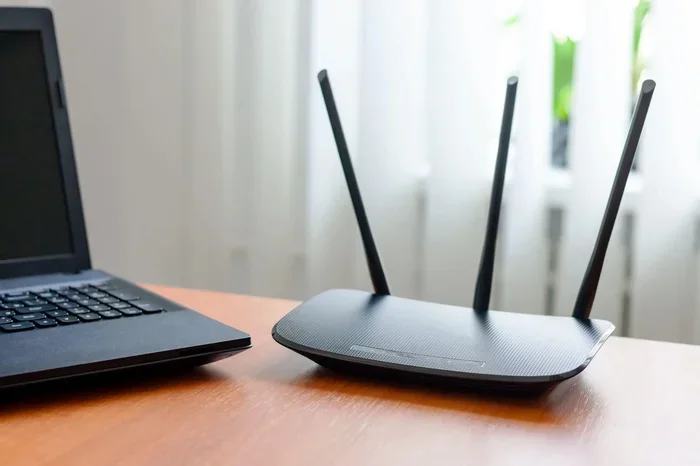
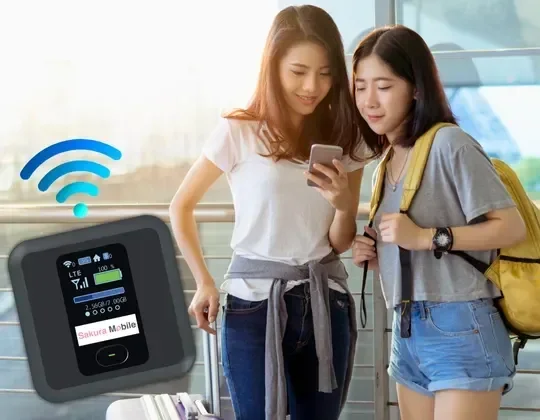
A portable WiFi device is one of the most popular ways to get online in Japan. Also called a travel router or pocket WiFi, this small gadget creates your own personal hotspot. You can connect your phone, tablet, and laptop all at once.
Here is how it works. You order a device online before your trip. It arrives at your hotel or an airport pickup location. You turn it on, and it connects to a local Japanese carrier network. Then you share that connection with your own devices.
Pros of Renting Portable WiFi
- Multiple device support — connect up to 10 devices at once
- No phone battery drain — your phone stays charged
- Consistent speeds — dedicated data without sharing
- Easy to use — no technical setup required
- Works everywhere — strong coverage across Japan
Cons to Consider
- Extra device to carry and charge daily
- Rental fees can add up for longer trips
- Pickup and return logistics require planning
- Limited to one trip — you do not keep the device
Popular rental services include Japan Wireless, Sakura Mobile, and Ninja WiFi. Prices typically range from about 500 to 900 yen per day. A week-long rental often costs around 5,000 to 7,000 yen total. This makes it a solid choice for families or groups who want to share mobile data easily.
Option 2: Buy a Japan SIM Card
A Japan SIM card is another excellent way to get internet while traveling in Japan. These prepaid SIMs are designed specifically for tourists. They give you a local Japanese phone number and a data plan that lasts for a set period.
You can buy a SIM card before you leave home or pick one up at the airport. Many convenience stores and electronics shops in Japan also sell tourist SIMs. Popular providers include Ubigi, Mobal, and IIJmio.
How to Choose the Right SIM
Look at your data needs first. A typical tourist SIM offers 1 to 10 GB of data. If you only use your phone for maps and messages, 1 to 3 GB should be enough. If you stream videos or post lots of photos, go for 5 GB or more.
Check the coverage too. Most tourist SIMs use the NTT Docomo or SoftBank network. These two carriers have the widest network coverage in Japan. Some cheaper options use KDDI, which is also reliable but may have gaps in very rural areas.
Quick Tip: Make sure your phone is unlocked before you travel. A locked phone will not accept a foreign SIM card. Contact your carrier ahead of time to request an unlock.
Cost Comparison
SIM cards usually cost between 2,000 and 5,000 yen for a 7 to 30-day plan. This is often cheaper than renting a portable WiFi device for the same period. A SIM card also means one less thing to carry and charge.
Option 3: Use an eSIM for Japan
An eSIM is a digital SIM that lives inside your phone. You do not need a physical card. You simply download a profile, and your phone connects to a local network. This is a game-changer for travelers who want instant connectivity from the moment they arrive.
eSIM support has grown rapidly. Many newer iPhones (iPhone XS and later) and Android phones now support eSIM technology. Providers like Airalo, Holafly, and Ubigi offer Japan-specific eSIM plans.
Why eSIMs Are Great for Japan Travel
- Set up before you fly — activate your plan while still at home
- No physical card — nothing to lose or swap
- Instant activation — get online in minutes
- Flexible plans — choose data amounts that match your trip
- Keep your home SIM — use both your regular line and the eSIM at the same time
The main limitation is that your phone must support eSIM. If you have an older device, this option may not work. Also, make sure to download the eSIM profile while still on Wi-Fi at home or at the airport. You do not want to be stuck without a way to get online.
Option 4: Rely on Free Wi-Fi in Japan
Free Wi-Fi in Japan is more available than many travelers expect. Major cities like Tokyo, Osaka, and Kyoto have thousands of free hotspots. Train stations, airports, cafes, and convenience stores often offer free wireless internet access.
Apps like Japan Connected-Free Wi-Fi and Studio Wi-Fi help you find these hotspots. You can download them before your trip and search for available networks on the map.
Where to Find Free Wi-Fi
- Train stations — Shinkansen platforms and major stations often have free networks
- Airports — Narita, Haneda, Kansai, and other airports offer free access
- Convenience stores — 7-Eleven, Lawson, and FamilyMart often provide Wi-Fi
- Cafes and restaurants — many chains and local shops offer free internet
- Hotels and hostels — most accommodations provide free Wi-Fi for guests
- Parks and tourist areas — some city-sponsored spots offer free access
Limitations of Free Wi-Fi
Free Wi-Fi hotspots are convenient but not perfect. Speeds can be slow during peak hours. Some networks require you to register with an email address or phone number. And coverage is not uniform — you may find strong signals in one area and nothing just a block away.
For this reason, free Wi-Fi works best as a backup option. It is great for checking maps or sending a quick message. But for heavy use like streaming or video calls, you will want a more reliable option.
If you want to connect without a password at cafes or public spots, check out our guide on how to get Wi-Fi without a password for tips that apply in Japan too.
Option 5: Use Your Phone as a Hotspot
If your home carrier offers international data plans, you might be able to use your phone as a hotspot while traveling in Japan. This lets you share your mobile data with other devices like a laptop or tablet. You essentially turn your phone into a hotspot instead of Wi-Fi router.
Before you rely on this option, check a few things first. Contact your carrier and ask about international data add-ons. Some plans charge a daily fee for data roaming. Others offer unlimited data at reduced speeds. Know the costs before you go.
When This Option Works Well
- You already have a roaming plan that covers Japan
- You only need to connect one or two devices
- You do not want to carry an extra device
- Your trip is short — just a few days
When to Avoid This Option
- Your home plan charges high roaming fees
- You need to connect many devices
- You use a lot of data daily
- Battery drain on your phone becomes a problem
Tethering your phone drains the battery fast. You will want a portable charger if you plan to use this method all day. Also, sharing mobile data with another phone can be done through Bluetooth or Wi-Fi direct, though it is slower than a dedicated hotspot.
If you are interested in using your phone to get Wi-Fi in different ways, our article on getting Wi-Fi from your phone has helpful tips that apply while traveling.
Comparing Your Options
Choosing the right connectivity solution depends on your needs. Here is a quick comparison of the main options available for internet access in Japan.
| Option | Best For | Cost Range | Ease of Use |
|---|---|---|---|
| Pocket WiFi Rental | Groups and families | 500-900 yen/day | Very Easy |
| Japan SIM Card | Solo travelers | 2,000-5,000 yen/trip | Easy |
| eSIM | Tech-savvy travelers | 5-15 USD/day | Very Easy |
| Free Wi-Fi | Light users and backups | Free | Moderate |
| Phone Hotspot | Short trips with roaming plans | Varies by carrier | Easy |
Each option has strengths. For most travelers, renting a pocket WiFi or buying a SIM card offers the best balance of cost and convenience. If you want to avoid any extra hardware, an eSIM is the cleanest solution.
Practical Tips for Staying Connected in Japan
Beyond choosing a plan, a few smart habits help you stay online throughout your trip.
- Download offline maps before you leave. Google Maps lets you save areas for offline use. This saves data and keeps you navigating even without a signal.
- Carry a portable charger. Your phone works harder when it serves as a hotspot or translation tool. A small power bank keeps you going all day.
- Turn off auto-updates. Apps updating in the background eat through data fast. Switch to Wi-Fi only mode for downloads and updates.
- Use data-saving mode on your phone. This reduces background data and helps your plan last longer.
- Keep a backup plan. If your main option fails, knowing where the nearest free Wi-Fi is can save the day.
Common Mistakes to Avoid
Many travelers make avoidable mistakes when planning their internet access abroad. Here are the ones to skip.
- Assuming your home plan works — most US and European plans do not include Japan roaming by default
- Not checking phone compatibility — confirm your phone supports the right bands for Japanese networks
- Waiting until arrival — set up your solution before you land so you are connected from the airport
- Ignoring data limits — track your usage daily to avoid running out mid-trip
- Relying only on free Wi-Fi — it is a backup, not a primary solution
Final Thoughts
Getting internet while traveling in Japan does not have to be stressful. You have plenty of options to choose from. Rent a portable WiFi device for the whole family. Buy a Japan SIM card for affordable data. Set up an eSIM for instant connectivity. Or lean on free Wi-Fi for light use.
The best choice depends on your trip length, group size, and data needs. Plan ahead, compare costs, and you will stay connected from Tokyo to rural Kyoto. Japan rewards the prepared traveler. And with the right connectivity solution, you will enjoy every moment of your journey.
Start planning your internet setup for Japan today. A little preparation goes a long way toward a smooth and stress-free trip.
Frequently Asked Questions
Can I get Wi-Fi without a password at airports in Japan?
Yes, most major airports in Japan offer free Wi-Fi that does not require a password. You simply select the network and accept the terms. Narita, Haneda, Kansai, and other airports all provide this service for travelers.
Will my US phone work in Japan?
Most modern unlocked phones work in Japan. Check that your phone supports the right frequency bands. GSM and LTE bands 1, 3, and 19 are the most widely used. If your phone is locked to a carrier, it will not work with a Japanese SIM card.
How much data do I need for a week in Japan?
For most travelers, 3 to 5 GB per week is enough. This covers maps, messaging, social media, and some browsing. If you stream video or use translation apps heavily, consider 7 to 10 GB. You can always buy a data-only SIM with a larger allowance.
Can I use my phone hotspot in Japan with my current plan?
It depends on your carrier and plan. Many US carriers now offer international data passes. Check with your provider before you travel. Some plans include Japan roaming at no extra cost, while others charge daily fees. Tethering may also be limited on certain plans.
Is free Wi-Fi reliable enough for navigation in Japan?
Free Wi-Fi works well for light tasks like checking maps or sending messages. However, it is not always reliable for continuous use. Speeds can vary, and coverage gaps exist between hotspots. Use it as a backup, not your primary connection.
What is the fastest way to get online in Japan?
A portable WiFi device or a Japan SIM card on the NTT Docomo network typically offers the fastest and most reliable speeds. These options give you dedicated data without the congestion of shared public networks. For most travelers, either choice provides excellent performance.
=== CONCLUSION ===
Staying connected in Japan is within reach for every traveler. Whether you choose a portable WiFi rental, a local SIM card, an eSIM, or free Wi-Fi networks, the key is to plan ahead. Each option has its strengths, and the right choice depends on your travel style. Internet while traveling in Japan is no longer a challenge. It is a simple step that enhances your entire trip. Pick your solution, set it up before you go, and enjoy a seamless journey through one of the world’s most connected countries.