Do We Really Need a 4k Projector for Your Home Setup
A 4K projector delivers stunning image quality, but you may not need one if you watch mostly HD content or have a small room. The real answer depends on your viewing habits, budget, and space. This guide covers every factor so you can make a confident decision without wasting money.
So you have been scrolling through projector deals and keep seeing the term 4K projector everywhere. Maybe your current setup feels a little dated, or maybe you are building a home theater from scratch. Either way, the big question is the same: do you really need a 4K projector?
The short answer is: it depends. A 4K projector can transform your movie nights and gaming sessions, but it is not always a must-have. In this guide, we will walk through everything you need to know. We will cover the real benefits, the hidden costs, and the situations where a 4K upgrade simply does not make sense.
By the end of this article, you will have a clear picture of whether a 4K projector belongs in your home entertainment setup. No fluff, no sales pitches, just honest advice you can use.
Key Takeaways
- 4K resolution matters most for large screens: If your projection is over 100 inches, the extra detail becomes very noticeable.
- Content availability is a key factor: You need access to 4K streaming or 4K source material to justify the upgrade.
- Price has dropped significantly: Budget 4K projectors now start around $500, making them more accessible than ever.
- Room size and lighting affect the experience: A dark room with proper placement makes a 4K image pop.
- Other specs matter too: Brightness, contrast ratio, and projector lens quality all impact the final picture.
- Consider alternatives first: A high-quality 1080p projector may be enough for many home setups.
📑 Table of Contents
- What Is a 4K Projector and Why Does It Matter?
- Benefits of Having a 4K Projector at Home
- When a 4K Projector Is Worth the Investment
- When a 4K Projector Might Be Overkill
- Key Factors to Consider Before Buying a 4K Projector
- 4K Projector vs 1080p Projector: Quick Comparison
- Final Verdict: Do You Really Need a 4K Projector?
What Is a 4K Projector and Why Does It Matter?
A 4K projector displays images with roughly 8.3 million pixels. That is four times the detail of a standard 1080p projector. The result is a sharper, more lifelike picture with finer textures, smoother gradients, and more realistic colors.
4K resolution means each frame contains significantly more visual information. When you sit close to a large screen, your eyes can actually see the difference. This is especially true for movie projector setups where the screen size exceeds 100 inches. At that size, a 1080p image can start to look soft or pixelated.
But resolution is not the only thing that matters. A good projector lens and high projector color accuracy play a huge role in how the image looks on your wall. A 4K chip paired with a poor lens will still deliver a mediocre picture. So when shopping, look at the whole package, not just the pixel count.
How 4K Resolution Works in Practice
Think of it this way. A 1080p image is like a detailed painting. A 4K ultra HD image is like that same painting with twice the fine brushstrokes. You may not notice the difference from the couch every single time. But when you are watching a nature documentary with lush forest detail or a sports game with fast-moving action, the extra clarity stands out.
Most 4K content streaming services like Netflix, Disney+, and Amazon Prime now offer a growing library of 4K titles. If you already subscribe to one or more of these platforms, you are sitting on a goldmine of content that can take full advantage of a 4K projector.
Benefits of Having a 4K Projector at Home
There are several real advantages to adding a 4K projector to your home theater projector setup. Let us break them down.
1. Incredible Image Sharpness
This is the most obvious benefit. With 4K resolution, every frame looks crisp and detailed. Text on screen is razor-sharp. Fine details like hair, fabric textures, and foliage look incredibly realistic. If you are a movie lover, this alone can justify the investment.
2. Future-Proofing Your Setup
Content creators are shifting toward 4K ultra HD as the new standard. By choosing a 4K projector now, you ensure your setup stays relevant for years to come. You will not need to upgrade again when 4K becomes even more dominant.
3. Better Gaming Performance
If you are into gaming, a gaming projector with 4K support is a game-changer. Modern consoles like the PlayStation 5 and Xbox Series X output native 4K. A compatible projector lets you enjoy those games on a massive screen with stunning detail. Look for models with HDMI 2.1 support to get the full experience with low input lag.
4. Larger Screen Without Losing Quality
One of the biggest advantages of a 4K projector is the ability to go big without sacrificing image quality. A 1080p projector on a 120-inch screen can look soft. A 4K projector on the same screen still looks sharp and detailed. This makes it ideal for basement theaters and large living rooms.
When a 4K Projector Is Worth the Investment
Not everyone needs a 4K projector, but certain situations make it a smart choice. Here are the scenarios where the upgrade truly pays off.
You Have a Large Projection Screen
If your projector screen size is 100 inches or larger, a 4K projector will deliver a noticeably better image. On smaller screens, the extra pixels are harder to appreciate. But on a big screen, the difference is night and day.
You Watch a Lot of 4K Content
If your streaming 4K content habits include movies, series, and sports in 4K resolution, then a 4K projector lets you enjoy that content as the creators intended. Watching a 4K HDR movie on a large projection screen is one of the best experiences in home entertainment.
You Want a True Home Theater Feel
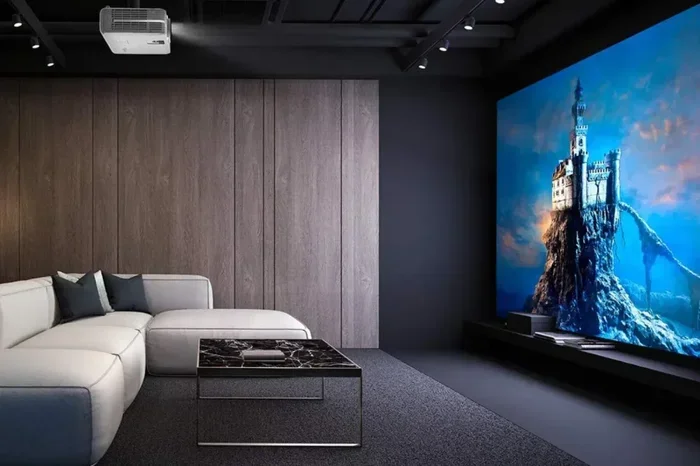
A 4K projector paired with a quality screen and proper projector placement can rival a commercial cinema. If you want your basement or living room to feel like a private movie theater, 4K is a big part of that equation.
You Are Connecting Multiple Devices
Modern setups often involve a TV, a soundbar, a gaming console, and a streaming stick. If you want to connect your phone to a projector with HDMI and enjoy 4K content from your device, a compatible projector makes that possible. Just make sure your cables and source devices support 4K output.
When a 4K Projector Might Be Overkill
Now let us look at the other side. There are plenty of situations where a 4K projector is simply not necessary.
You Watch Mostly HD Content
If most of your viewing is in 1080p or even 720p, a 4K projector will not magically improve the source material. The projector can only display what you give it. A high-quality 1080p projector may deliver a better experience than a budget 4K model playing HD content.
You Have a Small Room or Short Throw Distance
In a small room, the screen size is limited. On a screen under 80 inches, the difference between 4K and 1080p is hard to spot from a normal seating position. If you are thinking about putting a projector on a shelf in a compact space, a 1080p model might be the smarter buy.
You Have Bright Lighting in Your Room
4K projectors often have lower peak brightness compared to their 1080p counterparts in the same price range. If your room has a lot of ambient light, the image quality can suffer regardless of resolution. In bright rooms, brightness and contrast matter more than pixel count.
Your Budget Is Tight
4K projectors cost more than 1080p models. The projector price range for a decent 4K unit starts around $500 and can go well above $2,000. If you are on a strict budget, a solid 1080p projector with good brightness and contrast will serve you well for years.
Key Factors to Consider Before Buying a 4K Projector
If you have decided a 4K projector is right for you, here are the key factors to keep in mind during your search.
Brightness (Measured in Lumens)
Projector brightness is measured in lumens. For a dark room, 1,500 to 2,000 lumens is usually enough. For a room with some light, look for 2,500 lumens or more. A bright 4K projector will maintain image quality even when some light leaks into the room.
Contrast Ratio
A high projector contrast ratio means deeper blacks and brighter whites. This is critical for movie watching and gaming. Look for models with a contrast ratio of at least 100,000:1 for the best results.
Lamp Life and Replacement Costs
Projector lamp life varies widely. Traditional lamp-based projectors typically last 3,000 to 5,000 hours. Laser projectors can last 20,000 hours or more. Consider the long-term cost of replacement bulbs or lasers when evaluating the projector warranty and overall value.
Connectivity Options
Make sure the projector has the right ports for your devices. HDMI 2.1 is ideal for 4K gaming and high-frame-rate content. If you want flexibility, look for models that let you make your projector wireless with built-in Wi-Fi or compatible adapters.
Throw Distance and Lens Type
Your projector placement matters a lot. A short throw projector can produce a large image from a short distance, making it great for smaller rooms. A standard throw projector needs more space between the device and the screen. Check the throw ratio before you buy.
Built-In Smart Features
Many modern 4K projectors come with built-in smart operating systems. This means you can stream 4K content directly without needing an external device. Some models also support voice control and app stores, which adds a lot of convenience to your home entertainment setup.
4K Projector vs 1080p Projector: Quick Comparison
Still not sure which resolution is right for you? Here is a quick side-by-side look.
- Resolution: 4K has four times the pixels of 1080p. On large screens, the difference is clear and dramatic.
- Price: 4K projectors cost more upfront. However, prices have dropped fast, and budget options now exist.
- Content Availability: 4K content is widely available on major streaming platforms. 1080p content is still abundant but declining.
- Future Proofing: A 4K projector will stay relevant longer as content creators continue adopting higher resolutions.
- Room Requirements: 4K shines on large screens in dark rooms. 1080p works well in smaller spaces or brighter environments.
- Gaming: 4K projectors with HDMI 2.1 deliver the best console gaming experience on a big screen.
If you are trying to decide between the two, ask yourself what you watch most and how large your screen is. For many people, a great 1080p projector still delivers an excellent experience. But if you want the best of the best, a 4K projector is the way to go.
Final Verdict: Do You Really Need a 4K Projector?
The honest answer is that most people do not need a 4K projector, but many people want one, and that is perfectly fine. If you have the budget, a dark viewing room, and a large screen, a 4K projector will elevate your home entertainment to a whole new level.
On the other hand, if you watch mostly HD content, have a small room, or are on a tight budget, a quality 1080p projector will serve you just fine. Do not let marketing pressure push you into a purchase you do not need.
Before you buy, take a moment to assess your setup. Consider your screen size, room lighting, content sources, and budget. If a 4K projector fits your situation, go for it. You will not regret it. If it does not, there is no shame in sticking with a great 1080p model and saving your money for other upgrades.
The bottom line is this: a 4K projector is a fantastic tool for the right situation. Make sure your situation is the right one before you pull the trigger.
Frequently Asked Questions
Is a 4K projector worth it for a small room?
In a small room with a screen under 80 inches, the extra detail of 4K is hard to notice. A high-quality 1080p projector will likely give you a better experience in a compact space because it often comes with higher brightness and better contrast at a lower price point.
Can I watch 4K content on a 1080p projector?
Yes, but the projector will downscale the 4K signal to 1080p. You will not see the full detail that a 4K projector can display. The content will still look good, but you are missing out on the extra sharpness and clarity that 4K resolution provides.
How much does a good 4K projector cost?
Budget 4K projectors start around $500 and offer decent quality for casual viewing. Mid-range models between $800 and $1,500 deliver excellent picture quality for most home theaters. Premium models above $2,000 offer the best brightness, color accuracy, and advanced features like HDR support.
Do I need a special screen for a 4K projector?
You do not need a special screen, but a high-quality screen enhances the experience. A screen with good gain and color accuracy helps bring out the full potential of 4K resolution. Any clean, flat white surface will work, but a dedicated projection screen gives you the best results.
Can I use a 4K projector for everyday TV watching?
Absolutely. A 4K projector works great for everyday TV watching, especially if you stream content from services like Netflix or Disney+. Just keep in mind that the experience is best in a dimly lit room. Bright daytime TV watching may look washed out on a projector compared to a traditional TV.
What is the lifespan of a 4K projector?
Most 4K projectors last between 3,000 and 15,000 hours depending on the light source. Lamp-based models typically last around 3,000 to 5,000 hours, while laser projectors can go 15,000 to 20,000 hours or more. Regular maintenance like cleaning filters can help extend the life of your device.
=== CONCLUSION ===
So, do you really need a 4K projector? The answer comes down to your personal situation. If you have a large screen, a dark room, and access to 4K content streaming, the upgrade is absolutely worth it. The image quality is breathtaking, and it brings your home entertainment to life in a way that 1080p simply cannot match.
But if your setup is modest, your content is mostly HD, or your budget is limited, a solid 1080p projector will still give you years of enjoyment. The key is to match your purchase to your actual needs, not to what the latest marketing tells you to want.
Take your time, do your research, and choose the setup that fits your life best. Whether you go with a 4K projector or stick with 1080p, the goal is the same: to enjoy great content in a space that feels like your own personal theater.