Can I Replace Projector Headlight With Led Upgrade
Yes, you can replace projector headlight with LED — it’s one of the most popular car headlight upgrades today. This guide covers compatibility, installation steps, pros and cons, and everything you need to know about making the switch to LED projector headlights safely.
Key Takeaways
- LED upgrades fit projector housings: Most projector headlight assemblies can accept LED bulbs with the right retrofit kit and proper alignment.
- Brightness improves dramatically: LED headlights produce up to 3x more light than halogen bulbs, improving nighttime visibility significantly.
- Compatibility matters most: Not every LED bulb fits every projector housing, so checking your bulb type (D1S, D2S, H11, etc.) is essential before buying.
- Installation is DIY-friendly: Most LED headlight upgrades take under 30 minutes per side and require basic tools.
- Beam pattern can be affected: Poorly designed LED bulbs may scatter light incorrectly, so choosing a quality bulb with a proper focal point is critical.
- Legal considerations exist: Some regions have strict regulations on aftermarket headlights, so always verify local laws before upgrading.
- Long-term savings add up: LED bulbs last 30,000-50,000 hours compared to 500-1,000 hours for halogen, reducing replacement costs over time.
📑 Table of Contents
- Can I Replace Projector Headlight With LED? Everything You Need to Know
- How Projector Headlights Work
- Is Your Projector Headlight Compatible with LED?
- Step-by-Step: How to Replace Projector Headlight with LED
- Pros and Cons of LED Projector Headlight Upgrades
- LED vs. Other Headlight Technologies
- Common Mistakes to Avoid When Upgrading
- Expert Insights and Pro Tips
- Conclusion: Is the LED Upgrade Worth It?
Can I Replace Projector Headlight With LED? Everything You Need to Know
Driving at night with dim, weak headlights is frustrating. It’s also dangerous. That’s why so many drivers ask: can I replace projector headlight with LED and get a brighter, more modern look? The short answer is yes — but there’s a lot to consider before you grab a bulb and start swapping.
Upgrading your projector headlights to LED is one of the most popular car headlight upgrades on the market today. LED technology has come a long way. Today’s LED headlight bulbs are brighter, cooler-running, and longer-lasting than ever before. But fitting them into a projector housing isn’t always a simple plug-and-play situation.
In this guide, we’ll walk you through everything. You’ll learn how projector headlights work, what makes LED bulbs different, whether your specific setup is compatible, and how to install an LED headlight upgrade the right way. Let’s dive in.
How Projector Headlights Work
Before you upgrade, it helps to understand what you’re working with. Projector headlights use a special lens and reflector bowl to focus light into a clean beam pattern. This design prevents glare for oncoming drivers while still lighting up the road ahead.
The Projector Lens System
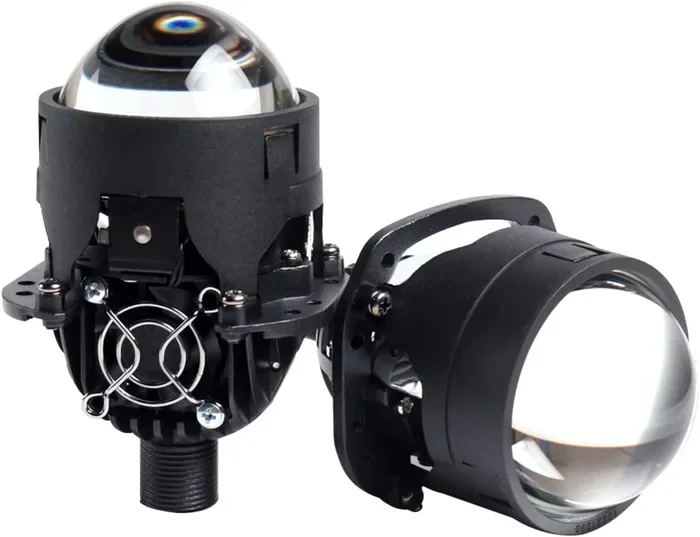
A projector headlight uses a curved lens at the front. Inside the housing, a bulb sits at a precise focal point. The light bounces off a reflective bowl and passes through the lens, creating a sharp cutoff beam. This is why projector headlights look so much more refined than standard reflector headlights.
The bulb type matters a lot here. Most projector housings were designed for specific bulbs like D1S, D2S, or D4S — these are typically HID (High-Intensity Discharge) bulbs. Some newer vehicles use H11 or H9 halogen bulbs in projector housings.
Why Drivers Want to Upgrade
So why do people want to swap to LED? The reasons are clear:
- Brighter light output — LED bulbs can produce 3,000 to 6,000 lumens or more per bulb.
- Faster illumination — LEDs reach full brightness instantly, unlike HIDs which need warm-up time.
- Lower energy draw — LEDs use less power from your car’s electrical system.
- Longer lifespan — quality LED bulbs last 30,000 to 50,000 hours.
- Modern appearance — LED light has a clean, white look that many find appealing.
Is Your Projector Headlight Compatible with LED?
This is the most important question. Not every projector housing accepts LED bulbs easily. Compatibility depends on several factors, and skipping this step can lead to poor beam patterns, moisture buildup, or even damage to the housing.
Check Your Bulb Socket Type
First, find out what bulb your projector headlight currently uses. Look at the base of your existing bulb or check your vehicle’s manual. Common types include:
- D1S / D2S / D4S — These are HID-specific bulbs used in many OEM projector headlights. LED retrofits for these sockets exist but require careful selection.
- H11 / H9 / H1 — These are halogen bulbs. Swapping to LED in an H11 projector is usually straightforward and very popular.
- 9005 (HB3) / 9006 (HB4) — These are common halogen bulbs in truck and SUV projector housings. LED replacements are widely available.
Focal Point and Beam Pattern
Here’s where things get technical. A projector lens focuses light at a specific focal point. The original bulb was designed to sit at that exact spot. If your LED bulb has a different size or emits light from a different position, the beam pattern will scatter.
A scattered beam means less road coverage and more glare for other drivers. That’s why choosing an LED bulb with a proper LED chip position is critical. Look for bulbs specifically designed for projector use. Premium brands place their LED chips to match the original bulb’s filament or arc position as closely as possible.
Housing Size and Clearance
Some LED bulbs have large heatsinks on the back. If your projector housing is compact, the heatsink might not fit. This can cause overheating and shorten the bulb’s lifespan. Always check the bulb dimensions against your housing before purchasing.
Step-by-Step: How to Replace Projector Headlight with LED
Once you’ve confirmed compatibility, the actual installation is usually straightforward. Here’s how to do it safely and correctly.
What You’ll Need
- Replacement LED headlight bulbs (pair for both sides)
- Protective gloves (LED bulbs are sensitive to skin oils)
- Screwdriver set (Phillips and flathead)
- Wire connectors (if not included with the LED bulb)
- Headlight alignment tool or tape (for adjusting beam after install)
Installation Steps
- Disconnect the battery. Remove the negative terminal to prevent electrical shorts. This is a safety-first step you should never skip.
- Access the headlight housing. Open the hood and locate the rear of the headlight assembly. Remove the rubber dust cover or protective cap.
- Disconnect the old bulb. Press the locking tab and pull the connector out. Then remove the bulb from the socket by twisting or releasing the spring clip.
- Install the LED bulb. Hold the bulb by the base only — never touch the LED chips or lens with bare fingers. Oils from your skin can create hot spots and reduce bulb life. Insert the LED bulb into the socket and lock it in place.
- Reconnect the wiring. Attach the LED driver or connector. Make sure it’s snug and secure. Some LED bulbs come with external drivers that need to be mounted nearby.
- Replace the dust cover. Seal the back of the housing to keep moisture out.
- Reconnect the battery. Turn on the headlights and check that both sides work evenly.
- Align the beam. This step is crucial. Park your car near a wall and adjust the headlight aim so the beam pattern is level and properly positioned. Most regions require the low beam cutoff to point slightly downward and to the right (in right-hand-drive countries).
The entire process usually takes 15 to 30 minutes per headlight. No special tools or mechanic skills are needed for most vehicles.
Quick Tips for Installation
- Always wear gloves when handling LED bulbs.
- Test the new bulb before fully reassembling the housing.
- If your LED bulb has a fan for cooling, make sure the fan has room to spin freely inside the housing.
- Consider installing a headlight wiring harness to handle the power draw and prevent flickering on older vehicles.
Pros and Cons of LED Projector Headlight Upgrades
Like any modification, LED upgrades come with trade-offs. Let’s break it down honestly so you can make the best decision for your vehicle.
The Advantages
- Massive brightness improvement. LED bulbs produce significantly more lumens than halogen. Your nighttime visibility will improve dramatically.
- Instant on. Unlike HIDs that take seconds to reach full brightness, LEDs light up the moment you switch them on.
- Energy efficient. LED bulbs draw less current, which reduces strain on your vehicle’s alternator and battery.
- Long lifespan. You won’t be replacing these bulbs often. Quality LEDs last years of daily driving.
- Clean, modern look. LED light has a crisp white tone that many drivers prefer over the yellowish glow of halogen.
The Disadvantages
- Compatibility issues. Not every LED bulb fits every projector housing. Poorly matched bulbs create bad beam patterns.
- Heat management. While LEDs run cooler than HIDs, the driver and heatsink still generate heat inside the housing. Over time, this can affect housing integrity if ventilation is poor.
- Legal concerns. Some aftermarket LED bulbs may not meet DOT or ECE certification standards. This could cause issues during vehicle inspections.
- Cost. Quality LED projector headlight bulbs aren’t cheap. Expect to pay $40 to $150 per bulb for reliable options.
LED vs. Other Headlight Technologies
To understand why LED is a great choice, let’s compare it with the other common headlight technologies. This comparison table shows the key differences at a glance.
| Feature | Halogen | HID (Xenon) | LED |
|---|---|---|---|
| Brightness (Lumens) | 700-1,200 | 3,000-4,500 | 3,000-6,000+ |
| Warm-Up Time | Instant | 5-15 seconds | Instant |
| Lifespan (Hours) | 500-1,000 | 2,000-5,000 | 30,000-50,000 |
| Power Draw | 55-65W | 35-45W | 15-30W |
| Color Temperature | 3,000-3,500K | 4,300-6,000K | 5,000-6,500K |
| Cost per Bulb | $5-$15 | $20-$60 | $40-$150 |
As you can see, LED hits a sweet spot between brightness, efficiency, and longevity. HID headlights are also excellent, but they require a ballast and have a warm-up period. Halogen is affordable but falls behind in every performance category.
Common Mistakes to Avoid When Upgrading
Many people rush through their LED headlight upgrade and run into problems. Here are the most common mistakes — and how to avoid them.
Buying Cheap, Unbranded Bulbs
It’s tempting to grab the cheapest LED bulb you find online. But low-quality LEDs often have poor color consistency, low actual brightness (many overstate their lumens), and unreliable drivers. Stick with reputable brands that offer OEM LED headlight quality or well-reviewed aftermarket options.
Ignoring the Beam Pattern
A bright bulb doesn’t help if the light scatters everywhere. Always test your headlights on a wall after installation. The beam should have a clear horizontal cutoff line and spread evenly on both sides. If one side looks scattered, the bulb may not be seated correctly or may be the wrong type for your projector housing.
Skipping the Alignment Step
Even the best LED projector headlight setup needs proper aiming. A misaligned headlight blinds oncoming traffic and reduces your own visibility. Use a headlight alignment tool or visit a shop that offers this service. It’s a small cost that makes a huge difference.
Touching the Bulb Without Gloves
This sounds basic, but it happens constantly. Finger oils create uneven hot spots on the LED surface and can drastically reduce bulb life. Always handle LED bulbs with gloves or a clean cloth.
Forgetting to Check Local Laws
Headlight regulations vary by state and country. Some areas only allow specific color temperatures (usually between 3,000K and 6,000K). Others require DOT or SAE certification on all bulbs. Check your local laws before installing aftermarket LED headlights to avoid fines or inspection failures.
Expert Insights and Pro Tips
We spoke with automotive lighting specialists to gather their best advice for drivers considering an LED projector headlight swap. Here’s what they want you to know.
Choose Bulbs Designed for Projector housings
Not all LED bulbs are created equal. Specialists recommend choosing bulbs specifically marketed for projector use. These bulbs have their LED chips positioned to match the original bulb’s light source point. This ensures the projector lens can focus the light correctly and maintain a proper headlight beam pattern.
Consider a Full Retrofit Kit for HID-to-LED Conversions
If your projector headlights currently run HID bulbs, a simple LED drop-in bulb might not give you the best results. A full retrofit kit includes a properly designed LED module that replaces the entire HID burner and ballast setup. These kits are more expensive but deliver superior beam quality.
Watch for Flickering Issues
Some vehicles, especially older models, may experience headlight flickering with LED bulbs. This happens because LED bulbs draw less current, and the vehicle’s computer may interpret this as a bulb failure. A headlight wiring harness or anti-flicker resistor can solve this problem easily.
Pair Upgrades with a Full Cleaning
Before installing new LED bulbs, clean your projector housings thoroughly. Over time, headlights become foggy and yellowed from UV exposure. A restoration kit or headlight polish can restore clarity and boost your effective brightness by up to 40%. It’s a perfect complement to an LED upgrade.
Conclusion: Is the LED Upgrade Worth It?
So, can I replace projector headlight with LED? Absolutely. And for most drivers, it’s one of the best car headlight upgrades you can make. The improvement in visibility, the modern look, and the long-term reliability make it well worth the investment.
Just remember to choose compatible bulbs, install them correctly, and aim your headlights after the swap. Avoid cheap no-name products, and always check your local regulations. Do these things right, and you’ll enjoy brighter, safer nighttime driving for years to come.
Take your time, follow the steps in this guide, and you’ll have professional-quality LED projector headlights without spending a fortune on a shop visit. Your future self — and everyone on the road — will thank you.
Frequently Asked Questions
Can I put any LED bulb in my projector headlight?
No, not every LED bulb fits every projector headlight. You need to match the bulb base type (D1S, H11, 9005, etc.) and ensure the LED chip position aligns with the projector lens focal point. Using the wrong bulb can create a scattered beam pattern and fail inspection.
Will LED headlights drain my car battery faster?
No, LED headlights actually draw less power than halogen or HID bulbs. A typical LED bulb uses 15-30 watts compared to 55-65 watts for halogen. This means less strain on your battery and alternator over time.
Are LED projector headlights legal?
It depends on your location. Most regions allow aftermarket LED bulbs as long as they meet certain color temperature and brightness standards. Look for bulbs with DOT, SAE, or ECE certification. Always check your local headlight laws before installing aftermarket lighting.
How long do LED headlight bulbs last?
Quality LED headlight bulbs typically last between 30,000 and 50,000 hours. That translates to roughly 10-15 years of normal driving. This is far longer than halogen bulbs (500-1,000 hours) and even HID bulbs (2,000-5,000 hours).
Do I need a special driver or ballast for LED bulbs?
Most LED headlight bulbs come with a built-in driver that converts your vehicle’s standard 12V power to what the LED chips need. If your car has a CAN-bus system, some bulbs include anti-flicker resistors. Otherwise, you may need a separate wiring harness adapter.
Can I convert my HID projector headlights to LED?
Yes, but it requires careful bulb selection. HIDs use D1S or D2S bulbs, and LED retrofits for these sockets exist. For the best results, consider a dedicated LED retrofit module designed for projector housings. This ensures the beam pattern stays sharp and properly focused.