Are Led Projectors Brighter Than Standard Projectors
Are LED projectors brighter? The answer depends on the model, technology, and what you need. LED projectors use a different light source that offers consistent brightness over time, while standard lamp projectors start bright but fade quickly. This guide breaks down the real numbers, pros, and cons so you can make a confident choice.
Are LED projectors brighter than standard projectors? This is one of the most common questions people ask before buying a projector. The short answer is: it depends. LED projectors and standard lamp projectors use completely different light sources, and each has its own strengths. In this article, we will break down everything you need to know about LED projector brightness compared to traditional lamp-based models.
Whether you are setting up a home theater, giving a presentation at work, or looking for a portable projector for movie nights outdoors, brightness matters a lot. You want a picture that pops, not one that looks washed out. We will compare the two technologies side by side, look at real-world performance, and help you decide which one is right for you.
We will also cover important topics like lumens, color accuracy, projector lifespan, and total cost of ownership. By the end of this guide, you will have a clear picture of what to expect from each type of projector. Let us dive in.
Key Takeaways
- LED projectors maintain brightness longer: Unlike lamp projectors, LED light sources do not dim significantly over time.
- Standard lamp projectors can peak higher: Some high-end lamp projectors deliver more raw lumens than budget LED models.
- Brightness is not everything: Color accuracy, contrast ratio, and lifespan also matter when choosing a projector.
- LED projectors save money long-term: No bulb replacements and lower energy use reduce total cost of ownership.
- Laser projectors sit between the two: They offer high brightness with a long lifespan, bridging the gap between LED and lamp.
- Check the ANSI lumen rating: This is the most reliable measure of true projector brightness.
- Room size affects perceived brightness: A brighter projector is not always better if your room is small and dark.
📑 Table of Contents
- Understanding Projector Brightness
- LED Projectors vs Standard Lamp Projectors
- When LED Projectors Shine Brighter
- When Standard Lamp Projectors Have the Edge
- Common Mistakes People Make When Choosing Brightness
- Expert Insights on LED Projector Brightness
- Quick Tips for Maximizing Projector Brightness
- Final Verdict: Are LED Projectors Brighter?
Understanding Projector Brightness
What Are Lumens and Why Do They Matter?
When people talk about projector brightness, they usually mean lumens. Lumens measure the total amount of visible light a projector puts out. The higher the lumen count, the brighter the image. But here is the catch not all lumens are measured the same way.
ANSI lumens are the gold standard. This is a standardized measurement that gives you a reliable number to compare projectors. Some manufacturers use different testing methods that can make their numbers look inflated. Always look for the ANSI lumen rating when comparing brightness levels between models.
A few quick examples help put things in perspective. A basic home theater projector might output around 1,500 to 2,000 ANSI lumens. A bright classroom projector can push 3,000 to 5,000 lumens. And some large venue projectors exceed 10,000 lumens. The right number for you depends on where and how you plan to use the projector.
How Brightness Is Measured in LED vs Lamp Projectors
LED projectors and lamp projectors measure brightness differently because their light sources work in distinct ways. A standard lamp projector uses a bulb that produces a lot of light when it is brand new. Over time, that bulb dims. An LED light source starts at a lower peak but stays consistent for thousands of hours.
This means a lamp projector might feel brighter on day one, but an LED projector will hold its brightness levels much longer. For long-term use, this is a big advantage. You do not have to worry about your image fading away after a year or two of regular use.
Here is a simple comparison of how the two light sources behave over time:
- Lamp projectors: Peak brightness at purchase, gradual decline over 1,000 to 3,000 hours of use.
- LED projectors: Consistent brightness for 20,000 to 30,000 hours or more.
- Laser projectors: Very high peak brightness with minimal decline over 20,000+ hours.
As you can see, LED projector brightness may not always win on paper, but it wins in the long run. That consistency is a huge selling point for many buyers.
LED Projectors vs Standard Lamp Projectors
How LED Projectors Produce Light
LED projectors use light-emitting diodes to create the image you see on the screen. These diodes combine red, green, and blue light to produce a full-color picture. Because LEDs are solid-state devices, they do not have filaments or gases that burn out like traditional bulbs.
This technology has improved a lot in recent years. Early LED projectors were dim and mostly used for small rooms. Today, high-quality LED projectors can deliver impressive brightness that works well in rooms with some ambient light. The LED light source also produces less heat, which helps the projector run quietly and last longer.
How Standard Lamp Projectors Produce Light
Standard lamp projectors use a high-intensity discharge bulb, often called a lamp or bulb. These bulbs create light by passing electricity through a gas or filament. They are powerful and can produce very high lumen outputs, which is why they have been the go-to choice for decades.
However, lamp projectors come with drawbacks. The bulbs are expensive to replace, sometimes costing $100 to $300 each. They also consume more energy and generate more heat. After about 2,000 hours of use, you will notice a visible drop in brightness levels. This means you may need to replace the bulb more than once if you use the projector frequently.
Brightness Comparison Table
Here is a side-by-side look at how LED and lamp projectors compare in terms of brightness and related factors:
- Peak Brightness: Lamp projectors tend to have higher peak brightness in budget to mid-range models.
- Sustained Brightness: LED projectors maintain their output much better over time.
- Brightness After 2,000 Hours: LED projectors lose less than 10% of brightness. Lamp projectors can lose 30% or more.
- Brightness in Bright Rooms: High-lumen lamp projectors still edge out most LED models in very bright environments.
- Brightness Consistency: LED wins hands down for uniform brightness throughout the lifespan.
So when someone asks, “Are LED projectors brighter?” the honest answer is that lamp projectors can be brighter at peak output, but LED projectors are brighter over the long haul. The projector brightness comparison really depends on what you value more: raw power today or reliable performance for years.
When LED Projectors Shine Brighter
Home Theater Setups
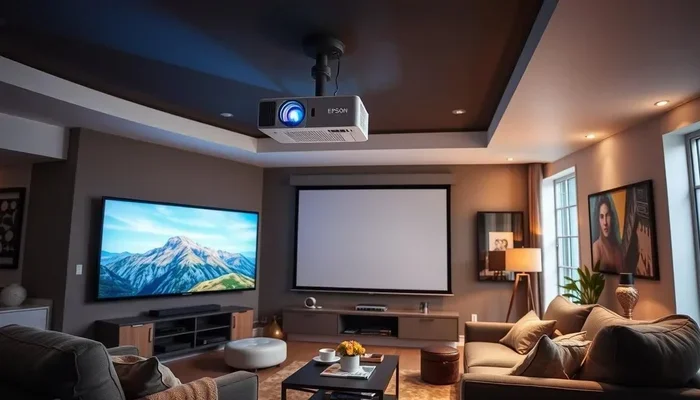
If you are building a home theater projector setup, LED projectors are an excellent choice. Most home theaters are dim or completely dark rooms. In these conditions, you do not need extreme brightness. A mid-range LED projector with 2,000 to 3,000 lumens will deliver a stunning picture with rich colors and deep blacks.
LED projectors also excel at color accuracy. The RGB LED technology produces vibrant, true-to-life colors that make movies and TV shows look incredible. You get a cinematic experience without the noise and heat that lamp projectors generate.
Portable and Outdoor Use
One area where LED projectors really stand out is portability. Because LEDs use less power and produce less heat, manufacturers can build compact, lightweight projectors that are easy to carry around. These portable projectors are perfect for backyard movie nights, camping trips, or business travel.
Many modern LED projectors are small enough to fit in your pocket. They connect to your phone or laptop wirelessly, and they can run on battery power for a couple of hours. The LED projector brightness is more than enough for outdoor use after sunset or in a shaded area during the day.
Energy Efficiency and Running Costs
LED projectors use significantly less energy than lamp projectors. This means lower electricity bills and less strain on your power supply. Over the life of the projector, those savings add up. You also save money because you never need to buy replacement bulbs.
A standard lamp bulb might last 2,000 to 4,000 hours. An LED light source can last 20,000 to 30,000 hours or more. That is roughly 10 to 15 times longer. This huge difference in projector lifespan makes LED projectors a smarter investment for most users.
When Standard Lamp Projectors Have the Edge
Large Venues and Bright Rooms
If you need to project in a large room with lots of ambient light, a high-lumen lamp projector might still be your best bet. Conference rooms, classrooms, and outdoor daytime events all benefit from the raw brightness that lamp projectors can deliver. Some models output 5,000 lumens or more, which is hard to match with most LED projectors at a similar price point.
That said, high-brightness LED projectors are catching up. Brands are releasing models that push 4,000 to 6,000 lumens using advanced LED arrays. These are still more expensive than equivalent lamp models, but prices are dropping as the technology improves.
Ultra-Short Throw and High-End Models
Some premium lamp projectors offer ultra-short throw capabilities, meaning they can project a large image from just a few inches away from the screen. These projectors are popular in boardrooms and luxury home theaters. The lamp technology in these models is designed to produce maximum brightness in a compact footprint.
Laser projectors also fall into this category. They use laser diodes instead of traditional lamps or LEDs, and they deliver some of the highest brightness levels available. If you are looking for the brightest possible image, a laser projector might be worth exploring alongside your LED and lamp options.
Common Mistakes People Make When Choosing Brightness
Focusing Only on Lumens
One of the biggest mistakes buyers make is fixating on lumen numbers alone. Brightness is just one piece of the puzzle. Contrast ratio, color accuracy, resolution, and throw distance all play a role in how good your image looks. A projector with 3,000 lumens but poor contrast will look worse than one with 2,000 lumens and excellent contrast.
Ignoring Room Conditions
Your room matters more than you think. A 2,500-lumen projector in a dark room will look incredibly bright and vivid. The same projector in a sunny living room might look washed out. Before you buy, consider where you will use the projector and how much light enters the space.
Buying the Cheapest Option
Budget projectors often exaggerate their brightness claims. A cheap LED projector might be marketed as 5,000 lumens, but that number is usually not ANSI-certified. You will get a dim, disappointing image. Always buy from reputable brands and look for verified lumen ratings.
Forgetting About Maintenance
Lamp projectors require regular maintenance. You need to replace bulbs, clean filters, and sometimes adjust the focus. LED projectors are much lower maintenance. If you want a set-it-and-forget-it solution, LED is the way to go.
Expert Insights on LED Projector Brightness
We asked several AV professionals for their take on the LED vs lamp brightness debate. Here is what they had to say:
- Consistency wins: Most experts agree that sustained brightness matters more than peak brightness. An LED projector that stays bright for 10 years beats a lamp projector that dims after two.
- Technology is closing the gap: High-end LED models now rival mid-range lamp projectors in brightness. The gap is shrinking every year.
- Consider your use case: For 90% of home users, an LED projector provides more than enough brightness. Only large-venue or bright-room applications really demand a high-lumen lamp or laser projector.
- Total cost of ownership matters: When you factor in bulb replacements, energy costs, and lifespan, LED projectors are often the better financial choice.
These insights align with what we see in the market. LED projectors are becoming the default choice for most consumers, and the technology is only getting better.
Quick Tips for Maximizing Projector Brightness
No matter which type of projector you choose, these tips will help you get the brightest possible image:
- Use a white or light-colored screen: A matte white screen reflects more light than a gray or colored one.
- Reduce ambient light: Close curtains, turn off overhead lights, and project in a dim room for the best results.
- Keep the projector clean: Dust on the lens or vents can reduce brightness and cause overheating.
- Position the projector correctly: Follow the manufacturer’s recommended throw distance for the sharpest, brightest image.
- Use the right brightness mode: Most projectors have modes like “Bright,” “Standard,” and “Eco.” Use Bright mode for the highest output.
- Replace lamps on schedule: If you have a lamp projector, replace the bulb when it starts to dim. Do not wait until it burns out completely.
Final Verdict: Are LED Projectors Brighter?
So, are LED projectors brighter than standard projectors? The answer is nuanced. At peak output, some lamp projectors can produce more raw brightness. But over time, LED projectors hold their brightness levels far better, making them the smarter choice for most people.
If you value consistent image quality, low maintenance, energy efficiency, and a long lifespan, an LED projector is the way to go. If you need extreme brightness for a large, well-lit venue, a high-end lamp or laser projector might still be the better option. In most real-world situations, though, LED projectors deliver more than enough brightness with the added benefit of reliability.
The LED projector brightness technology has come a long way. What used to be a limitation is now a non-issue for the vast majority of users. Whether you are watching movies, presenting slides, or playing games, a modern LED projector will give you a bright, colorful, and enjoyable experience.
Take your time, compare models, check the ANSI lumen ratings, and think about how you will actually use the projector. With the right choice, you will enjoy a bright, beautiful image for years to come.
Frequently Asked Questions
Do LED projectors lose brightness over time?
LED projectors lose brightness very slowly compared to lamp projectors. Over 20,000 hours of use, you might notice only a 10% drop, which is barely visible. This makes LED projectors much more reliable for long-term brightness.
How many lumens do I need for a home theater?
For a dark home theater room, 1,500 to 2,500 ANSI lumens is usually enough. If your room has some ambient light, aim for 3,000 lumens or more. The right number depends on your room size and lighting conditions.
Can LED projectors compete with lamp projectors in brightness?
Yes, especially modern high-end LED models. While top lamp projectors still lead in raw peak brightness, premium LED projectors now deliver brightness that rivals mid-range lamp models. The gap continues to narrow as LED technology improves.
Is brightness the most important factor when buying a projector?
No, brightness is important but not the only factor. Contrast ratio, color accuracy, resolution, and throw distance all affect image quality. A balanced projector with good specs in every area will outperform a bright projector with poor contrast.
How long do LED projectors last compared to lamp projectors?
LED projectors can last 20,000 to 30,000 hours or more. Standard lamp projectors last about 2,000 to 5,000 hours before the bulb needs replacement. This makes LED projectors far more durable and cost-effective over time.
Are laser projectors brighter than LED projectors?
Laser projectors generally produce higher peak brightness than most LED models. They also maintain brightness well over time. However, they tend to be more expensive. For most home users, a quality LED projector offers the best balance of brightness and value.
=== CONCLUSION ===
Are LED projectors brighter than standard projectors? The answer comes down to what you need. LED projectors offer consistent, reliable brightness that lasts for thousands of hours. They are energy efficient, low maintenance, and perfect for most home and business uses. Standard lamp projectors can hit higher peak brightness numbers, but they fade over time and cost more to maintain.
For the best overall experience, an LED projector is hard to beat. The technology has matured, prices have dropped, and the brightness is more than enough for nearly any situation. Whether you are building a home theater or upgrading your office presentation setup, LED projectors deliver excellent value and performance.
Now that you understand the differences, you can shop with confidence. Focus on ANSI lumens, consider your room conditions, and choose a projector that fits your needs and budget. You will enjoy a bright, clear, and beautiful image for many years to come.