Does Bluetooth Vinyl Defeat The Purpose Of Your Vinyl
Bluetooth vinyl setups offer wireless convenience but spark debate among music lovers. Many audiophiles argue that converting an analog signal to digital and streaming it wirelessly removes the warmth and authenticity that make vinyl special. However, modern Bluetooth codecs have improved significantly, and for casual listeners, the difference may be negligible.
This is a comprehensive guide about Does Bluetooth Vinyl Defeat The Purpose.
Key Takeaways
- Bluetooth adds convenience: You can stream to wireless speakers and headphones without extra cables.
- Analog purists say it defeats the purpose: The whole point of vinyl is the pure analog signal path.
- Modern Bluetooth codecs are better: aptX and LDAC reduce the quality loss compared to older versions.
- Sound quality depends on your setup: A good DAC and quality Bluetooth speaker make a big difference.
- It is a personal choice: Your listening habits should guide whether Bluetooth on a turntable makes sense.
- Hybrid setups work well: You can enjoy both wired and wireless options on the same turntable.
[FEATURED_IMAGE_PLACEHOLDER]
What Is Bluetooth Vinyl?
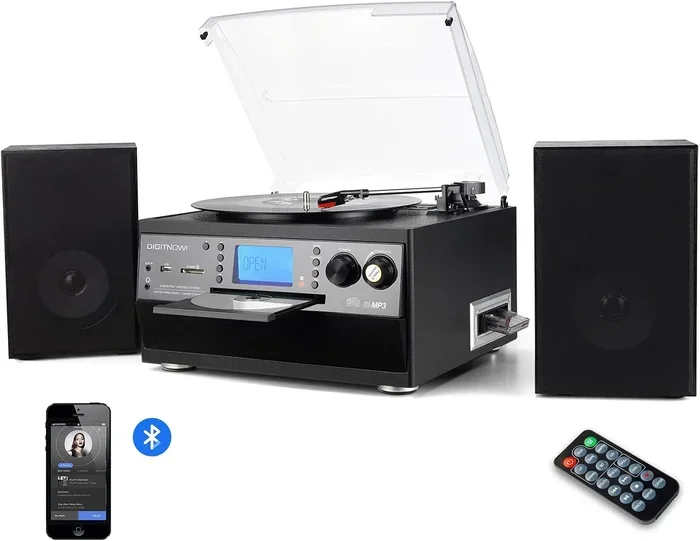
Bluetooth vinyl refers to a turntable or record player that includes built-in Bluetooth capability. Instead of connecting your turntable to speakers with a cable, you can stream the audio wirelessly to a Bluetooth speaker, headphones, or an amplifier. This feature has become increasingly popular in recent years.
Many modern turntables come with Bluetooth built right in. Brands like Audio-Technica, Victrola, and Sony offer models that let you go wireless. The idea is simple. You drop the needle on a record, and the music flows through the air to your speaker.
But here is the big question. Does adding Bluetooth to a turntable defeat the whole point of vinyl? That is what we are going to explore in detail. The answer is not as simple as yes or no.
Vinyl records are all about the analog experience. The groove on the record carries a continuous electrical signal. That signal travels through the stylus, the tonearm, and into your amplifier. Every step in that chain is analog. Adding Bluetooth inserts a digital conversion step right in the middle of that chain.
Some people love the wireless freedom. Others feel it ruins the magic of vinyl. Let us break down both sides so you can decide for yourself.
Why Do People Love Traditional Vinyl?
To understand the Bluetooth debate, you need to know what makes vinyl special in the first place. Vinyl records have been around since the late 1800s, and they have a devoted fan base for good reason.
The Analog Warmth
Vinyl is famous for its analog warmth. The sound feels rich, full, and natural. This is because the music is stored as a continuous physical groove. There are no bits or bytes involved. The signal stays analog from start to finish.
Many listeners describe vinyl sound as “warm” or “full-bodied.” This warmth comes from the way the record captures audio. It includes subtle harmonics and overtones that digital formats sometimes lose. That is why so many audiophiles swear by vinyl.
The Tactile Experience
Vinyl is not just about sound. It is a sensory experience. You hold the large album artwork. You carefully place the needle. You flip the record after each side. This ritual creates a deeper connection to the music.
There is something satisfying about owning a physical collection. You can see your records on a shelf. You can share them with friends. It feels personal in a way that streaming never will.
No Screen Needed
Vinyl offers a break from screens. When you play a record, you are not staring at a phone or a computer. You are listening. You are present in the moment. This unplugged experience appeals to people who are tired of constant digital noise.
Many vinyl fans also appreciate the larger album art. Gatefold sleeves and liner notes add to the experience. It is a full package that goes beyond just the music.
How Bluetooth Changes The Vinyl Experience
Now let us look at how Bluetooth changes things. When you add Bluetooth to a turntable, you are introducing a digital step into the analog signal chain. Here is how it works.
The Signal Path
In a traditional setup, the signal flows like this:
- The stylus reads the groove on the record.
- The cartridge converts the vibration into an electrical signal.
- The signal travels through the tonearm and cables.
- The amplifier boosts the signal.
- The speakers convert the signal into sound.
Every step is analog. The signal never becomes digital. This is what purists love about vinyl.
When you add Bluetooth, the signal path changes. After the preamp stage, the audio is converted from analog to digital. It is then compressed, encoded, and sent wirelessly. On the receiving end, it is decoded and converted back to analog. That is a lot of steps.
Loss of Analog Purity
This digital conversion is the main concern. Purists argue that it defeats the purpose of vinyl. The whole point is the pure analog signal. Once you convert it to digital, you are no longer getting the full analog experience.
Think of it this way. You spent money on a vinyl record because you wanted the best analog sound. Then you connect it to a Bluetooth speaker, which adds a digital middleman. It is like buying a handmade wooden table and then covering it with plastic wrap.
That said, not everyone feels this way. Many casual listeners do not notice the difference. And modern Bluetooth technology has come a long way.
Wireless Convenience
Let us be real. Bluetooth is incredibly convenient. You do not need to run cables across the room. You can move your speaker to any room. You can listen from the kitchen while cooking dinner.
This convenience is a big deal for many people. Not everyone wants to set up a complicated stereo system. Some just want to spin a record and enjoy the music with minimal hassle.
If you are someone who values ease of use over absolute sound quality, Bluetooth on a turntable can be a great choice. It opens up vinyl to people who might not otherwise try it.
Does Bluetooth Actually Ruin Sound Quality?
This is the million-dollar question. The short answer is: it depends. Let us break it down.
Bluetooth Codecs Matter
Not all Bluetooth is the same. The codec you use affects the sound quality. A codec is the method used to compress and send audio wirelessly. Here are the most common ones:
- SBC: The standard Bluetooth codec. It is basic and compresses audio heavily. Sound quality suffers.
- AAC: Better than SBC. Used by Apple devices. Good for casual listening.
- aptX: A major step up. Offers better resolution and less compression.
- aptX HD: Even better. Closer to CD quality.
- LDAC: The best Bluetooth codec available. Supports high-resolution audio.
If your turntable and speaker support aptX HD or LDAC, the quality loss is minimal. You might not even notice it. But if you are using older SBC codec, the difference is more obvious.
The DAC Factor
A DAC, or digital-to-analog converter, plays a big role in sound quality. Many modern turntables with Bluetooth have a built-in DAC. The quality of this DAC affects how well the digital signal is converted back to analog.
A cheap DAC will introduce more distortion. A high-quality DAC will preserve more of the original sound. This is why some Bluetooth turntables sound great, while others sound flat and lifeless.
If you are serious about sound quality, look for a turntable with a good built-in DAC or one that lets you connect an external DAC. This makes a noticeable difference.
Speaker Quality
The speaker you connect to matters just as much. A cheap Bluetooth speaker will not sound good no matter what turntable you use. But a quality Bluetooth speaker can deliver surprisingly good sound.
If you want to get the most out of your Bluetooth turntable, invest in a good speaker. Look for ones with good driver size, clear mids, and strong bass response. Brands like JBL and Bose offer solid options.
When Bluetooth On A Turntable Makes Sense
Bluetooth on a turntable is not always a bad idea. There are situations where it actually works well. Here are some scenarios where it makes sense.
Casual Listening
If you mostly listen to vinyl for fun and relaxation, Bluetooth is perfectly fine. You do not need to be an audiophile to enjoy records. Sometimes you just want to put on a record and let the music flow.
In this case, the convenience of Bluetooth outweighs any small loss in sound quality. You are still getting the vinyl experience. The music still sounds better than MP3s or compressed streaming.
Small Spaces
Living in a small apartment? Running long speaker cables can be a hassle. Bluetooth lets you place your speaker wherever you want without worrying about wires. This is perfect for small rooms and dorm setups.
A Bluetooth turntable also works well in bedrooms or kitchens. You can spin a record while doing other things without being tethered to a stereo system.
Sharing Music
Bluetooth makes it easy to share music with friends. You can stream to a speaker in the living room or take the speaker outside for a backyard gathering. This social aspect of Bluetooth adds value for many people.
It also makes it easier to connect to different devices. Want to switch from your turntable to your phone? Just pair another device. It is flexible and user-friendly.
Hybrid Setups
Many modern turntables offer both wired and Bluetooth options. This gives you the best of both worlds. You can use the wired connection when you want the purest sound. And you can switch to Bluetooth when you want convenience.
This hybrid approach is the smartest way to go if you are on the fence. You get to experience vinyl the traditional way and also enjoy wireless freedom.
The Verdict: Does Bluetooth Defeat The Purpose?
So, does Bluetooth vinyl defeat the purpose? The honest answer is: it depends on what you value most.
If you are a purist who cares deeply about analog sound quality, then yes. Bluetooth adds a digital step that compromises the pure analog signal path. It removes some of the warmth and character that make vinyl special.
But if you value convenience, flexibility, and accessibility, Bluetooth is a great addition. It makes vinyl more approachable for new listeners. It fits modern lifestyles where wireless everything is the norm.
The key is to understand what you are trading off. You are trading a small amount of analog purity for a lot of convenience. For many people, that trade-off is worth it.
At the end of the day, the purpose of vinyl is to enjoy music. If Bluetooth helps you enjoy music more, then it has not defeated the purpose. It has just changed how you experience it.
Do not let anyone tell you that your setup is wrong. Whether you go fully wired or embrace Bluetooth, what matters is that you are listening to music the way you love it. Vinyl is about personal enjoyment, and that means different things to different people.
Related: If you are exploring wireless audio options, check out how you can turn regular speakers into Bluetooth for a more affordable setup.
Also, if you already own a Bluetooth speaker, you might wonder whether it works without a Bluetooth source. Read more about whether a Bluetooth speaker works without Bluetooth to understand the basics.
For those who pair their audio devices with phones, here is an article on whether JBL pairs with iPhone that might help you get the most out of your wireless setup.
Frequently Asked Questions
Does Bluetooth vinyl sound worse than a wired connection?
In most cases, yes. Bluetooth adds a digital conversion step that can introduce slight loss in audio quality. However, with modern codecs like aptX HD or LDAC, the difference is very small and may not be noticeable to casual listeners.
Can you still enjoy vinyl records with Bluetooth?
Absolutely. Bluetooth does not stop you from enjoying vinyl. You still get the physical record experience, the album art, and the ritual of playing a record. The sound quality may be slightly different, but the enjoyment remains.
What is the best Bluetooth codec for vinyl listening?
LDAC and aptX HD are the best options. They support higher bitrates and preserve more of the original audio detail. If your turntable and speaker both support these codecs, you will get the best wireless sound quality.
Should audiophiles avoid Bluetooth turntables?
Most audiophiles prefer wired connections because they preserve the pure analog signal path. However, some audiophiles do use Bluetooth turntables with high-quality codecs and DACs. It comes down to personal preference and how much you value convenience.
Can you use a Bluetooth turntable with any speaker?
You can use it with any Bluetooth-enabled speaker. Just make sure the speaker supports the same Bluetooth codec as your turntable for the best results. A quality speaker will always deliver better sound than a cheap one.
Do Bluetooth turntables cost more than regular ones?
Not necessarily. Many affordable turntables now come with Bluetooth built in. The price difference is often minimal. In some cases, a Bluetooth turntable may even be cheaper than a comparable wired-only model.
Frequently Asked Questions
What is Does Bluetooth Vinyl Defeat The Purpose?
Does Bluetooth Vinyl Defeat The Purpose is an important topic with many practical applications.