AC vs DC Relay Coil Key Differences You Should Know
An AC DC relay coil operates differently based on the type of electrical current it uses. Choosing the right coil ensures your relay switch works safely and efficiently in your circuit. Understanding these differences helps you avoid common wiring mistakes and keeps your electronic devices running smoothly.
When you are working on an electrical project, the small parts matter a lot. One tiny component that makes a big difference is the AC DC relay coil. Many people overlook this part, but it controls how your entire circuit behaves. If you choose the wrong coil, your device might fail or even break down completely.
So, what exactly is the big deal about an AC vs DC relay coil? Simply put, it comes down to the type of electrical current the coil is built to handle. Alternating current and direct current behave very differently. Knowing these differences helps you pick the right relay coil for your needs.
In this guide, we will walk you through everything you need to know. We will break down how each coil works, show you the pros and cons, and help you avoid costly mistakes. By the end, you will feel confident choosing the right relay switch for your setup.
Key Takeaways
- AC coils use alternating current: They are great for high-power applications and have lower resistance.
- DC coils use direct current: They provide steady, quiet operation and are ideal for low-power electronics.
- Coil resistance matters: AC coils have lower resistance, while DC coils have higher resistance to limit current.
- Power consumption differs: AC relays draw more inrush current, whereas DC relays draw a steady amount.
- Switching speed varies: DC relays often switch faster and with less arcing than AC relays.
- Never swap them carelessly: Using an AC coil on DC can burn it out, and vice versa.
📑 Table of Contents
What Is a Relay Coil and Why Does It Matter?
A relay coil is the heart of a relay switch. It is the winding of wire that creates a magnetic field when electricity flows through it. This magnetic field pulls a metal armature, which closes or opens the electrical contacts. Think of it like an electromagnet that controls a much larger power source.
The electromagnetic coil is wrapped around a core, usually made of iron or ferrite. When you send power to this control circuit, the coil energizes. This energy changes the state of the contact load, allowing or stopping the flow of current. Without a properly functioning coil, the relay cannot do its job.
Understanding your relay coil is essential for any automation project. Whether you are building a simple home automation setup or a complex industrial machine, the coil determines reliability. It also affects how much power your whole system uses. A mismatch here can cause overheating, noise, or total system failure.
The relay socket holds the coil in place and connects it to the circuit. Some sockets are designed specifically for AC, while others work best with DC. Always check the socket type before you buy a new relay coil. Using the wrong socket can lead to poor connections and dangerous shorts.
Inside the coil, you will find a moving part called the armature or plunger. When the magnetic field activates, this part shifts. It pushes or pulls the contacts to complete the circuit. The speed and force of this movement depend entirely on the type of current powering the AC DC relay coil.
AC Relay Coils Explained
An AC relay coil is designed to work with alternating current. This is the type of power that comes from your wall outlets. In AC power, the current constantly changes direction, usually 50 or 60 times per second. This unique behavior shapes how the coil is built and how it operates.
How AC Coils Function
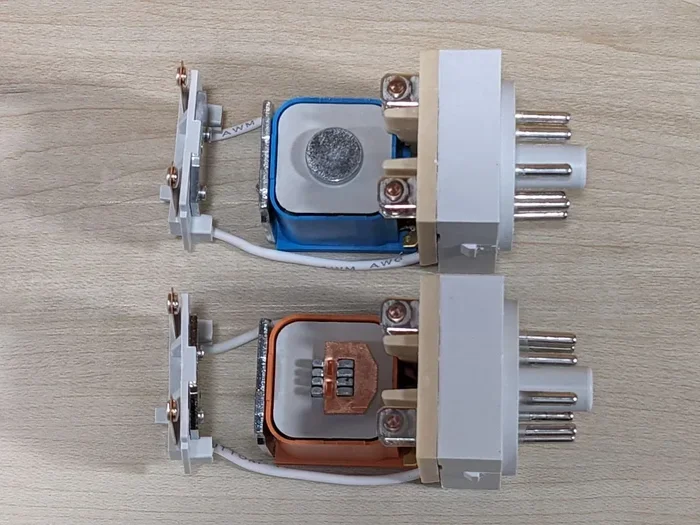
AC coils have a few special features to handle the changing current. Because the current drops to zero every half cycle, an AC coil might chatter or vibrate. To stop this, engineers add a shading coil. This is a small copper loop that creates a delayed magnetic field. This delay keeps the relay pull-in force steady, preventing buzzing.
Another key feature is the coil resistance. An AC coil has very low resistance. This allows a large amount of current to flow when first energized. This initial burst is called inrush current. It is much higher than the steady-state current the coil draws once it is fully energized.
The shading coil is a brilliant piece of engineering. It acts like a short-circuited transformer secondary. When the main AC current drops to zero, the shading coil keeps the magnetic flux moving. This continuous flux holds the armature steadily in place. Without it, the relay would click loudly and vibrate every single cycle.
Pros and Cons of AC Coils
AC coils have distinct advantages for certain jobs. Here is a quick look at what they offer:
- High contact load capacity: AC coils can handle heavy loads very well.
- Lower cost: They are generally cheaper to manufacture and buy.
- Easy to find: AC relays are common in household and industrial settings.
- Built-in shading coil: This reduces noise and prevents chatter.
However, there are downsides too. You must consider the power consumption and the inrush current. The high inrush current can cause issues in sensitive electronic circuits. Also, AC coils can generate more heat over time because of the continuous current draw. A great example of an AC relay coil is in a home air conditioner. The thermostat sends a small AC signal to the coil. The coil pulls in the contacts, which then powers the compressor. Because the compressor draws a lot of current, the AC coil is perfect for this heavy contact load.
DC Relay Coils Explained
A DC relay coil works with direct current. This is the steady flow of electricity from batteries or power supplies. Unlike AC, DC does not change direction. This steady flow changes how the relay coil behaves and how it is designed.
How DC Coils Function
DC coils do not have a shading coil. Because the current flows in one direction only, the magnetic field remains constant. There is no drop to zero, so there is no need to prevent chatter. The armature pulls in smoothly and stays quietly in place.
DC coils have much higher coil resistance compared to AC coils. This high resistance is intentional. It limits the steady electrical current to a safe level. Without this resistance, the coil would draw too much power and burn out quickly. The higher resistance also means lower power consumption during normal operation.
The steady flow of DC makes the relay very predictable. You know exactly how much current the coil will draw. This predictability is crucial for sensitive electronic circuit designs. Battery-powered devices especially benefit from the low power consumption of a DC relay coil.
Pros and Cons of DC Coils
DC coils are popular in many modern devices. Here are the main benefits and drawbacks:
- Quiet operation: DC relays make almost no sound when they activate.
- Lower power consumption: They draw less steady-state power, saving energy.
- No inrush current: The current draw is stable from the moment you energize the coil.
- Better for electronics: The stable current is safer for sensitive control circuits.
On the flip side, DC coils can be more expensive. They also have a slower switching speed in some designs. The high resistance means you need a precise voltage source. If the voltage drops too low, the relay might not pull in at all. A common example is a DC relay coil in a car. The battery provides steady DC power to the coil, which then switches the high-current starter motor circuit.
AC vs DC Relay Coil Head-to-Head Comparison
Choosing between an AC and DC AC DC relay coil can be tricky. Both have their place in the world of switching devices. Let us look at how they stack up against each other. This table breaks down the main differences you need to know.
When you compare an AC vs DC relay coil, you are really comparing two different ways of handling electrical current. The AC coil relies on a changing magnetic field, while the DC coil relies on a steady one. This fundamental difference affects everything from noise to heat to cost.
| Feature | AC Relay Coil | DC Relay Coil |
|---|---|---|
| Current Type | Alternating Current | Direct Current |
| Coil Resistance | Low resistance | High resistance |
| Power Consumption | Higher steady-state draw | Lower steady-state draw |
| Inrush Current | High inrush current | No inrush current |
| Noise Level | Can buzz or chatter | Very quiet operation |
| Shading Coil | Required to prevent chatter | Not needed |
| Switching Speed | Slightly slower | Generally faster |
| Best For | Industrial and high-load applications | Electronics and low-power circuits |
As you can see, the relay coil type changes everything. The voltage rating is not the only thing to check. You also need to look at the load you are switching. An inductive load like a motor behaves differently than a simple resistive load like a heater. Always match your relay socket to the coil type to avoid problems. The right choice ensures your control circuit runs safely and efficiently.
Common Mistakes When Choosing a Relay Coil
Many people make avoidable mistakes when picking a relay coil for their project. These errors can lead to overheating, failure, or even dangerous situations. Let us look at the most common pitfalls.
Ignoring the Voltage Rating
The most common mistake is ignoring the voltage rating. You cannot put a 12V DC coil on a 12V AC supply. The AC coil will draw too much current and burn out. Conversely, putting a DC coil on AC will cause it to chatter and fail quickly. Always double-check the label on the relay base before you wire anything up.
Mixing Up Coil Types
Another big error is mixing up coil types in a system. You might have a control panel with both AC and DC circuits. If you use an AC relay switch to control a DC load, the switching speed and contact wear will be poor. The magnetic field behavior is just too different. Stick to the correct electromagnetic coil type for each specific circuit.
Overlooking the Contact Load
People often focus only on the coil and forget the contacts. The coil energizes the relay, but the contacts do the actual switching. If your contact load is too high for the relay, the contacts will weld together. Always check the amperage and voltage ratings of the contacts, not just the coil. This ensures your automation system runs safely for years.
Ignoring Switching Frequency
How often you switch the relay matters a lot. High-frequency switching wears out contacts faster. If you are switching a load hundreds of times a day, you need a robust relay coil with heavy-duty contacts. AC coils can handle frequent switching well in some cases, but DC coils often provide cleaner breaks. Always check the rated electrical life of the switching device before you buy.
Expert Tips for Selecting the Right Coil
Choosing the right relay coil does not have to be hard. A few expert tips can save you time and money. Here is what the pros look for when they select a switching device.
Check the Coil Resistance
Always measure the coil resistance with a multimeter before installing. This tells you if the coil is intact and matches the specs. An AC coil usually reads very low, often under 10 ohms. A DC coil reads much higher, sometimes over 1000 ohms. If the resistance is zero, the coil is shorted and must be replaced.
Consider the Environment
Where you install the relay coil matters a lot. In a noisy industrial setting, an AC relay with a shading coil might be better. The steady pull-in force handles vibration well. In a quiet office or home, a DC relay is perfect. Its silent operation will not disturb anyone. Think about the electronic circuit environment before you decide.
Think About Lifespan and Maintenance
All relay coils wear out eventually. However, DC coils tend to last longer in many cases. The steady current creates less heat than the constant AC draw. Less heat means a longer lifespan for the solenoid and the contacts. If you want a maintenance-free setup, a DC relay coil is often the better choice. Plan for replacement only if the load is extremely heavy.
Test Pull-in and Drop-out Voltages
Every coil has a specific pull-in voltage and drop-out voltage. The pull-in voltage is the minimum voltage needed to activate the relay switch. The drop-out voltage is the maximum voltage at which it releases. Testing these values ensures your control circuit has enough power. It also prevents the coil from staying partially energized, which causes overheating and early failure.
Quick Tips for Relay Coil Selection
Here are some fast tips to keep in mind when you are shopping for a relay coil:
- Always check the datasheet: It tells you the exact voltage, resistance, and current ratings.
- Measure before you buy: If you are replacing an old coil, measure the resistance first.
- Consider the ambient temperature: High heat can lower the coil resistance and cause failure.
- Use a flyback diode for DC coils: This protects your electronic circuit from voltage spikes when the coil de-energizes.
Conclusion
Choosing between an AC and DC AC DC relay coil is a big decision for any electrical project. The AC vs DC relay coil debate comes down to your specific power source and load requirements. AC coils are tough, handle high loads, and are great for industrial settings. DC coils are quiet, energy-efficient, and perfect for sensitive electronics.
Remember to always check the voltage rating and coil resistance before you buy. A small mistake can lead to a big failure. By understanding how the electromagnetic coil works, you can build a reliable control circuit. Take your time, follow the tips in this guide, and your relay switch will serve you well for a long time.
Frequently Asked Questions
Can I use an AC relay coil on a DC power supply?
No, you should never do this. An AC coil has very low resistance. When connected to DC, it will draw too much current and burn out quickly. Always match the coil type to your power source to avoid damaging the relay coil.
Why does my AC relay coil buzz or chatter?
AC coils buzz because the alternating current drops to zero every half cycle. This causes the magnetic field to collapse momentarily, making the armature vibrate. A proper shading coil fixes this issue. If your relay buzzes, the shading coil might be damaged or missing.
What is the difference between inrush current and steady-state current?
Inrush current is the high burst of electricity a coil draws the moment it is energized. Steady-state current is the amount it draws once it is fully active. AC relay coils have high inrush current, while DC coils draw a steady amount from the start.
How does coil resistance affect relay performance?
Coil resistance controls how much current flows through the winding. AC coils have low resistance to allow high current for strong pulling force. DC coils have high resistance to limit current and reduce power consumption. Always check the resistance to ensure the coil matches your circuit.
Which relay coil lasts longer, AC or DC?
DC coils generally last longer because they run cooler. The steady direct current creates less heat than the constantly changing alternating current. Less heat means less wear on the solenoid and the contacts, extending the overall lifespan of the switching device.
What should I look for when buying a relay coil?
First, check the voltage rating to match your power source. Second, look at the coil resistance to ensure it is correct. Third, verify the contact load rating to make sure it can handle your appliance. Finally, consider the relay socket type to ensure a secure fit.