Can You Leave a Thermometer in Meat While Smoking Safely
Yes, you can leave a thermometer in meat while smoking, and it is actually one of the best ways to monitor your cook without constantly opening the smoker. Using a leave-in meat thermometer or wireless BBQ thermometer helps you track the internal meat temperature accurately, ensuring food safety and perfect doneness. This guide covers the types of thermometers, safe practices, and expert tips for smoking meat like a pro.
There is nothing quite like the aroma of slow-smoked meat filling your backyard. Whether you are smoking ribs, brisket, or a whole turkey, the process demands patience and precision. One of the most common questions among beginners and seasoned pitmasters alike is whether you can leave a thermometer in meat while smoking. The short answer is yes, but there are important details you need to know to do it safely and effectively.
Using the right meat thermometer can make or break your smoking session. A good BBQ thermometer takes the guesswork out of cooking, helping you hit the perfect internal meat temperature every single time. In this guide, we will walk you through everything you need to know about using thermometers during smoking, from probe types to safety tips that will elevate your next cook.
Key Takeaways
- Leave-in thermometers are safe: Most digital and wireless thermometers are designed to stay in meat throughout the entire smoking process.
- Food safety matters: Always ensure your meat reaches the recommended internal food safety temperature to avoid undercooking.
- Wireless options offer convenience: A remote thermometer lets you monitor your smoking temperature from anywhere.
- Probe placement is critical: Proper positioning of the thermometer probe ensures accurate readings and prevents false data.
- Avoid cheap dial thermometers: Analog models may not hold up to long smoking sessions and can give inaccurate results.
- Calibration keeps things accurate: Regularly check your BBQ thermometer to make sure it reads correctly.
📑 Table of Contents
- Why You Should Use a Thermometer When Smoking Meat
- Types of Thermometers You Can Leave in Meat While Smoking
- Can You Leave a Thermometer in Meat While Smoking Safely?
- Common Mistakes People Make with Thermometers While Smoking
- Expert Tips for Using a Thermometer While Smoking
- Best Thermometers for Smoking Meat
- Final Thoughts on Leaving a Thermometer in Meat While Smoking
Why You Should Use a Thermometer When Smoking Meat
Smoking meat is all about low and slow cooking. Unlike grilling, where high heat cooks food quickly, smoking relies on maintaining a steady smoking temperature over several hours. During this time, your meat goes through different stages of cook, and the internal meat temperature is the only reliable way to know when it is done.
Relying on time alone is a recipe for disappointment. Every smoker, every cut of meat, and every weather condition can change how fast your cook progresses. A leave-in thermometer gives you real-time data so you can make informed decisions. Here is why it matters:
- Food safety: Certain meats, especially poultry and pork, must reach specific food safety temperatures to eliminate harmful bacteria.
- Perfect doneness: Knowing the exact internal temperature helps you pull your meat at the right moment for the best texture.
- Consistent results: Tracking temperatures over time helps you refine your technique and repeat great cooks.
- Peace of mind: A remote thermometer lets you step away from the smoker without worrying about undercooking or overcooking.
The Role of a BBQ Thermometer in Low and Slow Cooking
A BBQ thermometer is not just a gadget. It is an essential tool for anyone serious about smoking meat. When you are cooking at low temperatures for hours, small changes in smoking temperature can have a big impact on the final result. A reliable digital thermometer or wireless thermometer keeps you informed without you ever having to open the smoker lid.
Every time you open the lid, you lose heat and smoke. This can extend your cook time and affect the texture of your meat. By using a leave-in thermometer, you minimize how often you need to check on your food. The result is a more efficient cook and better-tasting meat.
Types of Thermometers You Can Leave in Meat While Smoking
Not all thermometers are created equal. Some are built specifically for long smoking sessions, while others are better suited for quick checks. Understanding the different types of meat thermometers will help you choose the right one for your setup.
Leave-In Digital Thermometers
A leave-in digital thermometer is designed to stay in the meat for the entire cook. These thermometers have a probe that goes into the meat and a display unit that sits outside the smoker. They are simple to use and provide continuous internal meat temperature readings. Most models are heat-resistant and can handle the conditions inside a smoker without any issues.
When shopping for a leave-in thermometer, look for models with a long probe cable and a heat-resistant display. Some versions come with alarms that notify you when the meat reaches a target temperature. This feature is especially helpful if you like to step away from the smoker for a while.
Wireless Remote Thermometers
If you want maximum convenience, a wireless thermometer is the way to go. These remote thermometers send temperature data to a receiver or a smartphone app. You can monitor your smoking temperature and the internal meat temperature from across the yard or even from inside your house.
Wireless thermometers typically come with two probes. One probe measures the smoking temperature inside the cooker, and the other measures the internal meat temperature. This dual-probe setup gives you complete control over your cook. Popular brands like ThermoWorks, MEATER, and Weber offer excellent wireless options that are built to last.
Instant-Read Thermometers
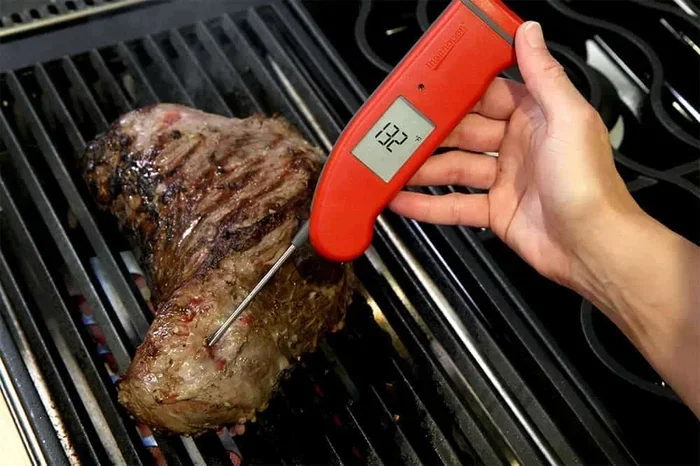
An instant read thermometer is not designed to stay in the meat during a long smoke. However, it is still a valuable tool for checking the internal temperature at the end of your cook. These thermometers give you a fast and accurate reading in seconds, making them great for verifying doneness.
You should not leave an instant-read probe in the meat while smoking. The design is not built for prolonged heat exposure, and the delicate electronics can get damaged. Use it as a final check before serving your BBQ masterpiece.
Oven-Safe and Bimetallic Thermometers
Some older-style thermometers are labeled as oven safe. These bimetallic thermometers can handle high heat and can technically stay in the meat during a smoke. However, they are generally slower to respond and less accurate than modern digital options. If you are serious about smoking, investing in a digital leave-in thermometer or wireless probe will give you far better results.
Can You Leave a Thermometer in Meat While Smoking Safely?
This is the question at the heart of this guide, and the answer depends on the type of thermometer you are using. The good news is that most modern meat thermometers are specifically designed to remain in the meat during a smoking session. However, there are important safety considerations to keep in mind.
Safe Thermometer Placement
Proper placement of your thermometer probe is essential for both safety and accuracy. You want the probe to sit in the thickest part of the meat, away from bone, fat, or gristle. The tip should be fully surrounded by meat to get a true internal temperature reading.
Here are some placement tips to follow:
- Insert the probe into the center of the thickest section of meat.
- Avoid touching bone, as it conducts heat differently and can give false readings.
- Do not place the probe near the surface, where it can pick up heat from the smoke rather than the actual meat temperature.
- Make sure the probe is secured and will not shift during the cook.
- Keep the cable or wireless transmitter away from direct heat sources and flames.
Heat Resistance and Durability
Not all thermometers are rated for the same maximum temperature. Before leaving a thermometer in your meat, check the manufacturer’s specifications. Most BBQ thermometers designed for smoking can handle temperatures up to 500°F or higher, which is more than enough for any smoking application.
If you are using a thermometer that is not rated for high heat, you risk damaging the device and potentially contaminating your food. Always use equipment that is specifically designed for smoking meat and long cook times.
Food Safety Considerations
Food safety is a critical part of smoking meat. Different types of meat require different internal food safety temperatures to be considered safe to eat. Here is a quick reference:
| Meat Type | Minimum Internal Temperature |
|---|---|
| Poultry (chicken, turkey) | 165°F |
| Pork | 145°F (with 3-minute rest) |
| Beef, veal, lamb (steaks, roasts) | 145°F (with 3-minute rest) |
| Ground meats | 160°F |
| Fish and shellfish | 145°F |
Using a leave-in thermometer ensures you hit these targets without having to guess. Once your meat reaches the safe internal temperature, you can pull it from the smoker and let it rest before serving.
Common Mistakes People Make with Thermometers While Smoking
Even experienced smokers can make mistakes when using thermometers. Avoiding these common errors will help you get better results and keep your food safe.
Using the Wrong Type of Thermometer
One of the biggest mistakes is using an instant read thermometer as a leave-in probe. These are not designed for long-term heat exposure and can malfunction or break during a smoke. Always use a thermometer specifically rated for leave-in use when smoking meat.
Poor Probe Placement
Placing the probe in the wrong spot can lead to inaccurate readings. If the probe touches bone or sits too close to the surface, your temperature reading will be off. Take the time to position the probe correctly for the most reliable internal meat temperature data.
Ignoring Calibration
Over time, thermometers can drift out of calibration. This means your readings may not be accurate, even if the thermometer appears to be working. Test your BBQ thermometer regularly by inserting the probe into ice water (it should read 32°F) or boiling water (it should read 212°F at sea level). If the readings are off, refer to your thermometer’s manual for calibration instructions.
Not Monitoring the Smoker Temperature
While the internal meat temperature is important, you also need to pay attention to the smoking temperature inside your cooker. Many wireless thermometers come with a second probe for ambient temperature. Keeping your smoker at a consistent temperature is just as important as monitoring the meat itself.
Relying Too Heavily on the Thermometer
A thermometer is a tool, not a replacement for experience. While it gives you precise data, you should also use your senses. Look at the color of the meat, feel for firmness, and use the thermometer probe as one of several indicators of doneness.
Expert Tips for Using a Thermometer While Smoking
Want to get the most out of your thermometer during your next smoking session? Here are some expert tips that will help you achieve better results every time.
- Start with a clean probe: Wipe the probe with a damp cloth before inserting it into the meat. Residue from previous cooks can affect your readings.
- Use two probes: If your thermometer has multiple probes, use one for the meat and one for the smoker’s ambient temperature. This gives you a complete picture of your cook.
- Set target temperatures in advance: Know what temperature you are aiming for before you start smoking. This helps you plan your cook and avoid surprises.
- Let the meat rest: After pulling your meat from the smoker, let it rest for at least 10 to 15 minutes. The internal temperature will continue to rise slightly as the juices redistribute.
- Keep a smoking log: Tracking your cooks, including temperatures and times, helps you improve over time. Some smokers even use tools like spreadsheet tracking to organize their smoking data and refine their technique.
- Invest in quality: A good wireless BBQ thermometer is worth the investment. Cheap models may give inconsistent readings or break down after a few uses.
Quick Tips for Smokers Using Thermometers
Here are some fast tips to keep in mind:
- Always preheat your smoker before placing the meat on the grate.
- Insert the probe before you start the cook so you can monitor from the beginning.
- Check your smoker’s temperature every 30 to 45 minutes to maintain consistency.
- Keep the smoker closed as much as possible to maintain heat and smoke flow.
- Clean your probe after every use to prevent buildup and ensure accuracy.
Best Thermometers for Smoking Meat
If you are in the market for a new BBQ thermometer, here are some features to look for:
- Dual probes: One for meat, one for smoker temperature.
- Wireless capability: Allows remote monitoring from your phone or a handheld receiver.
- Wide temperature range: Should handle at least 500°F for smoker use.
- Long battery life: Important for long smoking sessions that can last 8 to 12 hours or more.
- Backlit display: Makes it easy to read temperatures in low-light conditions.
- Durable construction: Built to withstand heat, smoke, and grease.
Some of the top-rated wireless thermometers on the market today include brands like ThermoWorks Signals, MEATER Plus, and Weber iGrill. Each of these offers reliable remote thermometer performance and is built to handle the demands of smoking meat.
Final Thoughts on Leaving a Thermometer in Meat While Smoking
Leaving a thermometer in meat while smoking is not only safe, it is one of the smartest things you can do for your cook. A leave-in thermometer or wireless BBQ thermometer takes the guesswork out of smoking, helps you maintain the right smoking temperature, and ensures your meat reaches a safe internal food safety temperature. Whether you are smoking brisket for a weekend gathering or preparing a weeknight BBQ dinner, the right thermometer makes all the difference.
Remember to choose the right type of thermometer for your needs, place the probe correctly, and monitor both the meat and smoker temperatures throughout the cook. With these practices in place, you will smoke meat with confidence and consistently achieve delicious, perfectly cooked results. Happy smoking.
Frequently Asked Questions
Can I leave a meat thermometer in the meat for the entire smoking session?
Yes, most leave-in digital thermometers and wireless thermometers are specifically designed to stay in the meat throughout the entire smoking session. Just make sure your thermometer is rated for high heat and long cook times, and always follow the manufacturer’s guidelines for safe use.
What is the best type of thermometer for smoking meat?
A wireless remote thermometer with dual probes is often the best choice for smoking meat. It allows you to monitor both the internal meat temperature and the smoking temperature from a distance, giving you full control over your cook without constantly opening the smoker lid.
Is it safe to leave a thermometer probe in meat overnight?
Yes, it is generally safe to leave a thermometer probe in meat overnight if you are using a leave-in thermometer rated for high temperatures. Just make sure the probe and cable are positioned safely away from heat sources and flames, and that the meat stays within the safe temperature zone.
How do I know if my thermometer is accurate?
You can test your thermometer by inserting the probe into ice water (should read 32°F) or boiling water (should read 212°F at sea level). If the readings are off, consult your thermometer’s manual for calibration instructions. Regular calibration ensures your BBQ thermometer gives reliable results every time.
Can I use an instant-read thermometer while smoking?
An instant-read thermometer should only be used for quick checks at the end of the cook, not as a leave-in probe during smoking. These thermometers are not designed for prolonged heat exposure and can be damaged or give inaccurate readings if left in the meat for an extended period.
What internal temperature should pulled pork reach?
Pulled pork should reach an internal temperature of at least 195°F to 205°F for the best texture and tenderness. At this temperature, the collagen in the pork has fully broken down, resulting in juicy, pull-apart meat that is perfect for sandwiches and tacos.
=== CONCLUSION ===
Can you leave a thermometer in meat while smoking? Absolutely. Using a leave-in thermometer or wireless BBQ thermometer is one of the best ways to ensure your smoking sessions are safe, efficient, and successful. By choosing the right thermometer, placing the probe correctly, and monitoring both meat and smoker temperatures, you will take the guesswork out of your cook and enjoy consistently delicious results.
Remember that food safety always comes first. Make sure your meat reaches the proper internal food safety temperature before serving, and use your thermometer probe as a key tool in your smoking arsenal. With the right approach and a little practice, you will be smoking meat like a pro in no time. Happy grilling!