Can I Plug My Usb C Into A Thunderbolt Port Safely
Yes, you can plug a USB-C cable into a Thunderbolt port safely. Thunderbolt ports use the same USB-C connector shape, so the physical connection works every time. However, the speeds and features you get depend on the cable and device capabilities.
This is a comprehensive guide about Can I Plug My Usb C Into A Thunderbolt.
Key Takeaways
- USB-C fits into Thunderbolt ports: The connector shape is identical, so plug and play works without any adapter.
- Speed depends on the cable: A standard USB-C cable may not deliver Thunderbolt speeds, even if it connects.
- Thunderbolt is backward compatible: It works with USB-C devices, but you may not get the full Thunderbolt experience.
- Power delivery is shared: Thunderbolt ports can charge devices and transfer data at the same time through USB-C.
- Check your cable rating: Not all USB-C cables support the same data speeds or power levels.
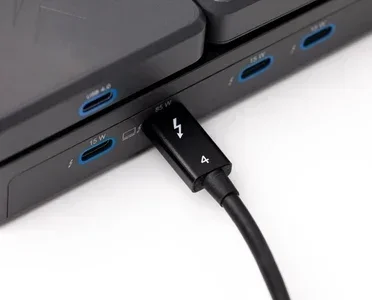
- Look for the lightning bolt icon: This is the easiest way to confirm a Thunderbolt port on your device.
[FEATURED_IMAGE_PLACEHOLDER]
Can You Plug USB-C Into a Thunderbolt Port?
The short answer is yes. You can plug a USB-C cable into a Thunderbolt port without any issues. The physical connector is the same shape on both. Thunderbolt 3 and Thunderbolt 4 use the USB-C connector design. This means the two technologies share a common physical shape.
But here is the thing many people miss. Just because the cable fits does not mean you will get the full Thunderbolt experience. The speeds, features, and capabilities depend on several factors. These include the cable quality, the port version, and the device you are connecting.
Think of it like a highway. A Thunderbolt port is a multi-lane highway. A standard USB-C cable might only let you use one lane. You still get to the destination, but it takes longer. Understanding this difference matters a lot for your daily workflow.
In this article, we will break down everything you need to know. You will learn how Thunderbolt and USB-C relate. We will cover speed differences, power delivery, and common mistakes. By the end, you will feel confident about every connection you make.
Understanding USB-C and Thunderbolt
Many people confuse USB-C with Thunderbolt. They are not the same thing, even though they share a connector. Let us clear up the confusion right away.
What Is USB-C?
USB-C is a connector type. It is a small, reversible plug that fits into ports on laptops, phones, and tablets. The USB-C connector can support different protocols. These include USB 3.2, USB 4, and Thunderbolt. The connector shape does not tell you the speed or capability. You need to check the specifications.
USB-C cables come in many varieties. Some support fast data transfer. Others only handle charging. This is why not every USB-C cable is created equal. The cable rating determines what it can do.
What Is Thunderbolt?
Thunderbolt is a protocol developed by Intel in partnership with Apple. It combines data, video, and power into one single cable. Thunderbolt 3 uses the USB-C connector. Thunderbolt 4 builds on that foundation with even better performance.
Thunderbolt ports can do everything USB-C can do. Plus, they add extra capabilities. These include daisy-chaining multiple devices, driving high-resolution displays, and faster data transfer rates. The key difference is the protocol inside the cable and port.
What Happens When You Connect USB-C to Thunderbolt?
When you plug a USB-C device into a Thunderbolt port, several things happen. The port detects the device and negotiates the best connection. If the device and cable support Thunderbolt, you get Thunderbolt speeds. If not, the connection falls back to standard USB-C speeds.
This backward compatibility is one of the best features of Thunderbolt. You do not need a separate hub or adapter for most USB-C devices. Your external hard drive, keyboard, or mouse will work fine. The connection is safe and will not damage your equipment.
However, there is a catch. If your USB-C cable only supports USB 2.0, your data transfer will be very slow. You might notice this when moving large files like video projects or spreadsheets. If you ever notice that a line wont delete in Microsoft Excel after transferring a file, a slow cable could be the culprit behind file corruption or incomplete transfers.
Speed Comparison
The speed difference between USB-C and Thunderbolt can be huge. Here is a simple comparison of the different standards:
- USB 2.0 via USB-C: Up to 480 Mbps. Fine for charging and basic peripherals.
- USB 3.2 Gen 1 via USB-C: Up to 5 Gbps. Good for most everyday tasks.
- USB 3.2 Gen 2 via USB-C: Up to 10 Gbps. Great for external drives and monitors.
- Thunderbolt 3: Up to 40 Gbps. Best for professional workflows and docking stations.
- Thunderbolt 4: Up to 40 Gbps with stricter certification requirements. Guarantees minimum performance.
As you can see, the gap between standard USB-C and Thunderbolt is significant. If you are moving large files regularly, the Thunderbolt advantage really adds up.
USB-C vs Thunderbolt: Key Differences
Let us compare USB-C and Thunderbolt side by side. This table shows the main differences at a glance:
- Connector Shape: Both use the same USB-C connector. They look identical on the outside.
- Data Speed: Thunderbolt is faster. USB-C speeds vary by cable and protocol. Thunderbolt 3 and 4 offer up to 40 Gbps.
- Video Output: Thunderbolt supports multiple displays natively. USB-C video support depends on the cable and device.
- Power Delivery: Both support USB Power Delivery. Thunderbolt ports typically supply more consistent power.
- Daisy Chaining: Thunderbolt allows you to connect multiple devices in a chain. Standard USB-C does not support this.
- Cost: Thunderbolt cables and devices cost more. USB-C options are widely available and affordable.
The most important takeaway is this. USB-C is the connector. Thunderbolt is the technology that runs through it. Not every USB-C port is Thunderbolt, and not every Thunderbolt port needs a special cable. The USB-C cable just needs to support the right protocol.
How to Identify a Thunderbolt Port
Not sure if your port is Thunderbolt or just USB-C? There are a few easy ways to check.
Look for the Lightning Bolt Symbol
The quickest way to identify a Thunderbolt port is the lightning bolt icon. Look next to the port on your laptop or dock. If you see a small lightning bolt, it is a Thunderbolt port. If there is no symbol, it is likely a standard USB-C port.
Check Your Device Specifications
You can also check the manufacturer specifications. Look up your device model online and find the port details. The spec sheet will clearly list Thunderbolt 3 or Thunderbolt 4 if your device supports it.
Use System Information on Your Computer
On Windows, go to Device Manager and look under Universal Serial Bus controllers. On Mac, click the Apple menu, then About This Mac, and click System Report. Look for Thunderbolt in the sidebar. These built-in tools make identification easy and accurate.
Common Mistakes When Using USB-C and Thunderbolt
Even though the connection is safe, people still make mistakes that cause frustration. Here are the most common ones to avoid.
Using a Low-Quality Cable
Not all USB-C cables are the same. A cheap cable might only support USB 2.0 speeds. This means your Thunderbolt port will never reach its full potential. Always check the cable rating before purchasing. Look for cables that explicitly support Thunderbolt or at least USB 3.2 Gen 2.
Assuming All USB-C Ports Are Thunderbolt
This is a very common misconception. Many laptops have both USB-C and Thunderbolt ports. They look identical but behave differently. Always verify the port type before expecting Thunderbolt speeds.
Forcing a Connection
The USB-C connector is reversible. It should plug in either way. If you are struggling to insert it, check the orientation. Forcing a cable can damage the port or the connector itself. A gentle push is all you need.
Ignoring Power Delivery Limits
Thunderbolt ports support USB Power Delivery, but the wattage varies. Some ports deliver up to 100 watts. Others deliver less. If your device is not charging properly, the power delivery profile might not match your needs. Check both the port and the device power requirements.
Expert Tips for Getting the Best Performance
Want to make the most of your USB-C and Thunderbolt connections? Follow these practical tips.
- Buy certified cables: Thunderbolt-certified cables guarantee compatibility and speed. Look for the Thunderbolt logo on the cable packaging.
- Keep cables short: Longer cables can reduce signal quality. For best performance, use cables under 2 meters in length.
- Update your drivers: On Windows and Mac, keeping your system updated ensures the best Thunderbolt support. Outdated drivers can cause connection issues.
- Use a docking station: A Thunderbolt docking station lets you connect multiple peripherals through one cable. This simplifies your workspace and keeps your setup clean.
- Test your connection speed: Use tools like Blackmagic Disk Speed Test or CrystalDiskMark to verify your data transfer speeds. This helps you confirm whether you are getting Thunderbolt performance.
These small steps make a big difference. You will notice faster transfers, more stable connections, and fewer headaches overall.
Is It Safe to Mix USB-C and Thunderbolt Devices?
Absolutely. Mixing USB-C and Thunderbolt devices is completely safe. Thunderbolt is designed to be backward compatible with USB-C. Your devices will not be damaged by connecting them to a Thunderbolt port.
The connection will simply negotiate the best common standard. If you plug a USB-C external hard drive into a Thunderbolt 4 port, it will work at USB-C speeds. You will not get the Thunderbolt speed boost, but the device will function normally.
This compatibility extends to charging too. You can charge your phone, tablet, or laptop through a Thunderbolt port using a USB-C cable. The power delivery protocol handles the negotiation automatically. Your device will only draw the power it needs.
One thing to keep in mind. If you are using a Thunderbolt dock, the performance of connected devices depends on the dock’s capabilities. A Thunderbolt 4 dock will offer better speeds and more display support than a basic USB-C dock. Choose your dock based on your workflow needs.
Frequently Asked Questions
Can a USB-C cable damage a Thunderbolt port?
No, it cannot. Thunderbolt ports are designed to be backward compatible with USB-C cables and devices. The connection is completely safe and will not cause any damage to your port or device.
Do I need a Thunderbolt cable to get Thunderbolt speeds?
Yes, you do. A standard USB-C cable will not deliver Thunderbolt speeds. You need a Thunderbolt-certified cable to unlock the full 40 Gbps data transfer rate. Check the cable packaging for the Thunderbolt logo.
Can I use a Thunderbolt cable in a USB-C port?
Yes, you can. A Thunderbolt cable works in a standard USB-C port. However, the connection will operate at USB-C speeds, not Thunderbolt speeds. The cable is fully compatible but limited by the port.
How do I know if my USB-C cable supports Thunderbolt?
Look for the Thunderbolt lightning bolt icon on the cable or its packaging. Certified Thunderbolt cables also list their specifications clearly. If there is no Thunderbolt marking, it is likely a standard USB-C cable.
Can I connect multiple monitors using a USB-C cable to a Thunderbolt port?
It depends on your cable and device. Thunderbolt 3 and 4 support dual 4K displays or a single 8K display. Standard USB-C cables may only support one display or lower resolutions. Check your cable and device specifications for display support details.
Why is my USB-C connection slow even though I have a Thunderbolt port?
The most common reason is a cable limitation. If your cable only supports USB 2.0 or USB 3.2, the connection will be capped at those speeds. Try using a Thunderbolt-certified cable to see if your speeds improve.
Conclusion
Plugging a USB-C cable into a Thunderbolt port is safe, easy, and fully supported. The shared connector design makes the two technologies work together seamlessly. You get backward compatibility built right into the standard.
However, the experience you get depends on your cable, your port, and your device. A quality Thunderbolt cable unlocks the full potential of Thunderbolt speeds and features. A basic USB-C cable will still work, but at slower speeds.
Now that you understand the differences, you can make smarter choices about your cables and connections. Check your port type. Verify your cable rating. And always buy certified accessories when performance matters.
The world of USB-C and Thunderbolt is simpler than it looks once you know the basics. Your devices will thank you for using the right cable. And your workflow will run smoother than ever before.
Frequently Asked Questions
What is Can I Plug My Usb C Into A Thunderbolt?
Can I Plug My Usb C Into A Thunderbolt is an important topic with many practical applications.