Can I Jump Start A Car With A Laptop Charger Right Now
Can you jump start a car with a laptop charger? The short answer is no, not directly. A laptop charger provides far too little power to turn over a car engine. However, there are safe alternatives and creative workarounds that can help in a pinch. This guide covers everything you need to know about emergency car starting without a traditional jump.
Your car just refused to turn over. The dashboard lights flicker. You are standing in the parking lot with a dead battery and a laptop charger in your bag. It is a frustrating moment. And it makes you wonder, can I jump start a car with a laptop charger? This is a question more drivers ask than you might think.
The idea is simple. Your laptop charger plugs into the wall and delivers power. Your car battery needs power to start. So why not connect them? It sounds logical. But the reality is very different. A laptop charger simply does not produce enough energy to crank an engine. Let us break down exactly why that is and what you can do instead.
In this article, we will explore the truth about using a laptop charger for car starting. We will look at the power numbers, the risks involved, and the real solutions that actually work. Whether your car battery is dead or you are just curious, this guide has you covered.
Key Takeaways
- A laptop charger cannot jump start a car: It lacks the amperage needed to crank an engine.
- Laptop chargers output 19V to 20V DC: This is far below what a 12V car battery needs to start.
- Portable jump starters are the real solution: They are compact, powerful, and designed for this exact purpose.
- Using a laptop charger incorrectly can damage your car: Avoid connecting it directly to the battery.
- There are safe low-power tricks: Like charging a phone or running accessories when the battery is weak but not dead.
- Know when to call for help: Roadside assistance is always a smart backup plan.
📑 Table of Contents
- How a Car Battery Jump Start Actually Works
- How a Laptop Charger Actually Works
- Can I Jump Start A Car With A Laptop Charger?
- What Happens If You Try
- Safe Alternatives When Your Car Battery Is Dead
- When a Laptop Charger Can Still Help
- Expert Tips for Emergency Car Starting
- Common Mistakes People Make With Dead Batteries
- Key Takeaways
- Conclusion
How a Car Battery Jump Start Actually Works
Before we answer whether a laptop charger can help, let us understand what a proper jump start does. When you jump start a car, you connect another battery or a booster pack to your dead battery. That external source sends a large surge of current through the cables. The starter motor draws that power and cranks the engine.
A typical car battery holds about 48 amp hours. But to start an engine, it needs a burst of 200 to 400 amps for just a few seconds. That is a massive spike of energy. Your battery or a booster must deliver it fast. This is why jumper cables and a working second battery are essential for a standard jump start.
What Power Does a Car Starter Need?
The starter motor in most cars draws between 100 and 400 amps. Smaller engines like sedans need less. Larger trucks need more. Either way, the demand is far beyond what a small USB device can provide. The lead-acid battery inside your car is built for exactly this kind of burst discharge.
When you turn the key or press the start button, the battery sends power to the ignition system, the fuel pump, and the starter motor. All of these happen in under three seconds. A weak or dead battery cannot sustain that flow. That is why a battery booster or another vehicle is needed.
How a Laptop Charger Actually Works
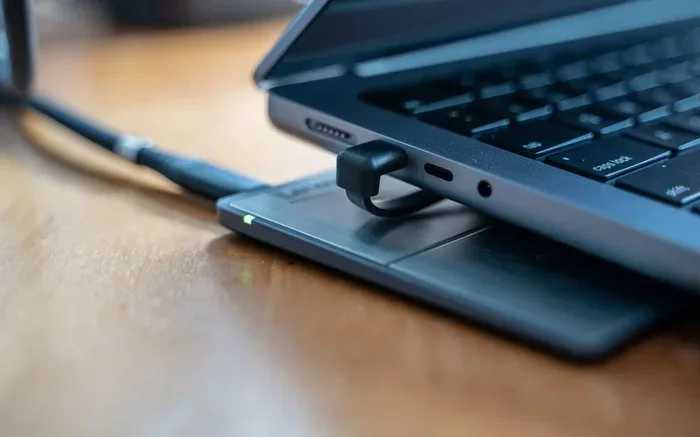
A laptop charger converts AC wall power into DC power your laptop can use. Most laptop chargers output between 19 volts and 20 volts of DC. The amperage typically ranges from 2 amps to 6 amps. That means the total wattage is usually between 40 and 120 watts.
Now compare that to what a car starter needs. A laptop charger gives you a tiny fraction of the required current. It is like trying to fill a swimming pool with a garden hose. The water flows, but not fast enough to make a real difference. A laptop charger voltage of 19V to 20V is also higher than a car battery’s 12V nominal output. But voltage alone does not determine starting power.
Understanding DC Power Output
Your car battery runs on direct current, or DC. Your laptop charger also outputs DC. So on paper, the connection seems possible. But the real issue is current, measured in amps. A laptop charger simply cannot push enough amps through the system to turn the engine over.
Even if you connect the charger directly to the battery terminals, it will not deliver the burst of energy needed. At best, it might slowly add a tiny amount of charge over many hours. That is not a jump start. That is barely a trickle.
Can I Jump Start A Car With A Laptop Charger?
The direct answer is no. You cannot jump start a car with a laptop charger in any practical sense. The charger does not have the power output to crank the starter motor. Attempting to do so will not start your car. It may also damage your charger or your car’s electrical system.
Some people confuse a laptop charger with a power inverter or a portable jump starter. These are very different devices. A power inverter converts DC to AC and can run small electronics. A jump starter is a compact battery pack designed to deliver high current for engine cranking. A laptop charger does neither of these jobs.
Why People Think It Might Work
There is a common misconception. People see that a laptop charger has a higher voltage than a car battery. They assume more voltage means more power. That is not how it works. Amperage and wattage matter far more for engine starting than voltage alone.
Also, some modern cars have start-stop systems and small auxiliary batteries. These are not the same as the main starting battery. A laptop charger might keep a phone alive or power a USB port. But it cannot replace the main battery for starting the engine.
What Happens If You Try
So what actually happens if you connect a laptop charger to your car battery? In most cases, nothing good. The charger is not designed to handle the load. It may overheat, shut off, or simply fail to do anything.
There is also a risk of reverse current or voltage mismatch. Your car’s electrical system is sensitive. Plugging in an incompatible power source can cause issues with the alternator charging system, the onboard computer, or even the battery itself.
Risk of Damage to the Charger
Laptop chargers are designed for low-power devices. They cannot handle the sudden draw of a starter motor. If you somehow force the connection, the charger will likely burn out. You will lose your laptop charger and still not start your car.
Risk of Damage to the Car
Connecting an external power source incorrectly can fry sensitive electronics. Modern cars have dozens of computers and sensors. A wrong voltage or current spike can cause problems. This is especially true if you do not know what you are doing. Always be careful with any external power source near your car battery.
Safe Alternatives When Your Car Battery Is Dead
Now that we know a laptop charger will not work, what can you actually do? There are several safe and effective options for emergency car starting. Let us go through them one by one.
1. Use a Portable Jump Starter
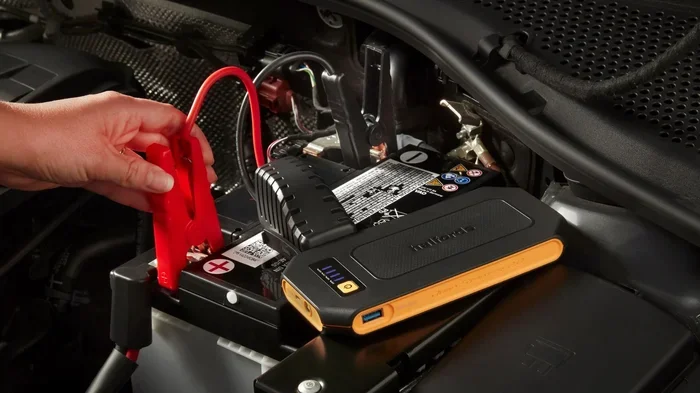
A portable jump starter is the best tool for this situation. These small devices fit in your glove box or trunk. They contain a lithium-ion battery that can deliver hundreds of amps on demand. You connect the clamps to your battery, and the device provides enough power to crank the engine.
Most portable jump starters also double as a battery booster for other vehicles. They often include USB ports so you can charge your phone at the same time. Brands like NOCO, Tacklife, and DBPOWER make reliable models at affordable prices.
2. Call for Roadside Assistance
If you do not have a jump starter, call for help. Your insurance may include roadside assistance. AAA, your car manufacturer, or a local towing service can all send a technician. They will either jump your car with their equipment or replace your battery on the spot.
This is the safest option if you are unsure about handling car batteries yourself. It costs a little money but saves you a lot of hassle and risk.
3. Use a Traditional Set of Jumper Cables and Another Vehicle
The classic method still works great. Ask another driver to park next to you. Connect the jumper cables to both batteries. Start the working car first. Then try starting your car. Once your engine is running, disconnect the cables in reverse order.
This method is reliable and widely understood. Just make sure you follow the correct cable order: positive to positive, negative to a ground point on the dead car. Never connect the negative cable directly to the dead battery terminal.
4. Use a Battery Tender or Trickle Charger
If your battery is only slightly drained, a trickle charger might help. These devices provide a very low, steady charge over several hours. They are not for jump starting. But they can restore enough charge to a weak battery to get your car running.
Trickle chargers are great for vehicles that sit unused for long periods. They keep the battery healthy and prevent it from dying completely.
5. Push Start or Bump Start (Manual Transmission Only)
If you drive a manual transmission car, you can try a push start. Get the car rolling, pop the clutch in second gear, and release it quickly. The momentum of the wheels will turn the engine. This works when the battery is too weak to power the starter but not completely dead.
This method does not work for automatic transmissions. It also requires a flat, open area and a few helpers. Use it only as a last resort.
When a Laptop Charger Can Still Help
Even though a laptop charger cannot jump start your car, it is not completely useless in a dead battery situation. Here are a few ways it can still help you out.
Keep Your Phone Charged
Your phone is your lifeline when your car will not start. Use your laptop charger to keep your phone powered up. You can call for roadside assistance, check maps, or contact a friend for a ride. A dead phone is a much bigger problem than a dead car battery.
Power Small 12V Accessories
If your car battery is weak but not completely dead, a laptop charger might keep small accessories running. This includes interior lights, the radio, or a GPS device. It will not start the engine. But it can keep you comfortable and informed while you figure out the next step.
Use It as a Diagnostic Tool
Some people use a laptop charger to power a diagnostic tool or a multimeter. You can check the voltage of your car battery without draining it further. If the battery reads below 12 volts, it likely needs a charge or a replacement. This is a smart way to use the charger while waiting for help.
Expert Tips for Emergency Car Starting
Being stranded with a dead battery is stressful. But you can be prepared. Here are some expert tips to help you handle the situation like a pro.
Keep a Portable Jump Starter in Your Trunk
This is the single best investment you can make for roadside emergencies. A lithium jump starter weighs less than a pound and fits in a small bag. Charge it every few months, and it will be ready when you need it. It works in any weather and does not require another vehicle.
Check Your Battery Health Regularly
Car batteries typically last three to five years. Have your battery tested at every oil change. Most auto parts stores will do this for free. Catching a weak battery early gives you time to replace it before you are stranded.
Turn Off All Accessories Before Starting
When your battery is weak, turn off the radio, the AC, and all lights. Every accessory draws power from the battery. The less load on the system, the more power goes to the starter motor. This simple step can make the difference between a successful start and a no-start situation.
Keep Jumper Cables in Your Trunk
Even if you do not carry a jump starter, keep a set of jumper cables in your trunk. They weigh very little and take up almost no space. You never know when a helpful stranger will stop to give you a jump. Be ready for that moment.
Know Your Battery Terminals
Take a moment to learn where the positive and negative terminals are on your battery. The positive terminal is usually marked with a plus sign or red cover. The negative terminal has a minus sign or black cover. Knowing this ahead of time saves precious minutes when you are in a hurry or in the cold.
Common Mistakes People Make With Dead Batteries
There are several mistakes drivers make when dealing with a dead battery. Avoiding these can save you time, money, and frustration.
- Trying to charge a dead battery with a laptop charger: This will not work and may cause damage.
- Connecting jumper cables in the wrong order: This can fry your car’s electronics. Always follow the correct sequence.
- Leaving lights or accessories on: This is the most common cause of dead batteries. Make it a habit to check before you walk away.
- Ignoring warning signs: A slow crank or dimming lights means your battery is dying. Address it early.
- Using a cheap or unrated jump starter: Not all jump starters are equal. Buy a reputable brand with good reviews.
Key Takeaways
- A laptop charger cannot jump start a car: It lacks the amperage needed to crank an engine.
- Laptop chargers output 19V to 20V DC: This is far below what a 12V car battery needs to start.
- Portable jump starters are the real solution: They are compact, powerful, and designed for this exact purpose.
- Using a laptop charger incorrectly can damage your car: Avoid connecting it directly to the battery.
- There are safe low-power tricks: Like charging a phone or running accessories when the battery is weak but not dead.
- Know when to call for help: Roadside assistance is always a smart backup plan.
Conclusion
So, can I jump start a car with a laptop charger? The answer is clearly no. A laptop charger simply does not produce enough power to start a car engine. It is a great tool for keeping your laptop alive on the go. But it is not a substitute for a proper jump start or a portable jump starter.
The good news is that you have many better options. A portable jump starter is small, affordable, and incredibly effective. Jumper cables and a helping hand from another driver still work perfectly. And calling roadside assistance is always a reliable fallback.
Being prepared makes all the difference. Keep the right tools in your car. Know your battery health. And understand what your equipment can and cannot do. The next time your car will not start, you will be ready. You will not be left wondering if a laptop charger will save the day. You will know exactly what to do.
Stay safe on the road. Keep your battery maintained. And remember, a laptop charger is for your laptop, not your car engine.
Frequently Asked Questions
Can a laptop charger power a car at all?
A laptop charger can power small USB devices in your car, like a phone or a tablet. It cannot power the engine or the main electrical system. The output is too low for any meaningful car function beyond charging small electronics through the USB port.
What is the minimum power needed to jump start a car?
Most cars need at least 200 amps of current for a few seconds to start the engine. A laptop charger provides 2 to 6 amps. That is less than 3% of what you need. This is why a laptop charger cannot be used for jump starting.
Can I use a laptop charger to keep my car battery from dying?
No, a laptop charger is not designed for this purpose. Use a battery tender or trickle charger instead. These devices provide a low, steady charge over hours and are specifically built for maintaining car battery health.
Is it safe to connect a laptop charger to a car battery?
It is generally not safe. The voltage and current do not match what the car system expects. Doing so may damage the charger, the battery, or the car’s electronics. Always use the right equipment for car battery needs.
What should I keep in my car for emergency battery situations?
Keep a portable jump starter, a set of jumper cables, a flashlight, and your phone charger. These items will cover most emergency situations. A portable jump starter is the single most useful tool for a dead battery.
How long does it take to charge a dead car battery with a proper charger?
A standard battery charger takes 4 to 24 hours to fully charge a dead car battery. The time depends on the battery size and the charger’s amperage. A trickle charger takes longer but is gentler on the battery and prevents overcharging.