Can 3D Printed Guns Shoot Bullets and Change Everything
3D printed guns can indeed fire bullets, but the reality is far more complex than headlines suggest. These firearms range from single-shot polymer pistols to multi-part weapons that challenge traditional gun laws. The technology behind 3D printed weapons is advancing fast, raising serious questions about gun safety, regulation, and the future of manufacturing. This guide breaks down everything you need to know about whether 3D printed guns can really shoot bullets and what it means for society.
The idea of printing a gun at home sounds like something out of a sci-fi movie. But it’s real, and it’s happening right now. 3D printed guns have moved from a fringe experiment to a mainstream conversation. People are asking serious questions about whether these weapons can actually fire live ammunition and what that means for the future of gun control.
The short answer is yes. 3D printed guns can shoot bullets. But the longer answer is much more interesting. These weapons come in many shapes, sizes, and levels of danger. Some are crude and unreliable. Others are surprisingly functional. Understanding how they work, why they matter, and what the risks are is essential for anyone following this story.
In this article, we will explore the world of 3D printed firearms in depth. We will look at how they are made, what materials are used, and whether they can really compete with traditional guns. We will also examine the legal landscape, the safety concerns, and the big debates surrounding this technology. By the end, you will have a clear picture of what 3D printed guns can do and why they are changing the conversation around firearms.
Key Takeaways
- 3D printed guns can fire bullets: They use the same ammunition as traditional firearms and can be lethal.
- Plastic and polymer materials dominate: Most 3D printed guns are made from lightweight plastics that can evade metal detectors.
- The Liberator pistol changed the conversation: The first widely publicized 3D printed gun proved the concept was real.
- Gun laws are struggling to keep up: Regulations haven’t caught pace with 3D printing technology and digital blueprint sharing.
- Safety is a major concern: 3D printed guns carry higher risks of failure, injury, and malfunction than factory-made firearms.
- Ghost guns are a growing problem: Untraceable weapons made with 3D printers are increasingly showing up in crimes.
- The debate is far from over: Engineers, lawmakers, and activists continue to clash over how to regulate this emerging technology.
📑 Table of Contents
- What Are 3D Printed Guns?
- Can 3D Printed Guns Actually Shoot Bullets?
- What Materials Are Used in 3D Printed Guns?
- The Legal Landscape of 3D Printed Guns
- Safety Concerns with 3D Printed Guns
- The Gun Control Debate and 3D Printed Firearms
- What Does the Future Hold for 3D Printed Guns?
- Key Takeaways
- Conclusion
What Are 3D Printed Guns?
3D printed guns are firearms that are created using additive manufacturing technology. Instead of being forged, machined, or assembled from store-bought parts, these weapons are built layer by layer from a digital file. A 3D printer deposits melted plastic or other materials in precise patterns until the gun takes shape.
The process starts with a digital blueprint. These files are shared online and downloaded by anyone with a compatible printer. The printer then follows the instructions to build the weapon piece by piece. Some 3D printed guns are made entirely from plastic. Others use metal inserts for critical parts like the barrel or firing pin.
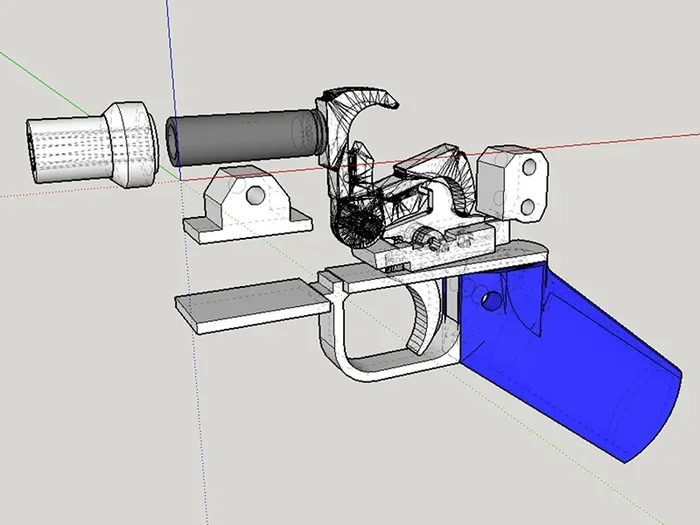
The concept has been around for over a decade. But it gained massive attention in 2013 when a man named Cody Wilson released the blueprints for the Liberator pistol. This was the first widely shared 3D printed gun that could fire a real bullet. It was made almost entirely from plastic and fired a single .380 ACP round.
The Liberator: A Game Changer
The Liberator pistol proved that a functional firearm could be printed at home. It had one shot. The barrel was a small metal insert. The rest of the body was made from ABS plastic. Despite its simplicity, it worked. And that changed everything.
After the Liberator, engineers and hobbyists started experimenting with more advanced designs. Some printed guns now use metal components. Others can fire multiple rounds. The technology is evolving fast, and each new design pushes the boundaries of what is possible with a consumer-grade 3D printer.
Can 3D Printed Guns Actually Shoot Bullets?
This is the question everyone wants answered. And the answer is yes. 3D printed guns can and do shoot bullets. But there are important caveats. The performance of a printed gun depends on several factors, including the material used, the design, and the type of ammunition.
Most 3D printed guns are designed to fire low-caliber rounds. The .380 ACP and 9mm are common choices. Some designers have experimented with larger calibers, but the results are often dangerous. The printed body of the gun may crack or shatter under the pressure of a more powerful round.
How Do They Handle the Pressure?
When a bullet is fired, the gun experiences enormous pressure. Traditional firearms are made from hardened steel and aluminum. They are built to withstand thousands of rounds. 3D printed guns are a different story.
Most printed gun bodies are made from plastic polymers like ABS or PLA. These materials can handle some pressure, but they are not as strong as metal. This is why many 3D printed designs include metal inserts. A metal barrel lining or firing pin can help the gun handle the stress of firing.
Without these metal reinforcements, a 3D printed gun is more likely to fail. The barrel might bulge or crack. The receiver might split apart. These failures can be dangerous to the shooter. In some cases, they have caused serious injuries.
Real-World Tests and Results
Several organizations and individuals have tested 3D printed guns in controlled settings. The results show that these weapons can fire bullets reliably, at least for a few shots. But they are not built for sustained use.
Some tests have shown that a printed gun can fire 5 to 10 rounds before showing signs of wear. Others have failed after just one shot. The variability is huge. This is one of the biggest safety concerns with 3D printed firearms. You simply do not know how many times it will work before something goes wrong.
Experts warn that using a 3D printed gun is inherently risky. The materials are not tested or certified for firearm use. There is no quality control. And the consequences of a failure can be severe.
What Materials Are Used in 3D Printed Guns?
The material choice is one of the most important factors in whether a 3D printed gun can shoot bullets safely. Different materials offer different levels of strength, durability, and heat resistance.
Plastic Polymers
The most common materials for 3D printed guns are ABS (Acrylonitrile Butadiene Styrene) and PLA (Polylactic Acid). ABS is stronger and more heat-resistant than PLA. It is the preferred choice for most printed gun designs.
PLA is easier to print with, but it is more brittle. It can crack under the stress of firing. ABS is tougher, but it can warp if exposed to heat. Both materials have limitations when it comes to handling the pressure of a gunshot.
Metal Inserts and Reinforcements
Because plastic alone cannot handle the full force of a fired bullet, many designers add metal parts. Common metal inserts include:
- Steel barrel liners to withstand the heat and pressure of the bullet.
- Metal firing pins to ensure reliable ignition of the primer.
- Nail or bolt inserts used as the firing mechanism.
- Metal receiver sections to reinforce the most stressed parts of the gun.
These metal components make the gun more functional. But they also make it heavier and more detectable. A fully plastic gun is one of the big concerns in the gun control debate. But in reality, most working 3D printed guns include at least some metal parts.
Advanced Materials
Some advanced users have experimented with stronger materials. Nylon-based filaments and polycarbonate offer better durability than standard ABS or PLA. These materials can handle higher pressures and more shots. But they require more expensive printers and more technical skill to use.
There is also interest in metal 3D printing for gun manufacturing. Industrial metal printers can create gun parts from steel or aluminum. But these machines cost thousands of dollars. They are not something the average person has in their garage.
The Legal Landscape of 3D Printed Guns
The legal status of 3D printed guns is a mess. Laws are struggling to keep up with the technology. In many places, the rules are unclear or outdated.
United States Regulations
In the United States, it is legal to manufacture a firearm for personal use. This includes guns made with a 3D printer. However, there are important rules to follow:
- The gun must not be classified as a short-barreled rifle or short-barreled shotgun.
- If you add a silencer or machine gun capability, you need federal approval.
- You must comply with all federal, state, and local gun laws.
- Selling a 3D printed gun without a license is illegal.
The key issue is that 3D printed guns often fall into a gray area. They are not serial-numbered. They are not registered. And they can be made without a background check. This has earned them the nickname “ghost guns.”
The Blueprint Debate
A huge part of the legal debate centers on sharing 3D printing files online. In 2018, the U.S. Department of State settled a lawsuit with Cody Wilson, allowing him to post the Liberator blueprints online. Since then, the files have been downloaded millions of times.
Several states have tried to ban the sharing of 3D gun blueprints. But the legal battles are ongoing. The federal government has also weighed in, with varying degrees of restriction. The core question is whether sharing digital files should be treated the same as manufacturing a weapon.
International Laws
Other countries have taken different approaches. Some nations have strict laws that ban the manufacture of any firearm without a license. Others have specific rules about 3D printed guns. The United Kingdom, for example, has clear laws against manufacturing firearms without proper authorization. In Australia, the regulations are similarly strict.
But enforcement is difficult. A digital file can be shared across borders in seconds. A printer can sit in a home workshop, completely undetected. This makes 3D printed guns a unique challenge for law enforcement and lawmakers worldwide.
Safety Concerns with 3D Printed Guns
Safety is the biggest issue with 3D printed guns. These weapons are not tested. They are not certified. And they are not built to the same standards as factory-made firearms.
Risk of Failure
The most serious danger is that a 3D printed gun can fail during firing. The barrel might burst. The receiver might crack. The slide might separate from the frame. Any of these failures can cause serious injury to the shooter or bystanders.
Even with metal reinforcements, the risk is higher than with a traditional gun. The layers created by a 3D printer are not as uniform as cast or forged metal. Microscopic gaps between layers can weaken the structure. Over time, these weak points can lead to catastrophic failure.
Accuracy and Reliability
3D printed guns are also less accurate and less reliable than factory-made weapons. The layers of plastic can shift slightly during printing. This can affect the alignment of the barrel and the chamber. Even a tiny misalignment can cause the bullet to veer off course.
The firing mechanism is another weak point. A 3D printed trigger or hammer may not function as smoothly as a machined metal part. This can lead to misfires or failures to feed. In a self-defense situation, these reliability issues could be life-threatening.
Heat and Wear
Firing a gun generates a lot of heat. Plastic materials are not great at dissipating this heat. After several shots, the barrel and chamber can become hot enough to deform. This can cause the gun to jam or, worse, to rupture.
Experienced users recommend limiting the number of shots fired from a 3D printed gun. Some designs are only rated for 2 to 5 shots before they need to be retired. This makes them impractical for anything beyond a single use or demonstration.
The Gun Control Debate and 3D Printed Firearms
The rise of 3D printed guns has injected new energy into the gun control debate. Both sides of the issue have strong opinions about what this technology means for public safety.
Arguments for Regulation
Advocates for stricter gun laws see 3D printed guns as a serious threat. Their main concerns include:
- Untraceability: Ghost guns have no serial numbers. They cannot be traced back to a buyer or owner.
- No background checks: Anyone with a printer can make a gun without ever passing a background check.
- Undetectability: Fully plastic guns can pass through metal detectors undetected.
- Accessibility: The digital files are available online, making guns accessible to people who cannot pass legal background checks.
Law enforcement agencies have expressed serious concern about the rise of ghost guns. In recent years, untraceable firearms have shown up at crime scenes more frequently. Police departments are struggling to keep up with this new trend.
Arguments Against Regulation
On the other side, proponents of 3D printed guns argue for personal freedom. Their key points include:
- Second Amendment rights: They believe citizens should have the right to manufacture their own firearms.
- Censorship concerns: Sharing digital blueprints is a form of free speech, they argue.
- Decentralization of power: Some see 3D printed guns as a way to resist government overreach.
- Innovation: The technology has legitimate uses beyond weapons, and restricting it could harm progress in 3D printing.
The debate is complex and deeply personal. It touches on fundamental questions about rights, safety, and the role of technology in society.
What Does the Future Hold for 3D Printed Guns?
The technology behind 3D printed firearms is only going to improve. As printers become more advanced and materials become stronger, the quality and reliability of printed guns will increase. This raises important questions about what the future holds.
Improving Technology
Future 3D printers may be able to produce gun parts from metal at home. Multi-material printers could create objects with both plastic and metal components. The line between a printed gun and a traditional gun will continue to blur.
Some experts predict that within a decade, it may be possible to print a fully functional firearm with no metal parts at all. This would make the weapon completely undetectable by standard security scanners. The implications for airport security, schools, and public spaces are profound.
Evolving Laws
Laws will need to evolve to address these changes. Some experts believe new regulations will focus on digital files rather than physical weapons. Others think the focus should be on the printers themselves. The conversation is ongoing, and there are no easy answers.
What is clear is that 3D printed guns are not going away. The technology is too accessible and too powerful to ignore. Whether you see them as a tool of freedom or a threat to safety, they represent a major shift in how weapons can be made and distributed.
Key Takeaways
- 3D printed guns can fire bullets: They use the same ammunition as traditional firearms and can be lethal.
- Plastic and polymer materials dominate: Most 3D printed guns are made from lightweight plastics that can evade metal detectors.
- The Liberator pistol changed the conversation: The first widely publicized 3D printed gun proved the concept was real.
- Gun laws are struggling to keep up: Regulations haven’t caught pace with 3D printing technology and digital blueprint sharing.
- Safety is a major concern: 3D printed guns carry higher risks of failure, injury, and malfunction than factory-made firearms.
- Ghost guns are a growing problem: Untraceable weapons made with 3D printers are increasingly showing up in crimes.
- The debate is far from over: Engineers, lawmakers, and activists continue to clash over how to regulate this emerging technology.
Conclusion
So can 3D printed guns shoot bullets? The answer is a definitive yes. They can fire live ammunition, and they can do so with enough force to be lethal. But the story does not end there.
3D printed guns represent a fascinating and frightening intersection of technology, law, and personal freedom. They challenge our assumptions about how weapons are made, who can make them, and how they should be regulated. As the technology continues to advance, these questions will only become more urgent.
Whether you are a gun enthusiast, a tech lover, or simply someone who cares about public safety, it is worth understanding what 3D printed guns can do. The genie is out of the bottle. The digital blueprints are online. And the conversation about how we respond is only just beginning.
The most important takeaway is this: 3D printed guns are real, they work, and they are changing the world. Understanding them is the first step toward making informed decisions about the future of firearms and the role of technology in our lives.
Frequently Asked Questions
Are 3D printed guns dangerous?
Yes, 3D printed guns can be dangerous. They can fire live bullets and cause serious harm. However, they also carry a higher risk of failure than traditional firearms. The plastic materials used in most printed guns can crack or burst under pressure, potentially injuring the shooter.
Can a 3D printed gun be detected by metal detectors?
It depends on the design. A fully plastic 3D printed gun would not be detected by a metal detector. However, most working printed guns include at least some metal parts, such as a barrel lining or firing pin. These metal components make the gun detectable in most cases.
Is it legal to make a 3D printed gun?
In the United States, it is legal to manufacture a firearm for personal use, including with a 3D printer. However, there are restrictions. You cannot make certain types of weapons, like machine guns or short-barreled rifles, without proper registration and approval. Laws vary by country and state.
How much does it cost to print a gun?
The cost depends on the printer and materials. A basic consumer 3D printer costs around $200 to $400. Filament for printing a gun typically costs $20 to $50. So the total material cost is relatively low. However, the printer itself is a significant upfront investment.
Can 3D printed guns be used more than once?
Some designs can fire multiple shots, but most are single-use or limited-use. The plastic materials degrade with each shot due to heat and pressure. Many printed guns are only safe to fire 2 to 5 times before they risk failing catastrophically.
What is a ghost gun?
A ghost gun is a firearm that has no serial number and is not registered. 3D printed guns often fall into this category because they are made at home and do not go through traditional manufacturing channels. Ghost guns are difficult for law enforcement to trace.