Are Star Projectors Safe for Bedrooms and Nurseries
Are star projectors safe? Yes, most galaxy projectors are perfectly safe for bedrooms and nurseries when used correctly. These ambient light projectors create a calming starry night projector effect that helps both kids and adults relax and fall asleep faster. However, there are a few safety considerations around blue light exposure, projector lamp heat, and brightness levels that every user should know about before setting one up in a nursery or child’s room.
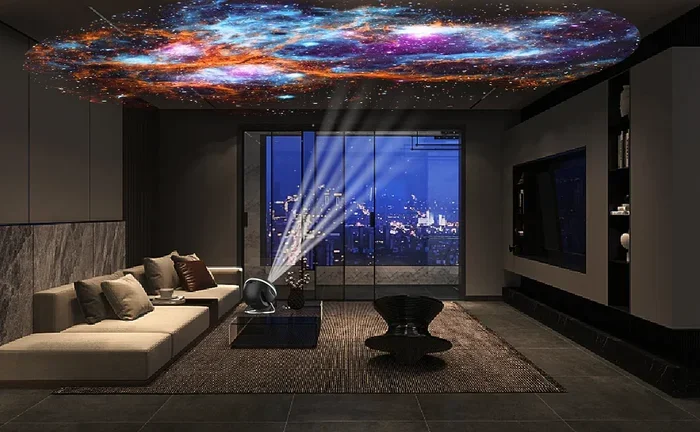
Have you ever walked into a room and felt instantly calm because the ceiling looked like a starry night sky? That is the magic of a star projector. These devices have become hugely popular for bedrooms, nurseries, and even living rooms. They turn any plain ceiling into a dreamy galaxy of stars and nebulae.
But here is the question many parents and buyers ask before purchasing one. Are star projectors safe? It is a fair concern. You want to create a relaxing atmosphere in your child’s room or your own bedroom, but you also want to make sure nobody’s eyes or health are at risk.
The good news is that most modern star projectors for bedrooms and star projectors for nurseries are designed with safety in mind. They use LED technology, low-voltage power, and gentle light output. Still, not all projectors are created equal. Some may have features that could cause problems if used incorrectly or for too long.
In this guide, we will walk through everything you need to know about galaxy projector safety. We will cover how these devices work, what risks might exist, and how to choose a safe model for your home. Whether you are a new parent setting up a nursery or someone who wants a peaceful bedroom setup, this article has you covered.
Key Takeaways
- Star projectors are generally safe: Most LED-based galaxy projectors emit low levels of light that are not harmful to eyes or skin.
- Blue light is the main concern: Some cheaper projectors may emit excess blue light, which can disrupt sleep patterns, especially in nurseries.
- Heat from projector lamps is minimal: LED star projectors stay cool, but older bulb-based models can get warm and should be placed safely.
- Nursery use is safe with precautions: Keep brightness low, use a timer, and place the projector out of baby’s reach.
- Choose the right projector: Look for models with adjustable brightness, warm light modes, and eye-safe certifications.
- Follow the 20-20-20 rule: Even with star projectors, give your eyes regular breaks from any light source.
📑 Table of Contents
- What Are Star Projectors and How Do They Work?
- Are Star Projectors Safe for Bedrooms?
- Are Star Projectors Safe for Nurseries and Babies?
- Potential Risks and Side Effects of Star Projectors
- How to Choose a Safe Star Projector
- Expert Tips for Using Star Projectors Safely
- Common Mistakes People Make With Star Projectors
- Conclusion
What Are Star Projectors and How Do They Work?
A star projector is a device that projects images of stars, planets, galaxies, and nebulae onto walls and ceilings. It works by shining light through a rotating lens or hologram. This creates the illusion of a moving night sky right inside your room.
Most star projectors for kids and adults today use LED light sources. LEDs are energy-efficient and produce very little heat compared to older bulb-based projectors. The light passes through a rotating disc or motor-driven mechanism that spins patterns across the ceiling and walls.
There are two main types of ambient light projectors you will find on the market:
- LED star projectors: These are the most common and safest type. They use light-emitting diodes that stay cool to the touch and last for thousands of hours.
- Laser star projectors: These produce brighter and more vivid images. However, they require more careful handling because lasers can be harmful if viewed directly at close range.
When asking are star projectors safe, it helps to understand what is inside the device. Most quality projectors use low-wattage LEDs and are powered by standard USB cables or batteries. There are no harmful radiations like UV or X-rays in any consumer-grade star ceiling projector. The light produced is similar to what you get from a regular LED lamp.
The rotating parts inside a projector are usually small motors that spin at low speeds. These are enclosed in a plastic casing. There is very little risk of mechanical injury from a well-made galaxy projector. The main safety concerns are almost always related to light exposure and heat, not the moving parts.
Are Star Projectors Safe for Bedrooms?
The short answer is yes. Star projectors for bedrooms are generally very safe for adults and older children. They are used for relaxation, meditation, and creating a cozy sleep environment. Many people use them every night without any issues at all.
However, there are a few things to keep in mind. The light from a starry night projector is not completely neutral. It can affect your sleep quality if the wrong settings are used. Let us look at the main bedroom safety factors.
Blue Light and Sleep Disruption
This is the biggest concern when it comes to bedroom use. Blue light tells your brain that it is daytime. It suppresses melatonin, the hormone that helps you fall asleep. Some LED star projectors emit a noticeable amount of blue light, especially in their cooler color modes.
If you use a galaxy projector in your bedroom at night, choose a model with a warm light setting. Warm white, amber, and soft orange tones are much better for sleep. They mimic the colors of a real sunset and do not interfere with your natural sleep cycle.
Many modern projectors now include a “sleep mode” or “warm mode” specifically designed for nighttime use. This is a great feature to look for when shopping for a star projector for bedroom use.
Brightness and Eye Comfort
A projector brightness that is too high can cause eye strain, even in a dark room. The light hits your eyes indirectly after bouncing off the ceiling, but it is still light entering your eyes. Over time, this can lead to discomfort, especially if you are sensitive to light.
Here are some quick tips to keep your eyes comfortable:
- Always use the lowest brightness setting that still looks good.
- Place the projector across the room, not on your nightstand.
- Avoid staring directly at the projector lens.
- Take a break every 30 minutes if you are using the projector for a long time.
Most people find that a dimmed star projector creates a beautiful, calming effect without any eye discomfort. The key is moderation and smart placement.
Heat and Fire Safety
LED projectors produce very little heat. You can safely leave them on for hours without worrying about overheating. However, older models that use traditional projector bulbs can get quite warm. These are less common now but still exist in some budget or vintage models.
If you have an older bulb-based projector, make sure it is placed on a flat, heat-resistant surface. Keep it away from curtains, bedding, and other flammable materials. A good rule of thumb is to never leave any projector running unattended for very long periods if it uses a traditional bulb.
Modern LED star projectors are built with thermal protection. They will automatically shut off if they overheat. This makes them very safe for overnight use in bedrooms.
Are Star Projectors Safe for Nurseries and Babies?
This is where things get a little more nuanced. Parents naturally want to protect their babies from anything that could be harmful. A star projector for nursery can be a wonderful tool for soothing a baby to sleep. But safety for infants requires extra care.
Eye Safety for Infants
A baby’s eyes are much more sensitive than an adult’s. The lenses in infant eyes are clearer and allow more light to reach the retina. This means that any light source, even a gentle galaxy projector, can have a stronger effect on a baby than on an older child or adult.
The good news is that most pediatric experts agree that soft, ambient light from a star projector is safe for babies when used correctly. The light is indirect and gentle. It does not shine directly into the baby’s eyes the way a lamp or screen would.
Here are some nursery-specific safety tips:
- Use the projector at the lowest brightness setting possible.
- Place it at least three feet away from the crib.
- Aim the projector toward the wall or ceiling, not directly at the baby.
- Use a warm-toned light mode rather than cool or colorful modes.
- Turn the projector off once the baby is asleep, if possible.
Color and Light Temperature Considerations
Not all light is the same, and this matters a lot in a nursery. Cool white and blue-toned light can be stimulating for babies. It can make it harder for them to settle down and stay asleep. On the other hand, warm amber and soft pink tones are naturally calming.
When choosing a star projector for nursery, look for models that offer warm color options. Many projectors now come with a “nightlight” mode that emits a very soft, warm glow. This is ideal for baby rooms.
Some parents worry about star projector radiation. Rest assured, consumer-grade LED projectors do not emit ionizing radiation. They produce visible light only. There is no UV radiation, no X-rays, and no harmful electromagnetic fields from a standard star projector for babies.
Sound and Motion Features
Many galaxy projectors for nurseries also include built-in sound machines or gentle motion effects. These can be very helpful for soothing babies. The combination of soft stars, gentle sounds, and slow movement creates a sleep-friendly environment.
However, be mindful of the volume. A projector with a sound feature should not be too loud. Keep the volume low and gentle to protect your baby’s sensitive hearing. Some models allow you to set a maximum volume limit, which is a great feature for nursery use.
Potential Risks and Side Effects of Star Projectors
While star projectors are safe for most people, it is important to be aware of potential risks. Understanding these helps you use the device more safely and get the most enjoyment from it.
Eye Strain and Fatigue
Even though the light from a starry night projector is indirect, staring at a lit ceiling for a long time can cause eye fatigue. This is especially true if the projector is very bright or if the room is very small, causing the light to be intense.
People with light sensitivity or certain eye conditions should be extra cautious. If you experience headaches, dry eyes, or discomfort after using a galaxy projector, reduce the brightness or limit your exposure time.
Sleep Disruption from Light Exposure
As mentioned earlier, blue light is the enemy of good sleep. If your star projector emits too much blue light, it can trick your brain into thinking it is still daytime. This can delay sleep onset and reduce sleep quality.
This is why it is so important to use warm light modes for evening and nighttime use. A star projector with a warm mode gives you the beautiful visual effect without the sleep disruption.
Choking Hazards for Toddlers
Some star projectors for kids have small removable parts, like lenses or decorative covers. If you have a toddler in the house, these small parts can pose a choking hazard. Always check the age recommendations on the product packaging.
Mount the projector out of reach of young children. Use wall-mounted brackets or place it on a high shelf. This prevents curious little hands from pulling the device down or taking it apart.
Electrical Safety
Like any electronic device, a star projector uses electricity. Make sure the power cable is not frayed or damaged. Do not use the projector near water or in humid environments unless it is specifically rated for that use.
Use a surge protector if you are plugging the projector into a wall outlet. This protects both the device and your home from electrical issues.
How to Choose a Safe Star Projector
Not all galaxy projectors are made the same way. Some are built with safety and quality in mind, while others cut corners. Here is how you can choose a safe and reliable model for your home.
Look for Certified Products
Always check if the star projector has been tested and certified by a recognized safety organization. Look for certifications like CE, FCC, or UL. These marks indicate that the product has been evaluated for electrical safety and electromagnetic compatibility.
A certified star projector for nursery gives you peace of mind that it meets safety standards for use around children.
Check for Adjustable Brightness
The ability to dim the projector is one of the most important safety features. A model with multiple brightness levels lets you set the light to a comfortable, low intensity for nighttime use. This reduces eye strain and sleep disruption.
Some projectors also have a “fade” or “timer” function. These gradually dim the light and turn the projector off automatically after a set period. This is perfect for using in bedrooms and nurseries.
Prioritize LED Over Bulb-Based Models
As we discussed, LED projectors are cooler, safer, and more energy-efficient than bulb-based models. They also last much longer. When shopping for a star projector for bedroom or nursery, LED should be your default choice.
LED projectors also tend to produce less blue light in their warm modes. This makes them a better option for sleep-friendly environments.
Read Reviews and Check for Eye-Safe Features
Before buying any galaxy ceiling projector, read user reviews carefully. Look for feedback about brightness levels, heat output, and overall safety. Other users will often mention if a projector feels too bright or gets too warm during use.
Some premium models now include “eye-safe” LED chips that filter out harmful wavelengths. These are worth the extra investment, especially for nursery use.
Expert Tips for Using Star Projectors Safely
Using a star projector safely comes down to a few simple habits. Here are some expert-backed tips that make a big difference.
- Keep it dim. Always start with the lowest brightness setting and increase only if needed.
- Use a timer. Set the projector to turn off after 30 to 60 minutes. This prevents overnight light exposure that can affect sleep quality.
- Place it strategically. Position the projector so the light bounces off the ceiling rather than shining directly into the room.
- Choose warm tones for bedtime. Warm white, amber, and soft orange are the best colors for sleep environments.
- Keep it clean. Dust can build up on the lens and reduce image quality. Clean the lens gently with a soft cloth to maintain the best projection.
- Supervise young children. Even though the device is safe, toddlers should not play with the projector unsupervised.
- Follow the 20-20-20 rule. Every 20 minutes, look at something 20 feet away for 20 seconds. This helps reduce eye strain from any light source.
These simple practices ensure that your star projector remains a safe and enjoyable part of your daily routine. You get all the benefits of a beautiful night sky without any of the risks.
Common Mistakes People Make With Star Projectors
Even well-meaning users can make mistakes that reduce the safety of their star projector. Here are the most common ones to avoid.
- Using the projector too close to the face. This can cause direct light exposure and eye discomfort. Always place the projector at a reasonable distance.
- Leaving it on all night without a timer. Prolonged light exposure, even at low levels, can affect sleep quality over time.
- Ignoring the color temperature. Using cool blue or white light modes in a nursery or bedroom can disrupt sleep patterns.
- Buying the cheapest option without checking certifications. Cheap, uncertified projectors may have poor electrical safety or emit more blue light than advertised.
- Placing the projector on uneven surfaces. This can cause it to tip over, especially if it has a rotating mechanism that creates vibration.
Avoiding these mistakes is simple and makes a huge difference in how safe and enjoyable your starry night projector experience will be.
Conclusion
So, are star projectors safe? The answer is a clear yes. Star projectors are a wonderful, safe, and enjoyable way to transform any room into a calming space. Whether you want a galaxy projector for your bedroom or a star projector for nursery, the technology is well-established and widely considered safe for everyday use.
The key is to choose a quality LED projector, use warm light modes for nighttime, keep the brightness low, and follow basic safety practices. With these simple steps, you can enjoy the beauty of a star ceiling projector without any worries.
Remember, a star projector is a tool for relaxation and comfort. When used thoughtfully, it enhances your sleep environment and creates a magical atmosphere for you and your family. So go ahead, bring the stars indoors, and enjoy the peaceful glow of a personal galaxy right above your head.
Take the time to pick the right model, set it up safely, and make the most of your galaxy projector experience. Sweet dreams and clear skies await you.
Frequently Asked Questions
Can a star projector damage my eyes?
No, a quality star projector will not damage your eyes when used as intended. The light is indirect and projected onto the ceiling or walls. However, staring directly at the projector lens or using a very bright model for extended periods can cause temporary eye strain. Always use the lowest comfortable brightness and avoid looking directly at the light source.
Are star projectors safe for newborns and babies?
Yes, most star projectors for nursery use are safe for newborns when used properly. Keep the brightness low, use warm-toned light, and place the projector at least three feet from the crib. Avoid cool blue or bright white modes, as these can be overstimulating for babies. Always turn the projector off once the baby is deeply asleep.
Do star projectors emit harmful radiation?
No. Consumer-grade LED star projectors do not emit ionizing radiation, UV rays, or X-rays. They produce visible light only, similar to a standard LED lamp. Laser-based projectors should be used with more caution, as direct exposure to laser light can be harmful, but indirect projection is safe.
Can I leave a star projector on all night?
You can, but it is not recommended for optimal sleep health. Even low-level light can affect melatonin production and sleep quality over time. Use a projector with a built-in timer to automatically turn it off after 30 to 60 minutes. This gives you the calming effect at bedtime without disrupting your sleep through the night.
What is the best color for a star projector in a bedroom?
Warm white, amber, and soft orange are the best colors for a star projector in the bedroom. These warm tones do not suppress melatonin and help promote relaxation and sleep. Avoid cool white and blue modes for nighttime use, as they can trick your brain into thinking it is still daytime.
How do I clean and maintain my star projector safely?
Unplug the projector before cleaning. Use a soft, dry microfiber cloth to gently wipe the lens and exterior. Do not use water or cleaning sprays directly on the device. Keep the projector in a dust-free area when not in use, and check the ventilation openings regularly to prevent dust buildup that could cause overheating.