Can You Get Projector Screen Paint And Transform Any Wall
Can you get projector screen paint? Yes, you absolutely can. Projector screen paint turns any blank wall into a high-quality projection surface, making it one of the best hacks for home theater lovers on a budget. Whether you want a cinematic movie night or a stunning wall projection setup, this simple solution can elevate your viewing experience without the cost of a traditional screen.
Key Takeaways
- Projector screen paint exists and works great: It converts ordinary walls into professional-grade projection surfaces.
- Multiple brands and types are available: From ambient light rejection to gray screen paint, there is an option for every room.
- DIY application is straightforward: You do not need special skills to paint your own projection wall.
- It is more affordable than a traditional screen: A can of screen paint costs a fraction of what a pull-down screen costs.
- Common mistakes can ruin the result: Proper prep and technique matter more than you might think.
- It is not perfect for every situation: Bright rooms and low-lumen projectors can be a challenge.
📑 Table of Contents
What Is Projector Screen Paint?
So, can you get projector screen paint? The short answer is yes. Projector screen paint is a special type of coating designed to turn any flat surface into a high-quality projection surface. Instead of hanging a bulky fabric screen, you simply paint your wall and instantly create a dedicated home cinema display.
Think of it as a paintable screen that stays put permanently. You apply it just like regular wall paint, but the formulation is different. It creates a smooth, reflective surface that enhances how your projector brightness translates onto the wall. The result? A crisp, vibrant image that makes every movie night feel like a trip to the theater.
This concept has exploded in popularity over the last few years. People are tired of dealing with wrinkled fabric screens, messy frames, and limited placement options. Paint-on screen technology solves all of that. You get a seamless, wall-sized display that looks sleek and professional.
But here is the thing. Not all screen paint products are created equal. Some work better in dark rooms, while others handle ambient light. The key is understanding what you need and choosing the right product for your space. Let us break down exactly how this works.
How Is It Different From Regular Paint?
Regular wall paint absorbs light. Projection screen paint reflects it back in a controlled way. This difference is huge. When a projector beam hits a normal painted wall, the image looks washed out and dull. But when it hits a screen coating, the light bounces back with clarity and color accuracy.
The screen texture of these specialty paints is also engineered for uniformity. Regular walls have tiny bumps, roller marks, and imperfections. Screen paint creates a perfectly smooth surface that eliminates distortion. That is why the viewing experience improves so dramatically after application.
How Does Projector Screen Paint Work?
Understanding the science behind projector screen paint helps you make better choices. The paint contains micro-particles that are designed to reflect light directly back to the viewer. This is called gain. A higher gain means a brighter image. A lower gain means wider viewing angles.
Most projection wall coatings fall into two categories. You have high-gain paints that boost brightness, and low-gain paints that offer wider viewing angles. Your choice depends on your room setup and the type of projector you use.
The Role of Ambient Light Rejection
If your room gets a lot of natural light, you need ambient light rejection (ALR) technology. Some screen paint brands now offer coatings specifically designed to reject ambient light while preserving the projected image. These paints work by selectively reflecting the light from your projector while absorbing light from other sources like windows and lamps.
This is a game-changer for people who want to watch movies during the day. In the past, you needed blackout curtains and a completely dark room. With modern ALR paint, you can enjoy a bright, clear image even with sunlight streaming in.
Gray Screen Paint vs. White Screen Paint
You will find two main color options. White screen paint is the most common. It delivers bright, vivid images and works well in dark rooms. Gray screen paint, on the other hand, absorbs more light and boosts contrast. It is ideal for rooms with some ambient light.
Here is a quick comparison to help you decide:
- White screen paint: Best for dark rooms, delivers vibrant colors and high brightness.
- Gray screen paint: Best for rooms with some light, improves black levels and contrast.
- Two-tone paints: Some brands offer dual-surface options for maximum flexibility.
Top Brands and Products to Consider
When you decide to transform any wall into a projection surface, the brand you choose matters. Not all products perform the same way. Here are some of the most popular screen paint brands on the market right now.
Screen Goo
Screen Goo is one of the most well-known names in projector screen paint. It comes in several formulations, including options for ambient light rejection. The company has been around for years and has built a solid reputation among home theater enthusiasts. Users love that it goes on smoothly and dries to a uniform finish.
Paint On Screen
Paint On Screen offers a more budget-friendly option. It is a DIY-friendly product that works well for casual movie nights and gaming setups. The coverage is decent, and you can apply it with a standard roller. It does not have the same advanced ALR technology as premium brands, but it gets the job done for most users.
Sherwin-Williams Screen Perfection
Sherwin-Williams entered the projection surface game with its Screen Perfection line. This is a great option if you already trust the brand for your home paint needs. The product is widely available and offers reliable performance for wall projection setups.
Epson and Other Specialty Brands
Some projector manufacturers also make their own screen coatings. Epson, for example, offers products designed to work specifically with their projectors. These are worth considering if you want guaranteed compatibility. However, they can be more expensive than third-party options.
How to Apply Projector Screen Paint on Your Wall
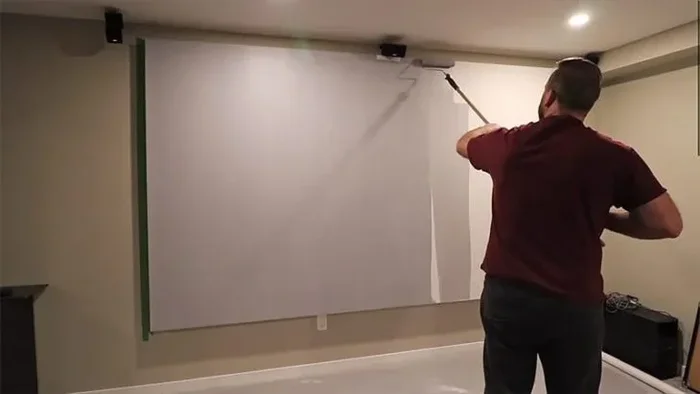
One of the best things about projector screen paint is how easy it is to apply. You do not need to be a professional painter. With the right preparation and a little patience, you can create a stunning DIY projector screen in a single weekend.
Step-by-Step Application Process
Follow these steps for the best results when applying projection wall paint:
- Clean the wall thoroughly. Remove any dust, dirt, or grease. A clean surface ensures proper adhesion and a smooth finish.
- Sand the wall lightly. Use fine-grit sandpaper to smooth out any bumps or imperfections. Wipe away the dust afterward.
- Apply a primer if needed. Some screen paint brands recommend a specific primer. Check the product instructions before you start.
- Apply the first coat evenly. Use a high-quality roller for a uniform finish. Avoid brush marks by working in small sections.
- Let it dry completely. Most products require several hours between coats. Follow the manufacturer’s drying time recommendations.
- Apply additional coats as needed. Two to three coats usually provide the best screen texture and reflectivity.
- Allow full curing before use. Wait at least 24 to 48 hours before projecting onto the wall.
Quick Tips for a Flawless Finish
- Use a foam roller for the smoothest application.
- Work in a dust-free room to avoid particles settling on the wet paint.
- Do not apply too thick. Multiple thin coats beat one thick coat every time.
- Test a small area first to check the color and reflectivity.
- Consider using a paint sprayer for larger walls to achieve an ultra-smooth finish.
Common Mistakes to Avoid
Even with a simple process, mistakes happen. Here are the most common errors people make when applying projector screen paint:
- Skipping surface preparation. A dirty or rough wall leads to an uneven finish and poor image quality.
- Using the wrong roller. A cheap roller leaves lint and texture that shows up on the projection.
- Applying too many coats too quickly. This can cause drips and an uneven surface that distorts the image.
- Ignoring room lighting. The paint looks different under projection than it does in daylight. Always test with the projector before committing.
- Not measuring coverage. Measure your wall area before buying paint. Running out mid-project is frustrating and delays your home cinema setup.
Projector Screen Paint vs. Traditional Screens
Now that you know can you get projector screen paint, let us compare it to the traditional alternative. A pull-down screen or a fixed-frame screen is the classic choice for home theater setups. But screen paint has some serious advantages.
Cost Comparison
A quality projector screen can cost anywhere from $100 to over $1,000. A can of projector screen paint typically costs between $50 and $150. For a standard-sized wall, one can might be enough. That makes screen paint significantly more affordable, especially if you want a large projection area.
Installation and Convenience
Traditional screens require mounting hardware, measuring, and sometimes drilling holes into your walls. Paint-on screen eliminates all of that. You just paint the wall and you are done. There is no assembly, no hardware, and no clutter.
Aesthetics and Flexibility
A painted projection wall blends seamlessly with your room decor. You do not see a big white rectangle dominating your living space when it is not in use. The wall looks normal, and the projection surface is hidden in plain sight. This is a huge advantage for people who value clean, minimalist design.
On the flip side, traditional screens can be moved to different rooms. They are also easier to replace if damaged. Screen paint is a permanent installation. You cannot easily undo it or relocate it.
Image Quality
In a controlled, dark room, a high-quality traditional screen may still offer slightly better image quality. The materials used in commercial screens are specifically engineered for optimal light reflection. However, modern screen paint brands have closed the gap significantly. For most home setups, the difference is barely noticeable.
Is Projector Screen Paint Worth It?
So, is investing in projector screen paint the right move for you? It depends on your situation, but for most people, the answer is a resounding yes.
If you are someone who loves hosting movie nights, you game on a big screen, or you simply want a home cinema experience without spending a fortune, screen paint is a fantastic option. It is affordable, easy to apply, and delivers impressive results.
The viewing experience improves dramatically compared to projecting onto a regular wall. Colors pop, contrast improves, and the overall image looks much sharper. If you have been on the fence about trying a DIY projector screen, this is the simplest and most cost-effective way to get started.
Just remember that preparation matters. Take the time to prep your wall properly, choose the right product for your room conditions, and apply it carefully. The effort you put in directly affects the final result. A rushed job will not give you the crisp, cinema-quality image you are hoping for.
Also, keep in mind that projector screen paint works best when paired with a decent projector. If your projector brightness is too low, even the best paint will not compensate. Make sure your projector is up to the task before you invest in the paint.
In the end, transforming any wall into a projection surface is one of the most rewarding upgrades you can make to your entertainment setup. It is simple, effective, and incredibly satisfying to see your wall come alive with a bright, clear image. Give it a try, and you will wonder why you did not do it sooner.
Conclusion
Can you get projector screen paint? Absolutely. And the best part is that it is easier and more affordable than you might think. Projector screen paint opens up a world of possibilities for anyone who wants a bigger, better home theater experience. Whether you are a casual movie night watcher or a serious home cinema enthusiast, this simple upgrade can completely change how you enjoy projected content.
The key is choosing the right product, preparing your wall properly, and applying it with care. With the right screen paint brand and a little effort, you can turn any blank wall into a stunning projection surface that rivals expensive commercial screens. So go ahead, grab a can of projection wall paint, and start your DIY projector screen project today. Your next movie night will never be the same.
Frequently Asked Questions
Can you use regular white paint as a projector screen?
Regular white paint is not ideal for projection. It absorbs too much light and produces a dull, washed-out image. Projector screen paint is specifically formulated to reflect light back to the viewer with clarity and brightness. If you absolutely must use regular paint, choose a high-gloss white, but the results will still be far inferior to a proper screen coating.
How long does projector screen paint last?
Most quality screen paint brands last for years without peeling or degrading. The longevity depends on the brand, the number of coats applied, and the condition of your wall. With proper application and a good primer, your projection surface can last a decade or more without needing a refresh.
Can projector screen paint be used outdoors?
Some screen paints are formulated for outdoor use, but most are designed for interior walls. Outdoor use exposes the paint to moisture, UV rays, and temperature changes that can degrade the screen texture over time. If you want an outdoor projection setup, look for products specifically rated for exterior use.
Does projector screen paint work with all projectors?
Screen paint works with most projectors, but the results vary based on your projector’s brightness and resolution. A high-lumen projector paired with quality projector screen paint delivers the best viewing experience. Lower-lumen projectors may struggle in brighter rooms, regardless of the paint used.
Can you paint over projector screen paint if you want to change it?
Yes, you can paint over screen paint with regular wall paint. However, the projection surface will be permanently covered. If you think you might want to revert to a screen setup later, consider applying the paint to a removable panel instead of the entire wall. This gives you the flexibility to change your setup whenever you want.
Is projector screen paint toxic or does it have fumes?
Most projector screen paint products are low-VOC and safe for indoor use. However, it is always a good idea to ventilate your room during application and while the paint dries. Check the product label for specific safety information. Using a mask during application is a good precaution, especially if you are sensitive to paint fumes.