Do Projector Screens Work In Daylight Yes Heres How
Yes, projector screens can work in daylight, but you need the right screen type, brightness level, and placement strategy. Many people assume projector screens only work in dark rooms, but modern screens and projectors are designed to handle ambient light. With the right projector screen and a few smart adjustments, you can enjoy a vibrant image even in broad daylight.
Key Takeaways
- Projector screens CAN work in daylight if you choose the right screen gain and projector brightness.
- High-gain screens reflect more light back to viewers, making them ideal for bright environments.
- Ambient light rejection (ALR) screens are specifically designed to combat sunlight and room lighting.
- Projector placement and angle play a huge role in how well your screen performs during the day.
- Avoid white bedsheets or plain walls as makeshift screens, as they wash out badly in daylight.
- Window coverings and shade can dramatically improve your daytime viewing experience.
- Brightness measured in lumens is the most important projector spec for daylight use.
📑 Table of Contents
- Do Projector Screens Work In Daylight?
- How Ambient Light Affects Projector Screens
- Best Projector Screen Types For Daylight Use
- How To Make Your Projector Screen Visible In Daylight
- Common Mistakes That Ruin Daytime Projector Screen Viewing
- Expert Tips For The Best Daytime Projector Experience
- Final Verdict: Do Projector Screens Work In Daylight?
Do Projector Screens Work In Daylight?
Here is the short answer. Yes, projector screens work in daylight. But there is a catch. Not every screen delivers great results when the sun is shining. The secret lies in choosing the right screen gain, projector brightness, and setup position. If you get these three things right, you can watch movies, play games, or present slides in a sunlit room without any headaches.
Many people believe projector screens only belong in dark basements or windowless home theaters. That idea is outdated. Today’s projector technology has come a long way. Screens are now built with special materials that handle ambient light far better than older models. Whether you are setting up an outdoor movie night or watching in a bright living room, a projector screen can absolutely deliver a bright and clear image.
The real question is not whether projector screens work in daylight. The real question is how to make them work well. And that is exactly what this guide covers. You will learn about screen types, projector specs, placement tips, and common mistakes to avoid. By the end, you will know everything you need to enjoy a great picture even when the sun is blazing.
How Ambient Light Affects Projector Screens
What Is Ambient Light And Why Does It Matter?
Ambient light is any light that is not directly from your projector. This includes sunlight coming through windows, ceiling lights, lamps, and even light bouncing off walls. When ambient light hits your screen, it competes with the light your projector sends out. The result is a washed-out, dim image that is hard to see.
Think of it this way. Your projector is trying to paint a picture on the screen. Ambient light is like someone spraying water paint over that picture. The more ambient light there is, the harder it becomes to see what your projector is trying to show. This is called the washout effect, and it is the number one enemy of daytime projector viewing.
Different screen materials handle ambient light in different ways. A basic white screen scatters light in all directions. This makes it easy to see from many angles, but it also picks up a lot of ambient light. A high-gain screen focuses light back toward the viewers. This makes the image brighter but can narrow your viewing angle. Understanding this tradeoff is key to picking the right setup.
The Role Of Screen Gain In Daylight Performance
Screen gain is a number that tells you how well a screen reflects light. A screen with a gain of 1.0 reflects light exactly as a standard white wall would. Anything above 1.0 reflects more light back to the audience. Anything below 1.0 spreads light out more widely.
For daylight viewing, you generally want a screen gain between 1.0 and 1.5. Screens with very high gain numbers above 2.0 can create hotspots, which are bright spots in the center of the image. The sweet spot for most daytime setups is a medium-gain screen that balances brightness with even light distribution.
Here is a quick comparison of common screen gain levels.
- Low gain (0.8 to 1.0): Great for dark rooms. Spreads light evenly. Not ideal for daylight.
- Medium gain (1.0 to 1.5): Best all-around choice. Handles some ambient light well.
- High gain (1.5 to 2.5): Reflects more light back. Good for daylight but can create hotspots.
- Ultra high gain (2.5+): Very bright but narrow viewing angle. Best for single-viewer setups.
Best Projector Screen Types For Daylight Use
Ambient Light Rejection (ALR) Screens
If you want the best daylight performance, ALR screens are the way to go. These screens are designed with special materials that reject ambient light from angles other than the projector’s position. They essentially filter out unwanted light and only reflect the projector’s image back to the viewers.
ALR screens work by using a combination of layered materials and optical structures. Some use micro-painted surfaces that absorb ambient light. Others use directional coatings that reflect projector light more efficiently. The result is a much clearer and more vibrant image, even in a brightly lit room.
ALR screens do come with a higher price tag. You can expect to pay more than a standard screen. But if you watch movies or present in a room with lots of natural light, the investment is worth it. The image quality improvement is dramatic.
Gray Screens For Better Contrast
Gray projector screens are another excellent option for daylight use. They absorb more ambient light than white screens, which helps maintain deeper blacks and better contrast. This makes the image look more natural and less washed out.
Gray screens are especially popular for rooms where you cannot block out sunlight completely. They work well with both home theater setups and business presentations. The tradeoff is that they can make the overall image slightly dimmer, so you need a projector with enough brightness to compensate.
Portable And Inflatable Screens
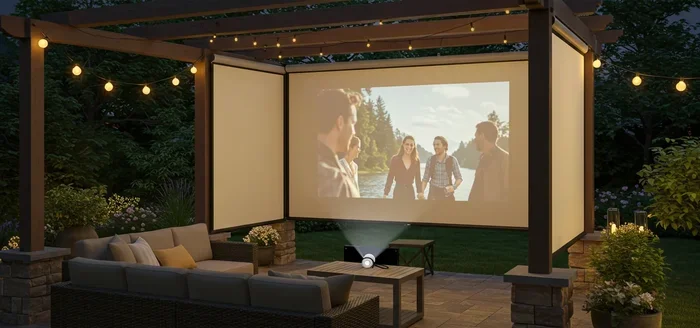
Not all daylight setups happen indoors. Many people use projectors outdoors for backyard movie nights, camping trips, or events. In these cases, a portable projector screen or an inflatable screen works great.
Portable screens are lightweight and easy to set up. They often come with their own frames and carry bags. Inflatable screens are even easier, as they self-inflate with a built-in fan. Both types are designed to be used in open environments where controlling ambient light is not possible.
For outdoor daylight use, look for screens with a matte white or high-gain surface. These will help your image stand out against the bright sky and surrounding environment. You can also check out can I use a projector as a TV for tips on making your projector work in various settings.
How To Make Your Projector Screen Visible In Daylight
Choose A Projector With High Lumens
The first step to a great daytime image is a bright projector. Projector lumens measure how much light the projector produces. The higher the lumen count, the brighter and more visible the image will be in daylight.
For daylight viewing, aim for at least 3,000 lumens. If your room gets direct sunlight, go for 4,000 lumens or more. Budget projectors often fall short at 1,500 to 2,000 lumens, which is fine for evening use but not for daytime. Investing in a brighter projector makes the biggest single difference in image quality.
Keep in mind that lumen ratings can be misleading. Some manufacturers use different measurement standards. Look for ANSI lumens, which is the most accurate and consistent measurement. This number will give you a reliable idea of how bright your projector really is.
Position Your Projector And Screen Strategically
Placement matters more than most people realize. The angle at which your projector hits the screen affects image brightness and clarity. If you can position the screen so it does not face a window or direct sunlight, you will immediately see an improvement.
Try to place your screen on a wall that faces away from the main light source. If that is not possible, consider using a projector screen on a shelf or a freestanding frame that you can move to the best spot in the room. You can also angle the screen slightly to reduce glare from overhead lights or windows.
For the projector itself, keep it as close to perpendicular to the screen as possible. This reduces keystone distortion and ensures the brightest, sharpest image. If you must project at an angle, use a projector with good keystone correction or lens shift capabilities.
Control The Light In Your Room
You do not need to make your room completely dark to use a projector screen in daylight. But you do need to manage the light. Simple steps can make a huge difference.
- Close blinds or curtains on windows that face the sun. This is the single most effective thing you can do.
- Turn off overhead lights in the room where you are watching.
- Use dim lamps instead of bright ceiling fixtures.
- Position the screen away from reflective surfaces like mirrors or glossy walls.
- Use a projector screen with a dark border to absorb stray light around the edges.
These small changes add up quickly. Even partially dimming the room can transform your viewing experience. The goal is to reduce the amount of competing light so your projector can do its job.
Use The Right Screen Material
The material of your screen plays a huge role in daylight performance. Not all screen materials are created equal. Here are the best options for daytime use.
- High-gain vinyl screens: Reflect more light back to viewers. Great for bright rooms.
- ALR screens: Designed to reject ambient light. Best overall for daylight.
- Woven projection screens: Offer good balance between gain and viewing angle.
- Acoustic transparent screens: Allow sound to pass through. Great for immersive setups.
Avoid using a plain white bedsheet or wall as a screen for daylight viewing. These surfaces scatter light in every direction and pick up too much ambient light. The image will look flat and washed out. A proper projection screen material is designed to direct light where it needs to go.
If you are looking for a quick and easy setup, consider making your projector wireless so you can move it around the room easily to find the best position for daylight viewing.
Common Mistakes That Ruin Daytime Projector Screen Viewing
Using A Screen That Is Too Small
Bigger is not always better, but going too small is a common mistake. A small screen in a bright room loses contrast fast. The image looks dim and hard to see. For daylight use, go with a screen size that is at least 100 inches diagonally. This gives the projector enough surface area to produce a visible and enjoyable image.
Ignoring The Projector’s Native Resolution
Brightness is not the only spec that matters. Your projector’s native resolution affects how sharp and clear the image looks. A 1080p projector will look much better than a 720p projector, especially when you are trying to fight daylight washout. The sharper the image, the easier it is for your eyes to pick up details even in bright conditions.
Forgetting About Screen Aspect Ratio
Make sure your screen aspect ratio matches your content. Most movies use a 16:9 aspect ratio. Presentations often use 16:9 or 4:3. If your screen does not match the content, you will see black bars or stretched images. This is especially noticeable in daylight, where the contrast is already lower.
Placing The Screen In Direct Sunlight
This one seems obvious, but people still do it. Placing your screen directly in a beam of sunlight will make the image impossible to see. No matter how bright your projector is, direct sun exposure will overwhelm the image. Always find a spot where the screen is shielded from direct sunlight, even if it means moving it to a different wall or room.
Skipping The Test Run
Before you host a movie night or important presentation, always do a test run during the daytime. Set up your projector and screen exactly where you plan to use them. Turn on the projector and check the image quality in the actual lighting conditions. This lets you make adjustments before it matters. You can tweak the screen angle, projector position, or room lighting until you get the best possible picture.
Expert Tips For The Best Daytime Projector Experience
Here are some pro tips that make a real difference. First, calibrate your projector settings for daylight mode. Many modern projectors have a brightness or dynamic mode that boosts output for well-lit rooms. Turn this on before you start watching.
Second, use a matte white or light gray wall paint on the screen wall if you are using a wall-mounted screen. This creates a more consistent surface that reflects light evenly. Third, consider using a projector headlight replacement with LED if your projector uses a traditional bulb, as LEDs produce more consistent brightness over time and handle daylight conditions better.
Fourth, keep your projector lens clean. Dust and smudges scatter light and reduce image sharpness. A quick wipe before each use can noticeably improve picture quality. Fifth, if you are projecting outdoors, try to start your session during overcast conditions or after sunset. The less direct sunlight hitting the screen, the better your image will look.
Finally, remember that your projector and screen work as a team. A great screen with a weak projector will underperform. A bright projector with a poor screen will also fall short. Match both components to your daylight needs for the best results.
Final Verdict: Do Projector Screens Work In Daylight?
The answer is a clear yes. Projector screens absolutely work in daylight. But success depends on three key factors. Choose a screen with the right gain for your lighting conditions. Use a projector with enough brightness, measured in lumens. And set up your equipment in a position that minimizes direct sunlight and ambient light interference.
With an ambient light rejection screen and a high-lumen projector, you can even watch movies in a sunlit living room. For outdoor setups, a portable high-gain screen paired with a bright projector delivers surprisingly good results. The days of needing a completely dark room for projector viewing are long gone.
So go ahead and set up your projector screen in the brightest room of your house. Or take it outside for a backyard movie night. With the right gear and a few smart positioning tricks, you will enjoy a bright, clear, and colorful image no matter what the sun is doing. The technology is ready. All you need is the right setup and the confidence to try it.
Whether you are a home theater enthusiast or someone who needs a projector for work presentations, daytime projector screen use is fully achievable. Start with the tips in this guide, experiment with your setup, and you will be amazed at how well a projector screen performs even in broad daylight.
Frequently Asked Questions
Can I use a regular projector screen in direct sunlight?
A standard white screen will struggle in direct sunlight. The image will look washed out and dim. For direct sun exposure, you need an ambient light rejection screen or a high-gain screen paired with a very bright projector. Even then, direct sunlight is the toughest condition for any projector setup.
How many lumens do I need for a projector screen in daylight?
For a room with natural daylight, aim for at least 3,000 ANSI lumens. If the room gets heavy direct sunlight, 4,000 lumens or more will give you a much better image. The brighter your projector, the easier it is to overcome ambient light and maintain a clear picture.
What is the best screen color for daylight projector use?
Matte white and light gray are the best screen colors for daytime use. White screens offer the brightest image, while gray screens provide better contrast by absorbing some ambient light. Avoid dark or colored screens for daylight setups, as they will make the image too dim.
Can I use an outdoor projector screen during the day?
Yes, but you need a high-gain or ALR screen and a projector with at least 3,000 lumens. Outdoor daylight is challenging because you cannot control the light source. Start with overcast conditions or shade the screen area with a canopy for the best results.
Do ALR screens really make a difference in daylight?
Yes, ambient light rejection screens make a significant difference. They are specifically engineered to filter out ambient light from angles other than the projector. This results in a much sharper and more vibrant image compared to standard screens when used in bright rooms.
Is it better to project on a wall or a screen in daylight?
A dedicated projector screen is always better than a wall. Screen materials are designed to reflect light efficiently and evenly. A wall, especially a textured or painted one, scatters light unpredictably. In daylight conditions, the difference between a proper screen and a wall is very noticeable.