How Do Gramophones Work And What Makes Them Special
The gramophone is a fascinating mechanical device that turns physical grooves on a record into the music you hear. It uses a needle, diaphragm, and horn to amplify sound waves without any electricity. Understanding how do gramophones work gives you a new appreciation for this brilliant piece of engineering that started the entire music playback revolution.
Have you ever held a vintage record and wondered how it produces music? The answer lies in a beautiful machine called the gramophone. How do gramophones work is a question that surprises many people, especially in a world dominated by digital streaming and wireless devices like Google Mesh that works wirelessly. But the gramophone tells a different story. It tells a story of pure mechanical magic.
Before Spotify, before CDs, before even radio broadcasts, there was the gramophone. This incredible device brought music into homes for the very first time. It gave people the power to listen to their favorite songs whenever they wanted. That was a big deal back then. Understanding how do gramophones work helps us see just how clever the inventors were. They built a machine with no computers, no batteries, and no internet. Yet it could fill a room with music.
In this guide, we will walk you through every part of the gramophone. We will look at the needle, the grooves, the horn, and the diaphragm. By the end, you will understand exactly why this device is so special. You will also learn how it paved the way for every music player that came after it. So let us dive in and explore the world of gramophone mechanics together.
Key Takeaways
- Gramophones work mechanically: They use a needle tracing grooves on a vinyl record to create vibrations that become sound.
- No electricity needed: Early gramophones were entirely acoustic, relying on a horn to amplify sound naturally.
- The diaphragm and needle are key: These two components convert physical vibrations into audible sound waves.
- Gramophones changed music forever: They made music portable and personal for the first time in history.
- Modern turntables evolved from gramophones: Today’s record players use similar principles with electronic enhancements.
- Proper care matters: Keeping the needle clean and the record dust-free ensures the best sound quality.
- They connect to broader tech history: Just like hidden cameras that work without internet, gramophones prove that clever engineering can make devices work with minimal technology.
📑 Table of Contents
The Basic Working Principle of a Gramophone
How Sound Is Captured on a Record
A gramophone record is like a tiny sound map. When music is recorded, the sound waves are carved into a flat disc as tiny grooves. These grooves spiral inward from the outside edge toward the center. Each wiggle and curve in the groove represents a specific sound. Louder sounds make deeper wiggles. Softer sounds make shallower ones. The record holds all of this information physically.
Think of it like a fingerprint for sound. Every song has its own unique groove pattern. When the gramophone plays the record, the needle follows these grooves. It reads the physical shape of each wave. This is the very first step in how do gramophones work. The record stores the music. The needle reads it. The machine turns it back into sound.
The Role of the Needle and Diaphragm
The needle is the most important part of the gramophone. It is also called the stylus. The needle sits at the end of the tone arm. As the record spins, the needle drops into the groove. It follows the tiny curves and valleys carved into the surface.
When the needle moves, it vibrates. These vibrations match the original sound waves that were recorded. The needle transfers these vibrations to a thin piece of material called the diaphragm. The diaphragm is usually made of metal or thin plastic. It is very light and very sensitive. When the needle pushes it, the diaphragm begins to shake. These shakes are what we call sound waves. The diaphragm makes the air around it vibrate, and that vibration reaches your ears as music.
The Horn Amplifier
Here is where the gramophone really shines. Early gramophones had no electricity at all. They had no speakers and no amplifiers. So how did they make sound loud enough to hear? The answer is the horn.
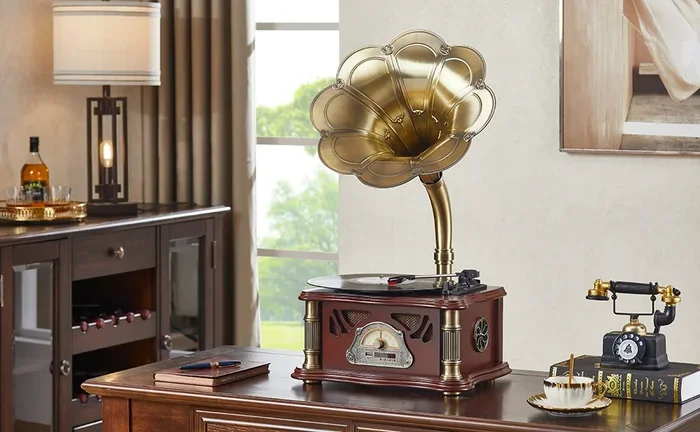
The horn is a large, flared cone usually made of metal or wood. It connects to the diaphragm. When the diaphragm vibrates, the horn catches those vibrations. It then amplifies them by spreading the sound out over a larger area. The shape of the horn is very important. It is wider at the end and narrower near the diaphragm. This shape helps push the sound forward. It makes quiet vibrations into something you can actually hear. This is pure acoustic amplification. No plugs, no power cords, no batteries.
A Brief History of the Gramophone
From Edison to Berliner
The story of the gramophone starts with Thomas Edison. In 1877, Edison invented the phonograph. This was the very first device that could both record and play back sound. Edison used a cylinder instead of a flat disc. His invention was amazing, but it had limits. The sound quality was not great, and the cylinders were hard to mass produce.
Then came Emile Berliner. In 1887, Berliner improved on Edison’s design. He switched from cylinders to flat discs. These discs were easier to make and easier to store. Berliner called his invention the gramophone. The word itself comes from “gramma,” which means “something written” in Greek. From that moment on, how do gramophones work became a topic of wonder around the world. People could now own music. They could play it over and over again.
The Golden Age of Gramophones
The early 1900s were the golden age of gramophones. Companies like Victor Talking Machine Company and Columbia Records made gramophones popular. Families would gather around the gramophone in their living rooms. It was the main source of entertainment. Music was no longer just for live performances. It was something you could keep and play at home.
Gramophones came in all shapes and sizes. Some were big wooden furniture pieces. Others were small and portable. The design improved over time. The horns got bigger and better. The needles became finer. All of these changes made sound reproduction clearer and more enjoyable. People fell in love with the warm, rich sound of a gramophone.
Key Components of a Gramophone
The Turntable and Motor
The turntable is the flat spinning platform where the record sits. A small motor underneath makes it spin at a steady speed. Most gramophones spin at either 78 RPM (revolutions per minute) or 33 RPM. The speed matters because it affects the pitch of the music. If the turntable spins too fast, the music sounds high. If it spins too slow, the music sounds low.
The motor in early gramophones was often a spring motor. You would wind it up like a clock. The spring would slowly release energy, keeping the turntable spinning at a constant rate. This mechanical music system was brilliant. It needed no electricity at all. The entire device ran on pure mechanical energy.
The Tone Arm
The tone arm is the long, thin piece that holds the needle. It sits above the turntable. When you place a record on the turntable, you lower the tone arm so the needle touches the record. The tone arm is designed to move smoothly across the spinning disc. It follows the spiral groove from the outside edge toward the center.
A good tone arm has the right amount of weight. Too much pressure and the needle will damage the record. Too little pressure and the needle will skip. Getting this balance right is essential for good analog audio playback. Many audiophiles still debate the best tone arm designs today.
The Horn and Cabinet
The horn is connected to the diaphragm inside a cabinet. The cabinet is the body of the gramophone. It is usually made of wood or metal. The shape of the cabinet also affects the sound. Some cabinets are designed to resonate at certain frequencies. This adds warmth and depth to the music. The cabinet protects the internal parts and helps project the sound outward.
How Gramophones Compare to Modern Music Players
It is easy to compare a gramophone to modern devices. Today we have digital music players, smartphones, and streaming services. But the basic idea behind how do gramophones work is still alive in modern turntables. Here is a simple comparison.
- Storage: Gramophones use physical records. Modern players use digital files or streaming.
- Playback Method: Gramophones use a mechanical needle and horn. Modern players use digital-to-analog converters and electronic speakers.
- Power Source: Gramophones need no electricity. Modern players need batteries or wall power.
- Sound Quality: Gramophones produce a warm, analog sound. Modern players produce clean, precise digital sound.
- Portability: Early gramophones were heavy. Modern players fit in your pocket.
The comparison shows how far music technology has come. But it also shows what we have lost. Gramophones had a certain charm. The warmth of the sound, the ritual of placing the needle, the physical connection to the music. That is why many people still love gramophones and turntables today.
Just as modern audio equipment has evolved, so have other devices. For example, replacing the power supply in a Bose Sounddock shows how we keep vintage audio gear alive. The same spirit of preservation applies to gramophones. People still repair and restore them because the experience of listening is irreplaceable.
Why Gramophones Are Still Special Today
The Tactile Experience
One of the biggest reasons gramophones are still loved is the hands-on experience. You pick up the record. You place it on the turntable. You lower the tone arm. You hear the music start. This is a ritual. It connects you to the music in a way that pressing a play button on a phone cannot match.
Each record has its own cover art. Each record has its own story. When you play a gramophone, you are not just listening to music. You are experiencing it. The vinyl record is a physical object. It can be held, touched, and treasured. That makes every listening session special.
The Warm Analog Sound
Digital music is clean and precise. But some people prefer the warmth of analog sound. Gramophones produce a rich, full sound that many listeners find pleasing. The slight imperfections in the record give the music character. A little crackle or pop adds to the charm. It reminds you that music is real and human.
This warm sound comes from the way the gramophone works. The needle reads the groove physically. The diaphragm vibrates naturally. The horn amplifies the sound acoustically. Every step in the process is organic. Nothing is digitized or compressed. That is the beauty of acoustic amplification.
Collecting and Nostalgia
Many people collect gramophones and records as hobbies. Vintage gramophones can be beautiful pieces of furniture. They have intricate designs and craftsmanship that modern devices lack. Collectors seek out rare records and antique machines. The gramophone connects us to the past. It reminds us of a time when music was slower, more intentional, and more personal.
Common Mistakes When Using a Gramophone
If you are new to gramophones, there are a few mistakes you should avoid. These tips will help you get the best experience and protect your records.
- Skipping the cleaning step: Always clean your records before playing them. Dust and dirt can damage the grooves and the needle. Use a soft brush or a record cleaning kit.
- Using the wrong needle: Not all needles fit all gramophones. Make sure you use the correct stylus for your model. A wrong needle can ruin your records.
- Placing the gramophone on an uneven surface: The turntable needs to be level. If the gramophone wobbles, the needle will skip and the sound will be distorted.
- Touching the record surface: Oils from your fingers can damage the grooves. Always hold the record by the edges and the center label.
- Leaving the tone arm resting on the record: When you are done listening, lift the tone arm and return it to its rest. Leaving it on the record will wear out the grooves over time.
Avoiding these mistakes will keep your gramophone and records in great shape for years. Proper care is the secret to long-lasting music playback enjoyment.
The Legacy of the Gramophone
The gramophone changed the world of music forever. Before the gramophone, music was only available through live performances. After the gramophone, anyone could listen to any song at any time. This was a revolution. It gave birth to the music industry as we know it today.
The principles behind how do gramophones work are still taught in audio engineering schools. The concepts of sound waves, vibration, and acoustic amplification are fundamental to all modern audio devices. From your phone speaker to a concert sound system, the roots trace back to the gramophone.
Even in the age of wireless technology, the gramophone holds a special place. It reminds us that great design does not need complex technology. A simple needle, a thin diaphragm, and a well-shaped horn can create something truly magical. The gramophone proves that sometimes the simplest solutions are the most brilliant ones.
The gramophone also connects to the broader world of technology. Just like devices that work without certain connections, gramophones work without electricity or the internet. They are a testament to human ingenuity. They show us that understanding basic physics can lead to incredible inventions. Whether you are interested in Wi-Fi technology or vintage audio, the story of the gramophone is a story of innovation.
Conclusion
How do gramophones work is a question that opens the door to a rich world of mechanical engineering and musical history. From the grooves on the record to the vibrations of the diaphragm, every part of the gramophone plays a vital role. This beautiful machine proved that music could be captured, stored, and shared without any electricity at all.
The gramophone is more than just an old device. It is a symbol of creativity and innovation. It gave people the gift of personal music long before digital players existed. If you ever get the chance to see or use a gramophone, take it. Place the needle on the record and listen. You will hear music the way it was meant to be heard. You will understand why this remarkable invention still matters today. The warmth, the charm, and the simplicity of the gramophone are truly irreplaceable.
Keep exploring the world of audio technology. Whether you are restoring a vintage gramophone or learning about modern wireless systems, there is always something new to discover. The more you understand how these devices work, the more you appreciate the incredible journey of sound technology.
Frequently Asked Questions
What is the main difference between a gramophone and a record player?
A gramophone is the original device that uses a mechanical horn to amplify sound. A modern record player, or turntable, usually connects to electronic speakers. Both use a needle and a spinning record, but the gramophone is entirely acoustic while modern players often include electronic amplification.
Can you still buy gramophone records today?
Yes, you can. Vinyl records are still manufactured and sold worldwide. Many music lovers prefer the analog sound and physical experience of records. You can find new releases and classic albums on vinyl at record stores and online shops.
Do gramophones need electricity to work?
No, traditional gramophones do not need electricity at all. They run entirely on mechanical energy. You wind up a spring motor, and it powers the turntable. The sound is amplified naturally through the horn. This is what makes how do gramophones work so fascinating.
Why does gramophone sound have that warm, crackly quality?
The warm sound comes from the analog nature of the recording. The needle physically traces the grooves, and tiny imperfections in the vinyl create a natural crackle. This gives gramophone music its unique character. Many listeners find this warmth comforting and authentic.
How long does a gramophone needle last?
A gramophone needle typically lasts between 500 and 1,000 hours of playback. However, this depends on how often you use it and how well you maintain it. Regular cleaning of both the needle and the records helps extend the life of the stylus significantly.
Is it worth collecting vintage gramophones today?
Yes, many people find collecting gramophones to be a rewarding hobby. Vintage gramophones can be beautiful and valuable. They also provide a unique listening experience that modern devices cannot replicate. If you love music and history, a gramophone is a wonderful addition to any collection.