Can I Use A Portable Monitor For A Laptop Worth It
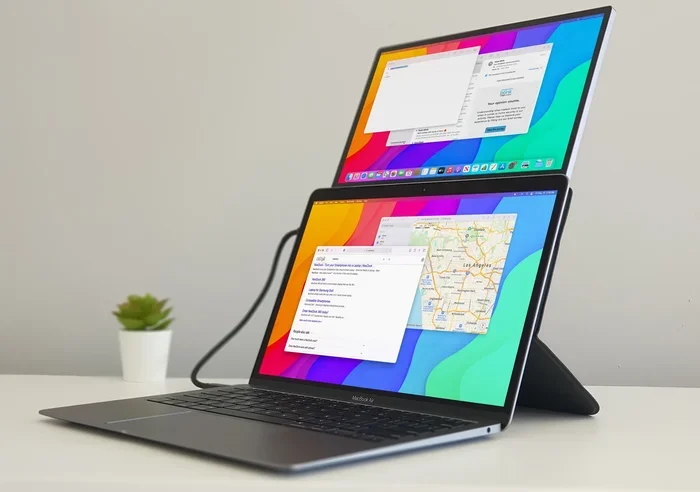
Yes, you can absolutely use a portable monitor for a laptop, and it can seriously level up your workflow. A portable monitor for laptop setup gives you extra screen space wherever you go. Whether you are a digital nomad, a student, or a remote worker, a lightweight external display transforms any space into a productive workstation. In this guide, we break down everything you need to know about portable laptop monitors, from setup and connectivity to the best options on the market.
So you are sitting at a coffee shop, trying to get work done on your laptop. The screen feels cramped. You have a dozen tabs open, a spreadsheet, and a document you need to edit. You keep resizing windows and losing your place. Sound familiar?
This is exactly where a portable monitor for laptop comes in handy. It is like adding a second brain to your setup without adding bulk. You might be wondering, “Can I use a portable monitor for a laptop?” The short answer is a big yes. The longer answer? It is even better than you think.
In this article, we will walk through everything you need to know. We will cover how they work, what to look for, and whether the investment makes sense for you. By the end, you will have a clear picture of whether a portable external display belongs in your bag.
Key Takeaways
- Easy Setup: Most portable monitors connect via USB-C or HDMI and work in minutes.
- Boosts Productivity: A second screen helps you multitask without switching windows constantly.
- Travel-Friendly: These displays are thin, light, and fit easily in any laptop bag.
- Battery Options: Many models include built-in batteries for use anywhere.
- Affordable: You can find solid portable displays at various price points.
- Versatile Use: Great for work, gaming, content creation, and presentations.
📑 Table of Contents
- What Is a Portable Monitor for Laptop Use?
- Why Use a Portable Monitor With Your Laptop?
- What to Look for When Buying a Portable Monitor
- Setting Up Your Portable Monitor With a Laptop
- Common Mistakes to Avoid
- Who Benefits Most From a Portable Monitor?
- Is a Portable Monitor Worth the Investment?
- Final Thoughts
What Is a Portable Monitor for Laptop Use?
A portable monitor is a compact, lightweight display designed to pair with laptops, tablets, and even smartphones. Unlike traditional desktop monitors, these screens are thin and easy to carry. Many are under half an inch thick and weigh just a few ounces.
People use them for dual screen setups on the go. They are popular among digital nomads, frequent travelers, and anyone who works from different locations. The idea is simple: plug it in, extend your display, and get more done.
How Do They Connect to a Laptop?
Most portable monitors use USB-C connectivity. This is great because many modern laptops already have USB-C ports. You just plug in one cable, and the display springs to life. Some models also offer HDMI input for older laptops or devices.
Here are the most common connection types you will find:
- USB-C: Fast, simple, and often carries power too.
- Mini HDMI: Works with most laptops and tablets.
- Wireless: Some newer models use Bluetooth or Wi-Fi.
- Type-C with DisplayPort: Offers high-resolution output.
The best part? You do not need to install any software. It is basically plug and play. Just connect the cable, and your laptop should recognize the external monitor right away.
Why Use a Portable Monitor With Your Laptop?
You might be thinking, “My laptop screen is fine. Why add another one?” That is a fair question. But once you try a portable display, you will wonder how you ever worked without one.
Extra Screen Space on the Go
Laptop screens have gotten better, but they are still small. A 15-inch laptop display works fine for basic tasks. But when you are juggling multiple apps, it gets tight. A second screen gives you room to spread out. You can have your email open on one side and your work document on the other. No more alt-tabbing constantly.
Productivity Boost for Remote Workers
If you work from home or a coffee shop, you know the struggle. You need to reference something while writing. Or you need a video call visible while editing a document. A portable workstation with an extra display makes all of this smoother. Studies show that dual-screen users can be up to 30 percent more productive.
Perfect for Travel and Commutes
Traveling for work? A travel-friendly monitor fits in your carry-on. You can set up a full dual-screen workspace in a hotel room or on a train. It beats squinting at a tiny laptop screen for hours. The lightweight monitor design means you barely notice the extra weight in your bag.
Great for Content Creators and Students
Video editors, graphic designers, and students all benefit from more screen real estate. A portable display gives you room for your timeline, tools, and canvas all at once. Students can have lecture notes on one screen and research on the other. It is a game-changer for multitasking.
What to Look for When Buying a Portable Monitor
Not all portable monitors are created equal. There are a lot of options out there, and the specs can be confusing. Here is what matters most when choosing a portable monitor for laptop setup.
Screen Size and Resolution
Most portable monitors range from 13 to 17 inches. The sweet spot for most people is 15 or 16 inches. This size gives you enough space without being too bulky. As for resolution, look for at least Full HD (1920 x 1080). If you can afford it, a 4K display is stunning and sharp.
Here is a quick comparison of common options:
- 13-inch: Ultra-portable but smaller workspace. Good for basic tasks.
- 15-inch: The most popular size. Great balance of portability and screen space.
- 17-inch: More screen real estate but heavier. Best for desk use.
Panel Type: IPS vs. TN vs. VA
The panel type affects color accuracy, viewing angles, and speed. Here is what you need to know:
- IPS panels: Best colors and wide viewing angles. Great for most users.
- TN panels: Faster response times but duller colors. Good for gaming.
- VA panels: Deep contrast but slower response times. Good for media consumption.
For most laptop productivity tasks, an IPS panel is the way to go. It gives you accurate colors and a comfortable viewing experience.
Connectivity and Compatibility
Make sure the monitor works with your laptop. Check what ports your laptop has. If your laptop only has USB-C, you want a monitor with USB-C input. Some monitors also need a separate power source, while others draw power through the cable itself.
Quick Tip: Always check if your laptop supports video output over USB-C. Not all USB-C ports carry video signals. Look for a port with DisplayPort Alt Mode.
Built-In Battery
Some portable monitors come with a built-in battery. This is a big plus if you work away from outlets for long periods. Battery life varies, but most last around 3 to 5 hours. If you plan to use your monitor on planes or in parks, a battery-powered model is a must.
Weight and Build Quality
The whole point of a portable monitor is portability. Look for models under 2 pounds if possible. The build quality matters too. A sturdy stand or a cover that doubles as a kickstand adds value. Some monitors even come with protective sleeves.
Setting Up Your Portable Monitor With a Laptop
Setting up a portable external display is surprisingly easy. Here is a step-by-step guide to get you started.
Step 1: Unbox and Position
Take your monitor out of the box. Place it on a flat surface next to your laptop. Many portable monitors have built-in kickstands. You can also use a small tripod mount or a desk clamp for a more secure setup.
Step 2: Connect the Cable
Plug the USB-C cable into your laptop and the monitor. If your monitor has a battery, make sure it is charged first. You should see the display light up within seconds.
Step 3: Configure Display Settings
On Windows, go to Settings > Display. You will see options to extend or duplicate your screen. Choose “Extend” for a true dual-screen setup. On a Mac, go to System Settings > Displays and select “Extend Display.”
Step 4: Adjust Resolution and Orientation
Make sure both screens are set to their native resolution. This gives you the clearest image. You can also flip the orientation if you prefer a vertical monitor for reading or coding.
Expert Insight: “The biggest mistake people make is not adjusting the display arrangement to match the physical setup. Drag the monitors in your settings to match how they sit on your desk. It sounds small, but it makes a huge difference in usability.” — Mark T., tech reviewer
Quick Tips for a Smooth Setup
- Use a high-quality USB-C cable to avoid connection issues.
- Keep your laptop drivers updated for best compatibility.
- Use a USB-C hub if your laptop has limited ports.
- Adjust brightness to match your environment for less eye strain.
Common Mistakes to Avoid
Using a portable monitor is simple, but there are a few pitfalls to watch out for.
Ignoring Power Requirements
Some portable monitors need their own power adapter. Others draw power through the USB-C cable. If you buy one that needs its own power, you will need to carry an extra charger. Always check the power requirements before you buy.
Choosing the Wrong Size
A 17-inch monitor might sound great, but it is not very portable. Think about where and how you will use it. If you are carrying it daily, go smaller. If it mostly stays on your desk, size matters less.
Skipping the Resolution Check
A low-resolution monitor looks blurry and strains your eyes. Always go for at least Full HD. If you do graphic design or video work, consider a higher resolution for sharper text and images.
Not Testing Compatibility First
Some laptops have trouble with certain monitors. Before you commit, check reviews for your specific model. Look for compatibility lists or forums where users share their experiences.
Who Benefits Most From a Portable Monitor?
A portable laptop monitor is not for everyone. But for certain groups, it is a total game-changer.
Digital Nomads and Freelancers
If you work from cafes, co-working spaces, or airports, a portable monitor transforms your setup. You get a proper workstation anywhere with a table and a power outlet.
Students and Educators
Students can use a second screen for research while writing papers. Educators can present from their laptop while managing notes on the portable display.
Business Professionals
Frequent travelers and business professionals benefit from a compact dual-screen setup in hotel rooms or on flights. It makes presentations and reports much easier to manage.
Content Creators
Video editors, photographers, and designers need screen space. A portable monitor gives them a reference display or an extended canvas without lugging a heavy desktop monitor.
Is a Portable Monitor Worth the Investment?
Let us get to the big question. Is a portable monitor for laptop worth it? The answer depends on your needs and how often you work on the go.
If you travel frequently or work from multiple locations, absolutely yes. A portable display gives you a productivity boost that is hard to match. The dual screen setup alone saves you time and reduces frustration.
If you mostly work from a fixed desk, a traditional external monitor might be a better value. But even then, a portable monitor has its uses. It is great for presentations, guest setups, or as a backup display.
The good news is that prices have come down a lot. You can find solid portable displays for under $200. At that price point, the value is hard to beat.
Here are some real-world scenarios where a portable monitor shines:
- Working from a coffee shop: Extend your screen and get more done in less time.
- On a flight: Use your laptop and a portable monitor for a comfortable in-flight work session.
- Hotel room office: Set up a proper workspace without carrying a heavy monitor.
- Classroom or lecture hall: Have notes on one screen and slides on the other.
- Gaming on the go: Some portable monitors support high refresh rates for a great gaming experience.
Common Mistakes: Do not buy the cheapest option just to save money. A low-quality monitor can have poor color accuracy, slow response times, and bad build quality. Spend a little more for a reputable brand and you will get a much better experience.
Also, do not overlook the importance of a good stand or mount. A shaky monitor is annoying and can cause eye strain. Look for models with adjustable stands or invest in a separate mount.
Finally, remember that a portable monitor is a tool. It works best when paired with good habits. Keep your cables organized. Use a protective sleeve. And take advantage of the extra screen space to organize your workflow efficiently.
Final Thoughts
So, can you use a portable monitor for a laptop? Yes, and it is one of the best upgrades you can make for your mobile workflow. A portable monitor for laptop setup gives you flexibility, more screen space, and a real productivity boost wherever you go.
Whether you are a digital nomad, a student, or a remote worker, a lightweight external display changes the way you work. The setup is simple, the benefits are clear, and the price is more affordable than ever.
Take a look at your current setup. Do you feel cramped? Do you find yourself switching windows too often? If so, a portable monitor might be exactly what you need. It is a small investment that pays off every single day.
Start small. Pick a 15-inch IPS model with USB-C connectivity. Try it out for a week. We think you will be hooked. The extra screen space becomes second nature fast, and you will wonder how you ever managed without it.
Your laptop is powerful. Give it the display it deserves. A portable monitor is the simplest way to unlock more productivity, more creativity, and more comfort in your work. Try it, and you will not look back.
Frequently Asked Questions
Can I use a portable monitor with any laptop?
Most laptops can work with a portable monitor. You need a USB-C port or an HDMI port. Check your laptop’s ports before buying. Almost all modern laptops support external displays through at least one of these connections.
Do portable monitors need their own power source?
Some do and some do not. Many USB-C portable monitors draw power directly from the laptop. Others need a separate power adapter. Check the product specs to know what to expect. Battery-powered models offer the most freedom.
Is a portable monitor good for gaming?
Yes, some portable monitors are great for gaming. Look for models with high refresh rates and low response times. IPS panels with 120Hz or higher refresh rates work well for casual and competitive gaming on the go.
Can I use a portable monitor as my laptop’s only display?
You can, but it is not ideal for long-term use. A portable monitor works best as a second screen. Using it as your only display means you lose access to your laptop screen, which can be inconvenient for quick tasks.
What is the best screen size for a portable monitor?
15 to 16 inches is the sweet spot for most users. It offers enough screen space while staying portable. Smaller 13-inch models are ultra-light, while 17-inch models give you more workspace but less portability.
How much does a good portable monitor cost?
You can find decent portable monitors for $100 to $200. Higher-end models with 4K resolution or advanced features may cost more. The price has dropped a lot in recent years, making them more accessible than ever.
=== CONCLUSION ===
A portable monitor for laptop is one of the smartest upgrades you can make for mobile work. It is simple to set up, easy to carry, and incredibly useful. Whether you need a second screen for productivity or a travel-friendly display for presentations, a portable monitor delivers real value.
The key is to pick the right size, resolution, and connection type for your needs. Avoid the common mistakes we covered, and you will have a smooth experience from day one. With prices dropping and quality improving, there has never been a better time to add a portable external display to your setup.
Take the leap. Your workflow will thank you.