Can I Plug My Blu Ray Player Into My Laptop Easily
Yes, you can plug your Blu-ray player into your laptop using an HDMI cable, USB connection, or even wirelessly. The method you choose depends on your laptop ports, your Blu-ray player type, and what kind of media you want to enjoy. This guide walks you through every option, from wired setups to wireless streaming, so you can watch your favorite movies on a bigger screen without any hassle.
Have you ever wanted to watch a Blu-ray movie on your laptop but didn’t know how to get started? Maybe you have a Blu-ray player sitting around and wonder if you can just plug it in. The good news is that you can plug your Blu-ray player into your laptop in several different ways. Whether you want to watch a new release or enjoy an old favorite, connecting these devices is easier than you might think.
Many people assume they need a fancy setup or expensive equipment. That’s not true at all. With the right cable or adapter, you can turn your laptop into a personal movie theater. In this guide, I’ll walk you through every method, explain what works best, and help you avoid common mistakes. Let’s dive in and make your movie night happen.
Key Takeaways
- Multiple Connection Options: You can connect a Blu-ray player to a laptop via HDMI, USB, or wireless methods depending on your setup.
- HDMI Is the Easiest Method: Most modern laptops and Blu-ray players support HDMI, making it the simplest wired option.
- USB External Drives Work Too: If your laptop lacks an HDMI input, an external USB Blu-ray drive is a great alternative.
- Wireless Streaming Exists: You can stream Blu-ray content wirelessly using apps, media servers, or screen mirroring.
- Check Compatibility First: Not all laptops can accept HDMI input, so verify your ports before buying any cables.
- Software Matters: You may need playback software or drivers to get Blu-ray content working on your laptop.
- Audio and Video Settings Need Adjustment: After connecting, you might need to tweak your laptop display and sound settings for the best experience.
📑 Table of Contents
- Understanding Your Blu-ray Player and Laptop Connection Options
- Method 1: Connecting via HDMI Cable
- Method 2: Using an External USB Blu-ray Drive
- Method 3: Wireless Streaming and Screen Mirroring
- Software You Need for Blu-ray Playback on Your Laptop
- Common Problems and How to Fix Them
- Expert Insights on Blu-ray to Laptop Connections
- Key Takeaways
- Conclusion
Understanding Your Blu-ray Player and Laptop Connection Options
Before you grab any cables, it helps to understand what you’re working with. Not all Blu-ray players are the same. And not all laptops have the same ports. Knowing your options saves time and money.
There are two main types of Blu-ray players you might own. The first is a standard standalone Blu-ray disc player. This is the box you keep near your TV and connect with an HDMI cable. The second type is an external USB Blu-ray drive. This is a portable device you plug directly into your laptop’s USB port.
Your laptop also matters a lot here. Some laptops have HDMI input ports, which let them receive video signals from other devices. Most laptops only have HDMI output ports, which send video to external screens. This distinction is crucial and affects which connection method will work for you.
What Ports Does Your Laptop Have?
Take a look at the sides of your laptop. You’ll usually find a mix of USB ports, an HDMI output, and maybe a headphone jack. Some newer laptops only have USB-C ports. Others still have traditional HDMI ports. Here’s a quick breakdown:
- HDMI Output Port: Sends video and audio to an external display. Most common on older and mid-range laptops.
- USB Port (Type-A or Type-C): Used for data transfer and connecting external devices like Blu-ray drives.
- USB-C with DisplayPort Alt Mode: Can carry video signals on some laptops, but usually only as output.
- SD Card Reader or Other Ports: Rarely used for Blu-ray connections but worth noting.
If your laptop only has HDMI output and no input, a direct HDMI connection between a standalone Blu-ray player and your laptop won’t work the way you might expect. Don’t worry though, there are other ways to make it work.
Method 1: Connecting via HDMI Cable
The HDMI method is the most straightforward way to connect a Blu-ray player to a laptop. But it only works if your laptop has an HDMI input port. Some gaming laptops and certain business models do include this feature. Check your laptop’s manual or look up the model online to confirm.
If your laptop supports HDMI input, here’s what you do:
- Turn off both your Blu-ray player and your laptop.
- Connect one end of the HDMI cable to the Blu-ray player’s HDMI output port.
- Plug the other end into your laptop’s HDMI input port.
- Turn on the Blu-ray player first, then power on your laptop.
- Switch your laptop’s display input to HDMI using the display settings.
Once connected, your laptop screen should display the Blu-ray player’s output. You’ll see the player’s menu right on your laptop display. This works great for reviewing discs or watching content directly.
Pros and Cons of HDMI Connection
Let’s look at the advantages and disadvantages of this method:
- Pros: Simple setup, high-quality video and audio, no extra software needed, supports full HD and 4K resolution.
- Cons: Only works on laptops with HDMI input, requires a long enough cable, limits your laptop’s portability.
Most people find this method reliable and easy. The video quality is excellent because HDMI carries both audio and video in a single cable. If your laptop supports it, this is the best option.
Method 2: Using an External USB Blu-ray Drive
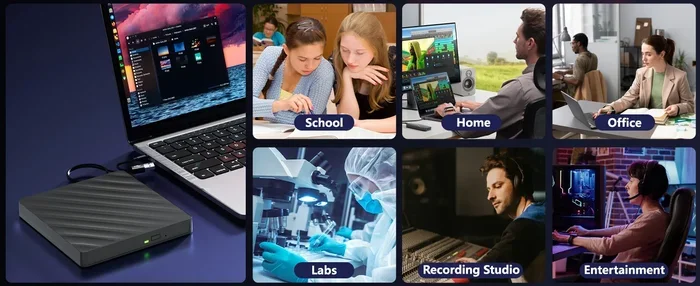
This is the most popular method for watching Blu-ray discs on a laptop. An external USB Blu-ray drive is a portable device that reads Blu-ray discs and connects directly to your laptop through a USB cable. You can buy one for under $100 at most electronics stores.
Here’s how it works. You insert the Blu-ray disc into the external drive. The drive connects to your laptop via USB. Then you use playback software on your laptop to read and play the disc. It’s basically like having a built-in Blu-ray drive without opening your laptop.
What You Need for This Method
- External USB Blu-ray Drive: Brands like LG, ASUS, and Pioneer make reliable options.
- Playback Software: Programs like VLC, PowerDVD, or Leawo Blu-ray Player can read and play Blu-ray discs.
- A USB Port: Most laptops have at least one USB port available.
- The Blu-ray Disc You Want to Watch: The disc itself, of course.
Setting this up is simple. Plug the external drive into your laptop’s USB port. Insert the Blu-ray disc into the drive. Open your playback software and select the disc. The movie starts playing right on your laptop screen. You can also adjust the screen resolution and audio settings for the best viewing experience.
One thing to keep in mind is region coding. Blu-ray discs come with region locks that restrict playback to certain geographic areas. Your playback software may need the correct region code to play the disc. This is a common issue that trips up many users.
Quick Tips for USB Blu-ray Drive Users
- Use a USB 3.0 port for faster data transfer and smoother playback.
- Keep the external drive on a flat, stable surface to avoid disc reading errors.
- Update your playback software regularly for the best disc compatibility.
- Close other programs while playing Blu-ray content to free up system resources.
Method 3: Wireless Streaming and Screen Mirroring
If you don’t want to deal with cables at all, wireless options are available. You can stream Blu-ray content from your Blu-ray player to your laptop over your home Wi-Fi network. This method works best when both devices are on the same network.
Many modern Blu-ray players support wireless streaming features. Some models come with built-in Wi-Fi and apps that let you share content across devices. You can also use media server software on your laptop to access Blu-ray content stored on other devices.
How Wireless Streaming Works
Here’s the general process for wireless Blu-ray streaming:
- Connect your Blu-ray player to your Wi-Fi network through its settings menu.
- Install a media server app on your laptop or a compatible device.
- Use a media player application on your laptop to detect and access the Blu-ray player’s content.
- Select the movie or content you want to watch and start streaming.
This method is convenient because you don’t need any cables. You can control playback from your laptop even while the Blu-ray player sits in another room. However, wireless streaming depends heavily on your Wi-Fi speed and stability. A slow connection can cause buffering or lower video quality.
Screen mirroring is another wireless option. Some Blu-ray players and laptops support Miracast or similar screen mirroring protocols. This lets you mirror the Blu-ray player’s screen directly onto your laptop display without a physical cable.
Wireless vs Wired: Which Is Better?
Here’s a quick comparison to help you decide:
- Wired HDMI: Best video quality, stable connection, but limited by port availability.
- USB External Drive: Great for direct disc playback, portable, but requires extra hardware.
- Wireless Streaming: Convenient and cable-free, but depends on Wi-Fi quality and may have slight delays.
For most people, the USB external drive method offers the best balance of quality and convenience. But if you value a clean setup without cables, wireless streaming is worth exploring.
Software You Need for Blu-ray Playback on Your Laptop
Connecting the hardware is only half the battle. You also need the right software to actually play Blu-ray content on your laptop. Windows and Mac laptops don’t always include built-in Blu-ray playback support. You’ll likely need to install a dedicated media player.
Here are some popular options for media playback of Blu-ray discs:
- VLC Media Player: Free, open-source, and supports many video formats including some Blu-ray discs.
- CyberLink PowerDVD: A paid option with excellent Blu-ray support and advanced features.
- Leawo Blu-ray Player: Free for basic use and handles most Blu-ray discs well.
- WinDVD: A reliable paid player with strong disc compatibility.
When choosing playback software, consider your needs. If you just want to watch occasional movies, a free option like VLC or Leawo works great. If you watch Blu-ray discs frequently and want premium features, a paid player like PowerDVD is worth the investment.
After installing your software, make sure to update it regularly. Blu-ray disc technology evolves, and software updates ensure you can read the latest disc formats. Also, check that your laptop meets the system requirements for smooth playback. Blu-ray video requires decent processing power and a good graphics card.
Common Problems and How to Fix Them
Even with the right setup, you might run into issues. Here are some common problems and their solutions.
No Signal or Blank Screen
If you connect your Blu-ray player via HDMI but see a blank screen, don’t panic. First, check that both devices are powered on. Make sure the HDMI cable is firmly connected at both ends. Try switching your laptop’s display input source to the correct HDMI port. Sometimes simply restarting both devices fixes the issue.
Audio Not Working
If the video plays but you can’t hear any sound, check your audio settings. Make sure your laptop’s output is set to the correct device. On Windows, right-click the speaker icon in your taskbar and select the right audio output. On Mac, go to Sound Preferences and choose the correct output device.
Disc Won’t Play
A disc that won’t play can be frustrating. First, make sure the disc is clean and free of scratches. Try a different disc to rule out a bad disc. Update your playback software and check that your software’s region code matches the disc’s region. If you’re using an external drive, try a different USB port.
Video Quality Is Poor
Blurry or pixelated video usually means your connection or settings need adjustment. For HDMI connections, make sure you’re using a high-quality cable. Check your laptop’s display resolution settings and set it to the highest available option. Close background apps that might be using your graphics card.
Expert Insights on Blu-ray to Laptop Connections
According to tech experts, the best way to watch Blu-ray content on a laptop depends on your use case. If you watch movies frequently, an external USB Blu-ray drive is the most practical solution. It gives you direct disc access without needing a separate player.
For casual viewers who only watch the occasional Blu-ray, streaming services offer a convenient alternative. Many Blu-ray movies are available on platforms like Netflix, Amazon Prime, and Disney+. You don’t even need a physical disc. Just subscribe, download the app, and start watching.
Experts also recommend always keeping your playback software updated. Blu-ray disc protection changes over time, and outdated software can’t read newer discs. A simple update can save you hours of frustration.
Key Takeaways
- Multiple Connection Methods: HDMI, USB external drive, and wireless streaming all work for connecting a Blu-ray player to a laptop.
- HDMI Requires Input Ports: Your laptop needs an HDMI input port for a direct cable connection to work.
- External USB Drives Are the Go-To Solution: Affordable, portable, and compatible with most laptops.
- Playback Software Is Essential: You need dedicated software like VLC or PowerDVD to play Blu-ray content.
- Region Coding Can Cause Issues: Always check that your software and disc regions match.
- Wireless Options Exist: Streaming and screen mirroring let you go cable-free with some quality trade-offs.
- Troubleshooting Is Simple: Most connection problems have easy fixes like checking cables, restarting devices, or updating software.
Conclusion
Can I plug my Blu-ray player into my laptop? Yes, absolutely. You have several options depending on your equipment and needs. Whether you use an HDMI cable, an external USB Blu-ray drive, or wireless streaming, connecting a Blu-ray player to your laptop is entirely possible and surprisingly simple.
The USB external drive method is the most accessible for most people. It’s affordable, portable, and doesn’t require special laptop ports. Just plug it in, insert your disc, and start watching. For those who prefer a direct connection, HDMI works well on compatible laptops and delivers excellent quality.
Don’t let confusion about ports and cables stop you. With the right setup, you can enjoy your Blu-ray movie collection on your laptop anytime, anywhere. Pick the method that fits your situation, follow the steps in this guide, and you’ll be watching your favorite movies in no time.
Take a few minutes today to check your laptop ports and figure out which method works best for you. Once you get it set up, you’ll wonder why you didn’t do it sooner. Happy watching.
Frequently Asked Questions
Can I connect a standalone Blu-ray player to any laptop?
Not all laptops support direct HDMI input from a Blu-ray player. You need a laptop with an HDMI input port for a wired connection. Most standard laptops only have HDMI output, which sends video out rather than receiving it. Check your laptop’s specifications before trying this method.
Do I need special software to play Blu-ray discs on my laptop?
Yes, most laptops need dedicated playback software to read and play Blu-ray discs. Free options like VLC and Leawo work well for many discs. Paid options like PowerDVD offer broader compatibility and extra features. Windows and Mac operating systems do not include built-in Blu-ray playback support.
Can I use a USB-C to HDMI adapter to connect a Blu-ray player to my laptop?
It depends on your laptop’s USB-C port capabilities. Some USB-C ports support video input through DisplayPort Alt Mode, but most only support video output. Check your laptop’s manual or specifications to confirm whether your USB-C port can accept an HDMI input signal.
Is an external USB Blu-ray drive better than a standalone Blu-ray player?
For laptop use, an external USB Blu-ray drive is usually the better choice. It connects directly to your laptop, is portable, and doesn’t require extra cables. A standalone Blu-ray player is designed for TV setups and needs an HDMI input port on your laptop to work directly.
Why won’t my Blu-ray disc play on my laptop even after connecting it?
This is often caused by region coding mismatch between your disc and playback software. Make sure your software’s region setting matches the disc’s region. Also check that your disc is clean and scratch-free. Outdated playback software can also fail to read newer Blu-ray discs, so keep everything updated.
Can I watch Blu-ray quality movies on a laptop screen?
Yes, you can enjoy Blu-ray quality on a laptop screen. Most modern laptops have displays that support full HD or even 4K resolution. The viewing experience depends on your laptop’s screen size, resolution, and brightness. For the best quality, make sure your playback software and display settings are optimized for high-definition output.