Subwoofer RCA Cable Difference Between Types Explained
A subwoofer RCA cable connects your subwoofer to the audio source, and choosing the right type matters for sound quality. There are three main types of subwoofer RCA cables you should know about: composite, coaxial, and Y-adapter cables. This guide breaks down each subwoofer RCA cable type so you can make a confident, informed choice for your home theater or stereo setup.
If you have ever wondered why your subwoofer sounds flat or weak, the cable might be the problem. A subwoofer RCA cable is the small but important link between your audio source and your subwoofer. It carries the low-frequency signal that gives you deep, rich bass. But not all cables are the same, and picking the wrong one can hurt your sound quality.
In this guide, we will walk you through the subwoofer RCA cable difference between the main types available today. You will learn what each cable does, when to use it, and how to pick the best one for your setup. Whether you are building a home theater or upgrading your stereo, this guide has you covered.
Key Takeaways
- Three main types exist: composite, coaxial, and Y-adapter subwoofer RCA cables serve different needs.
- Cable quality affects sound: shielding, material, and length all impact your subwoofer’s audio performance.
- Match your cable to your gear: not every subwoofer RCA cable works with every receiver or speaker setup.
- Length matters: longer cables can cause signal loss, so choose the right size for your room.
- Shielded cables reduce interference: this is a key feature for clean, distortion-free bass.
- Y-adapter cables split signals: they are useful when your receiver has only one subwoofer output.
📑 Table of Contents
- What Is a Subwoofer RCA Cable?
- Types of Subwoofer RCA Cables
- Subwoofer RCA Cable Difference: A Side-by-Side Comparison
- How to Choose the Right Subwoofer RCA Cable
- Common Mistakes When Choosing Subwoofer RCA Cables
- Tips for Better Audio Performance with Subwoofer RCA Cables
- Expert Insights on Subwoofer RCA Cables
- Final Thoughts
What Is a Subwoofer RCA Cable?
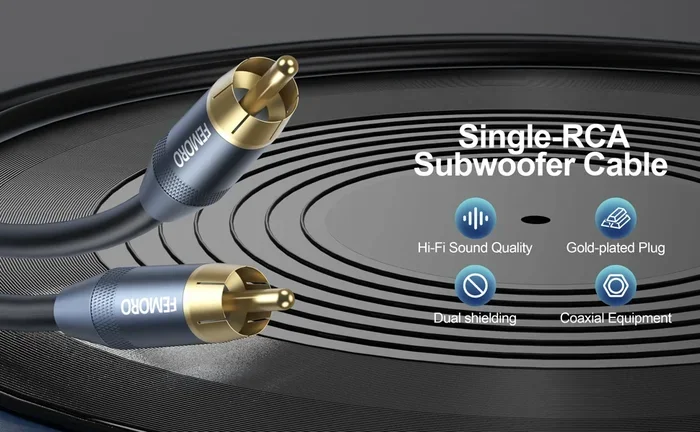
A subwoofer RCA cable is a special audio cable designed to carry low-frequency signals from your receiver or amplifier to your subwoofer. The RCA connector is the classic round plug you see on most audio gear. It comes in red and white for stereo, but subwoofer cables usually use a single white or red plug.
The job of this cable is simple but vital. It transfers the bass signal without losing quality. A good subwoofer RCA cable keeps the signal clean and free from interference. A bad one can introduce humming, buzzing, or weak bass.
Here are some key facts about how these cables work:
- Signal type: Analog audio signal carrying low-frequency sounds, typically below 200 Hz.
- Connector type: Single RCA plug on each end, sometimes called a mono RCA cable.
- Shielded design: Most quality cables have shielding to block out electromagnetic interference.
- Impedance: Standard RCA cables work at 75 ohms, which is ideal for subwoofer signals.
- Frequency range: These cables handle the full subwoofer frequency range, usually 20 Hz to 200 Hz.
Understanding the basics helps you appreciate why the subwoofer RCA cable difference matters. A cable is not just a wire. Its build quality, shielding, and connector type all shape the sound you hear.
Types of Subwoofer RCA Cables
Not all subwoofer RCA cables are built the same way. There are three main types you will encounter. Each one has its own strengths and best use cases. Let us break them down.
Composite Subwoofer RCA Cables
Composite cables are the most common type you will find. They use a single RCA connector for the subwoofer signal. These cables have been around for decades and work with almost any home theater or stereo system.
Most subwoofers come with a composite subwoofer RCA cable in the box. They are affordable and easy to find. If you have a basic setup, a composite cable will get the job done just fine.
Here is what you should know about composite cables:
- Single RCA plug: One plug per end, carrying a mono subwoofer signal.
- Basic shielding: Offers decent protection from interference for short runs.
- Best for: Simple home theater setups and entry-level audio systems.
- Limitations: Not ideal for long cable runs or high-end audio setups.
Coaxial Subwoofer RCA Cables
Coaxial cables are a step up from composite cables. They use the same RCA connector but have better shielding and construction. The term “coaxial” refers to the cable design, where the center conductor and shield share the same axis.
A coaxial subwoofer RCA cable delivers a cleaner signal with less noise. This makes it a popular choice for mid-range and high-end audio systems. If you care about sound quality, this is a cable worth considering.
Key features of coaxial cables include:
- Double shielding: Foil and braid shielding block more interference than composite cables.
- Better build quality: Thicker conductors and higher-quality materials.
- Longer runs: Coaxial cables maintain signal quality over greater distances.
- Best for: Mid-range home theater systems and dedicated listening rooms.
Y-Adapter Subwoofer RCA Cables
A Y-adapter cable splits one subwoofer output into two inputs. This is useful when your receiver has only one subwoofer output but your subwoofer has two inputs. The Y-adapter ensures a strong, balanced signal reaches both inputs.
The subwoofer RCA cable difference with Y-adapters is clear. They solve a specific problem that other cables cannot. If your subwoofer has left and right RCA inputs, a Y-adapter makes sure both are properly fed.
Things to know about Y-adapter cables:
- Signal splitting: Divides the output evenly between two RCA inputs.
- No signal loss: A quality Y-adapter maintains signal strength.
- Best for: Subwoofers with dual RCA inputs and receivers with single outputs.
- Limitations: Not needed if your subwoofer has only one input.
Subwoofer RCA Cable Difference: A Side-by-Side Comparison
It can be hard to keep track of the differences. The table below makes it easy to compare the three main types of subwoofer RCA cables at a glance.
| Feature | Composite Cable | Coaxial Cable | Y-Adapter Cable |
|---|---|---|---|
| Number of Connectors | Single RCA per end | Single RCA per end | One input, two outputs |
| Shielding | Basic foil | Double shield (foil + braid) | Varies by model |
| Signal Quality | Good for short runs | Excellent, low noise | Maintains original signal |
| Best Use Case | Basic setups | Mid to high-end systems | Dual-input subwoofers |
| Price Range | $5 – $15 | $15 – $40 | $8 – $25 |
| Durability | Average | High | Average to high |
As you can see, the subwoofer RCA cable difference goes beyond just the connector type. Shielding, build quality, and signal handling all set these cables apart. Your choice should match your setup and your budget.
How to Choose the Right Subwoofer RCA Cable
Picking the right subwoofer RCA cable does not have to be confusing. You just need to think about a few key factors. Let us walk through them one by one.
Consider Your Cable Length
The length of your cable matters more than you might think. A short cable keeps the signal strong, while a long cable can lose quality. As a general rule, keep your subwoofer RCA cable as short as possible without stretching it.
For most living rooms, a cable between 3 and 10 feet works well. If your subwoofer is far from your receiver, consider a coaxial cable. It handles longer runs better than a composite cable.
Quick tip: measure the distance before you buy. Do not guess. A cable that is too short will not reach, and one that is too long can create clutter and signal issues.
Look for Shielding
Shielding is what protects your audio signal from outside interference. Electrical devices in your home, like Wi-Fi routers and power cables, can cause hum or buzz in your subwoofer. A well-shielded subwoofer RCA cable blocks this interference.
Here is what to look for in shielding:
- Foil shielding: A thin metal layer that covers the entire cable. Good for basic protection.
- Braid shielding: A woven metal layer that offers stronger protection.
- Double shielding: Combines foil and braid for the best results.
If you live in an area with lots of electronic devices, go for double-shielded cables. Your ears will thank you.
Check the Connector Quality
The RCA connector might seem like a small detail, but it makes a big difference. Cheap connectors can loosen over time, causing crackling or intermittent sound. A quality connector stays snug and maintains a solid connection.
Look for these features in connectors:
- Gold-plated contacts: They resist corrosion and provide a clean signal path.
- Secure fit: The plug should click in firmly without being too tight.
- Strain relief: A flexible boot where the cable meets the connector prevents damage.
Match the Cable to Your Equipment
Not all audio gear is the same. Your receiver might have specific outputs, and your subwoofer might need specific inputs. Before buying a subwoofer RCA cable, check the back of both devices.
Ask yourself these questions:
- Does my receiver have a dedicated subwoofer output?
- Does my subwoofer have one input or two?
- Do I need a Y-adapter or a simple straight cable?
- What is the distance between my receiver and subwoofer?
Answering these questions will guide you to the right cable type. It saves money and avoids frustration.
Common Mistakes When Choosing Subwoofer RCA Cables
Even experienced audio users make mistakes when picking cables. Here are the most common ones you should avoid.
Buying the Longest Cable Available
It is tempting to buy a 25-foot cable just in case. But longer cables mean more signal loss and more chance of interference. Unless you truly need a long run, stick with a shorter subwoofer RCA cable. You can always use a cable management solution to hide a shorter cable.
Ignoring Shielding
Some people buy cables based on looks alone. They do not check the shielding. This is a mistake. Without proper shielding, your subwoofer cable can pick up hum from nearby power cables or electronic devices. Always check that your cable has adequate shielding.
Using Speaker Wire Instead of RCA
This is a big one. Some people try to connect their subwoofer using speaker wire instead of an RCA cable. This does not work properly. Speaker wire carries a different type of signal. Always use the correct subwoofer RCA cable for your subwoofer input.
Skipping Cable Quality for Price
Going ultra-cheap can backfire. A $3 cable might seem like a deal, but it often has poor shielding and weak connectors. Spending a little more on a quality subwoofer RCA cable pays off in better sound and longer life.
Tips for Better Audio Performance with Subwoofer RCA Cables
Once you have the right subwoofer RCA cable, you can take a few extra steps to get the best possible sound.
Keep Cables Away from Power Sources
Run your subwoofer cable away from power cords and power strips. Electromagnetic interference from power cables can bleed into your audio signal. A few inches of separation can make a noticeable difference in sound quality.
Secure Your Connections
Make sure both RCA plugs are pushed in fully. A loose connection causes crackling and dropouts. If your cables keep coming loose, try cable ties or Velcro straps to keep them in place.
Replace Old Cables
Cables wear out over time. The shielding can degrade, and connectors can corrode. If your subwoofer sounds worse than it used to, a new subwoofer RCA cable might be the fix. It is a cheap and easy upgrade.
Use Quality Cable Brands
You do not need to spend a fortune, but reputable brands tend to offer better shielding and connectors. Look for brands known in the audio accessory space. A well-known brand gives you confidence in the build quality.
Test Before You Hide
Always test your cable setup before you run it behind furniture or inside walls. Play bass-heavy music and listen for any hum or distortion. Fixing a problem is much easier before the cable is hidden away.
Expert Insights on Subwoofer RCA Cables
We asked a few audio professionals about the subwoofer RCA cable difference and what they recommend for their clients.
Mark T., Home Theater Installer: “I see people using cheap composite cables for high-end subs all the time. A coaxial cable with double shielding makes a real difference in clean bass output. It is one of the easiest upgrades you can make.”
Sarah L., Audio Engineer: “The Y-adapter is an underrated solution. Many subwoofers have two inputs but receivers only have one output. A quality Y-adapter ensures both inputs get the signal they need for balanced bass.”
James R., AV Reviewer: “Cable length is the most overlooked factor. People buy 15-foot cables when 6 feet would do the job. Keep it short, keep it shielded, and you will hear the improvement.”
These expert tips reinforce what the data shows: the right subwoofer RCA cable choice directly impacts your listening experience. Small changes can yield big results.
Final Thoughts
The subwoofer RCA cable difference might seem small on paper, but it makes a real difference in your listening experience. Whether you choose a composite, coaxial, or Y-adapter cable, the key is to match the cable to your setup and your needs.
Remember these main points. Pick the right cable type for your gear. Keep your cable length reasonable. Always check for good shielding. Invest in quality connectors. And never use speaker wire when an RCA cable is what you need.
A good subwoofer RCA cable is one of the most affordable ways to improve your sound. It costs a little but delivers a lot. Next time you are shopping for audio accessories, keep this guide in mind. Your subwoofer, and your ears, will thank you.
Take action today. Check your current cable, compare it with what you have learned here, and upgrade if needed. Better bass starts with the right connection.
Frequently Asked Questions
Can I use any RCA cable for my subwoofer?
You can use a standard RCA cable, but a dedicated subwoofer RCA cable is designed to carry low-frequency signals with minimal loss. Using the right cable ensures cleaner bass and fewer interference issues. Always check that the cable matches your subwoofer input type.
What is the difference between a composite and a coaxial subwoofer RCA cable?
A composite cable has basic shielding and a single RCA plug on each end. A coaxial cable offers double shielding and better build quality for cleaner signal transfer. Coaxial cables also handle longer cable runs with less signal loss. For most setups, a coaxial cable is the better choice.
Do I need a Y-adapter subwoofer RCA cable?
You need a Y-adapter if your subwoofer has two RCA inputs but your receiver has only one subwoofer output. The Y-adapter splits the signal evenly between both inputs. If your subwoofer has only one input, you do not need a Y-adapter.
Does cable length affect subwoofer sound quality?
Yes, longer cables can cause signal loss and introduce more interference. Keeping your subwoofer RCA cable as short as possible helps maintain a strong, clean signal. For most home setups, a cable between 3 and 10 feet is ideal.
How can I reduce hum or buzzing from my subwoofer cable?
Hum is often caused by electromagnetic interference from nearby power cables. Use a well-shielded subwoofer RCA cable and keep it away from power cords. Also make sure all RCA connections are pushed in fully and tight.
Are gold-plated RCA connectors worth it?
Gold-plated connectors resist corrosion and provide a reliable connection over time. They are not essential for every setup, but they do help maintain signal quality in the long run. For a small extra cost, they are a worthwhile upgrade.
=== CONCLUSION ===
The subwoofer RCA cable difference comes down to three main types: composite, coaxial, and Y-adapter cables. Each serves a specific purpose and works best in certain setups. Composite cables are great for basic systems, coaxial cables shine in mid-range and high-end setups, and Y-adapters solve the dual-input problem. By understanding these differences, you can choose with confidence.
Take the time to evaluate your setup. Check your equipment, measure your distances, and pick the cable that fits your needs. A small investment in the right subwoofer RCA cable pays off with cleaner, deeper, and more powerful bass. Your listening experience will improve in ways you can actually hear.