Can I Use 2 Usb C Chargers At The Same Time Together
Yes, you can use 2 USB C chargers at the same time in most cases. This setup can boost charging speed and power delivery to your devices. However, safety and compatibility depend on your charger type, cable quality, and device support. Let us break down exactly how this works and what you need to know.
Have you ever been in a rush and wished your phone or laptop would charge faster? Maybe you grabbed two USB-C chargers and wondered if you could plug them both in at the same time. It is a simple question, but the answer is not always straightforward.
The good news is that using 2 USB C chargers at the same time is possible in many situations. Whether you want to charge a laptop faster or top up a phone while it sits on a desk, dual charging can be a real game changer. But there are a few things you need to know before you start plugging in multiple adapters.
In this guide, we will walk you through everything. We will cover how dual USB-C charging works, when it is safe, what to watch out for, and expert tips to get the best results. By the end, you will know exactly whether this trick is right for your devices.
Key Takeaways
- Dual USB-C charging is generally safe: Most modern devices handle multiple chargers without issues.
- Power delivery adds up: Using two chargers can increase wattage and reduce charging time significantly.
- Not all devices support it: Some laptops and phones may not accept dual charging inputs.
- Quality matters: Cheap cables or mismatched chargers can cause overheating or damage.
- GaN chargers work great for this: They are compact, efficient, and ideal for dual charging setups.
- Check your device manual first: Always verify compatibility before plugging in two chargers.
📑 Table of Contents
- What Happens When You Use 2 USB C Chargers At The Same Time
- Which Devices Support Dual USB-C Charging
- Is It Safe To Use 2 USB C Chargers Together
- Benefits Of Using 2 USB C Chargers At The Same Time
- Common Mistakes People Make With Dual USB-C Charging
- Comparison Table: Single vs Dual USB-C Charging
- Expert Tips For Getting The Most Out Of Dual USB-C Charging
- When You Should NOT Use Dual USB-C Charging
- Final Thoughts
What Happens When You Use 2 USB C Chargers At The Same Time
When you connect two USB-C chargers to a single device, something interesting happens at the hardware level. Your device draws power from both sources if it supports it. This means the total wattage can increase, which often leads to faster battery charging.
But not all devices are built the same way. Some phones and laptops have smart charging circuits that manage power input automatically. Others may only accept power from one port at a time. Understanding how your specific device handles this is the first step.
How Power Delivery Works With Dual Chargers
USB-C Power Delivery, or PD, is the standard that governs how much power flows through a USB-C cable. A single USB-C PD charger can deliver anywhere from 18 watts to 240 watts depending on the charger and device. When you add a second charger, the total available power goes up.
Here is how it typically works:
- Negotiation phase: The device and each charger communicate to agree on power levels.
- Power splitting: The device pulls power from both sources based on its needs.
- Heat management: The device regulates temperature to prevent overheating.
- Battery protection: Built-in circuits stop charging once the battery is full.
This entire process happens in seconds. You do not need to do anything special. Just plug in both chargers and let your device handle the rest.
Which Devices Support Dual USB-C Charging
Not every gadget can handle two chargers at once. The support depends on the device model, brand, and internal hardware. Here is a breakdown of common devices and their dual charging compatibility.
Smartphones
Most modern smartphones use a single USB-C port. When you plug in two chargers, the phone usually draws from the one with higher wattage. Some brands, like Samsung and Google, have optimized their devices to handle dual input better than others.
However, iPhones with USB-C (like the iPhone 15 and 16 models) are more limited. Apple has designed them to work with one charger at a time. Plugging in a second charger may not speed things up at all.
Laptops
Laptops are where dual USB-C charging really shines. Many business and gaming laptops come with multiple USB-C ports that support charging. Some models even advertise support for dual charger setups to deliver maximum power.
Brands like Dell, Lenovo, and HP often include this feature in their premium lineups. If you own a laptop with two USB-C ports, there is a good chance you can use two chargers simultaneously.
Tablets
Tablets like the iPad Pro and Samsung Galaxy Tab series can sometimes benefit from dual charging. These devices have large batteries, and using two chargers can reduce the time it takes to go from empty to full.
But again, check your tablet specifications. Some tablets only pull power from one port even if both are occupied.
Is It Safe To Use 2 USB C Chargers Together
Safety is the number one concern people have about dual charging. The short answer is yes, it is generally safe. Modern devices have multiple layers of protection built in. These include over-voltage protection, over-current protection, and thermal management.
That said, there are risks if you are not careful. Using cheap or uncertified chargers can lead to problems. Here is what you need to keep in mind.
Overheating Risks
When two chargers push power into a device, heat is a natural byproduct. If your device is not designed for dual input, the extra heat can become an issue. In rare cases, this can degrade the battery over time.
To avoid overheating:
- Use chargers from reputable brands.
- Make sure both chargers are USB-C PD compliant.
- Do not cover your device while charging.
- Monitor the temperature of your device.
Charger Compatibility Issues
Not all USB-C chargers are the same. Some use different charging protocols. If you mix a charger that uses Qualcomm Quick Charge with one that uses USB PD, the device may not draw power from both efficiently.
The best approach is to use two chargers that support the same charging protocol. USB PD is the most universal standard, so matching two PD chargers is your safest bet.
Benefits Of Using 2 USB C Chargers At The Same Time
So why would anyone want to use two chargers at once? There are several real benefits that make this setup worthwhile for many users.
Faster Charging Times
The most obvious benefit is speed. When two chargers share the power load, your device charges faster. This is especially useful for laptops that need 60 watts or more to charge efficiently.
For example, if you use a 65-watt charger and a 45-watt charger together, your device has access to 110 watts of power. That can cut your charging time in half in some cases.
Emergency Situations
Imagine you are at an airport and your laptop battery is at 5 percent. You only have one charger, but you find a spare USB-C adapter in your bag. Plugging in both chargers can give you enough power to get through the rest of your day.
This makes dual charging a great emergency trick to know.
Reduced Strain On A Single Charger
Running a single charger at full capacity for hours can wear it out faster. By splitting the load across two chargers, each one works less hard. This can extend the lifespan of your power adapters over time.
Common Mistakes People Make With Dual USB-C Charging
Even though dual charging is generally safe, people make mistakes that can cause problems. Here are the most common ones to avoid.
Using Mismatched Chargers
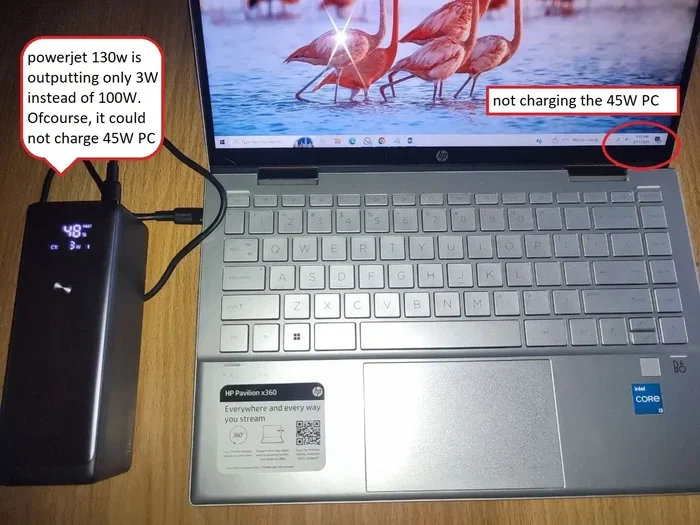
Plugging in a 10-watt charger alongside a 100-watt charger might not give you the best results. The lower wattage charger may not contribute much power at all. Worse, it could cause inconsistent power delivery.
Quick Tip: Try to match the wattage of both chargers as closely as possible for the best results.
Ignoring Cable Quality
The cable matters just as much as the charger. A cheap or damaged USB-C cable can limit power delivery and even become a safety hazard. Always use high-quality cables that support USB-C PD and the wattage you need.
Charging While Using Heavy Apps
If you are running demanding software on your laptop while dual charging, the device may generate more heat than usual. This combination of high power input and high processing load can push your device’s thermal limits.
It is better to let your device charge without heavy usage, especially when using two chargers.
Assuming All Ports Are Equal
Not every USB-C port on your device supports charging. Some ports are designed only for data transfer or video output. Plugging a charger into a non-charging port will not work, no matter how many chargers you use.
Check your device manual or the manufacturer’s website to confirm which ports support power delivery.
Comparison Table: Single vs Dual USB-C Charging
| Factor | Single Charger | Dual Chargers |
|---|---|---|
| Charging Speed | Standard | Faster (up to 50% quicker) |
| Wattage Available | Limited to one charger | Combined wattage from both |
| Heat Generation | Lower | Higher (manageable with good chargers) |
| Device Compatibility | Universal | Depends on device support |
| Portability | One charger needed | Two chargers required |
| Cost | Lower | Higher (two chargers needed) |
| Best For | Everyday use | Fast top-ups and emergencies |
Expert Tips For Getting The Most Out Of Dual USB-C Charging
Want to make sure you are getting the best results from your dual charger setup? Here are some expert-backed tips that really make a difference.
Use GaN Chargers
Gallium Nitride, or GaN, chargers are the best option for dual charging setups. They are smaller, cooler, and more efficient than traditional silicon chargers. A pair of GaN chargers gives you excellent power delivery without generating excess heat.
Many GaN charger models now support USB PD and come in compact sizes that fit easily in your bag.
Monitor Your Battery Health
Charging faster is great, but it should not come at the cost of battery health. Keep an eye on your battery percentage and avoid leaving your device on dual chargers for extended periods once it reaches 100%.
Most modern devices stop drawing power when full, but it is still a good habit to unplug once charged.
Keep Your Firmware Updated
Device manufacturers regularly release firmware updates that improve charging behavior. These updates can fix bugs related to dual charging and optimize how your device handles multiple power sources.
Check for updates in your device settings regularly.
Invest In A Good USB-C Hub
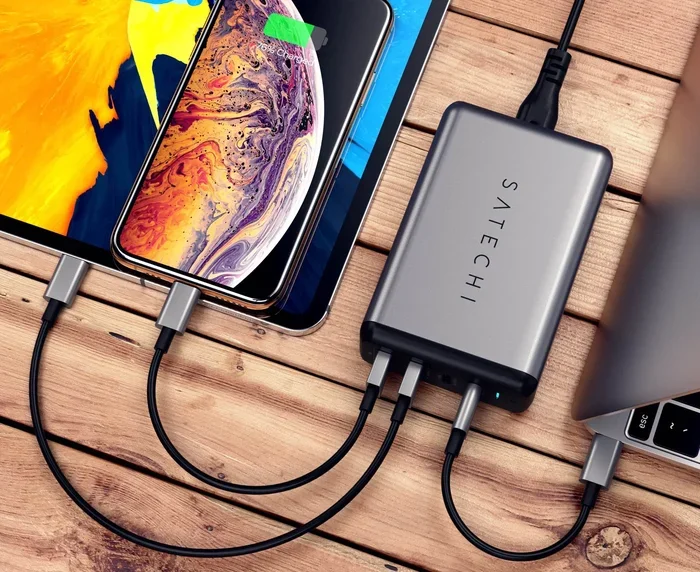
If you want a cleaner setup, consider using a USB-C hub with multiple charging ports. These hubs can manage power distribution more efficiently than plugging two separate chargers directly into your device.
Look for hubs that support pass-through charging and power delivery for the best experience.
Test Your Setup
Not sure if dual charging is working for you? Use a USB-C power meter to check how much power each charger is delivering. This small tool can help you fine-tune your setup and ensure both chargers are contributing.
When You Should NOT Use Dual USB-C Charging
There are situations where using two chargers at once is not a good idea. Knowing when to avoid this setup can save you from damage or wasted effort.
If your device is older and does not support USB-C PD, dual charging will not help. Similarly, if your device manual explicitly warns against using multiple power sources, you should follow that guidance.
Also, avoid dual charging if your device is already hot. Adding more power to a warm device can push it into thermal throttling, which slows everything down and could harm your battery in the long run.
Final Thoughts
Using 2 USB C chargers at the same time is a practical and often beneficial setup for many devices. Whether you want faster charging, emergency power, or less strain on a single charger, dual USB-C charging delivers real results. The key is to do it safely and with compatible equipment.
Always check your device specifications before trying this setup. Use quality chargers and cables, match your charging protocols, and monitor heat levels. Follow these simple rules, and you can enjoy the benefits of dual charging without any worries.
Give it a try the next time your device needs a quick boost. You might be surprised at how much faster your battery fills up with just one extra charger.
Frequently Asked Questions
Can I use any two USB-C chargers together for dual charging?
Ideally, you should use two chargers that support the same charging protocol, preferably USB PD. Mismatched chargers may not deliver power efficiently and could lead to inconsistent charging speeds. Always check compatibility before combining chargers.
Will using 2 USB C chargers at the same time damage my battery?
No, modern devices have built-in protections that prevent battery damage from dual charging. However, excessive heat from poorly matched chargers can reduce battery health over time. Use quality chargers and avoid leaving your device on dual chargers once fully charged.
Does dual USB-C charging work on all laptops?
No, not all laptops support dual charging. Some laptops only draw power from one USB-C port even if two are available. Check your laptop manual or the manufacturer’s website to confirm if your model supports it.
Can I use a USB-C power bank and a wall charger at the same time?
Yes, in many cases you can. This is a popular setup for travelers who want to charge their device from both a power bank and a wall outlet simultaneously. Just make sure both sources support USB PD for the best results.
How much faster does dual charging make a device charge?
The speed increase depends on your device and the wattage of the chargers. In some cases, dual charging can reduce charging time by 30 to 50 percent. However, results vary based on the device’s power management system and the quality of the chargers used.
Is it safe to leave my device on two chargers overnight?
It is generally safe due to built-in battery protection circuits. However, it is best practice to unplug your device once it reaches 100 percent. This helps preserve long-term battery health and avoids unnecessary heat buildup while you sleep.
=== CONCLUSION ===
Can I use 2 USB C chargers at the same time? Yes, you absolutely can, and in many cases it is a smart move. Dual USB-C charging can speed up your battery charging, help in emergencies, and reduce wear on individual chargers. Just make sure your device supports it, use quality equipment, and follow the safety tips we covered.
With the right setup, you will wonder why you did not try this sooner. Share this guide with friends who are always looking for a faster way to charge their gadgets. Happy charging!