Can You Block Wi Fi In A Room And Stop The Signal Today
Yes, you can block WiFi in a room using several proven methods ranging from simple DIY tricks to specialized commercial products. Whether you need WiFi signal blocking for privacy, security, or better sleep, this guide covers everything you need to know. We break down the science, the solutions, and the legal side so you can make an informed choice.
Have you ever wondered if you can actually block WiFi in a room? The short answer is yes. Whether you want to keep kids off the internet at bedtime, protect sensitive data in a home office, or simply enjoy a signal-free bedroom, there are real ways to do it. This guide walks you through every method, from easy DIY tricks to professional-grade solutions. Let us dive in and help you take control of your wireless network today.
Blocking WiFi signals is not magic. It is science. Your router sends out radio frequency waves that travel through the air and penetrate walls. But these waves can be weakened, redirected, or even stopped depending on the materials and methods you use. Understanding how this works puts you in the driver seat. You will learn what blocks WiFi signals, what does not, and which approach fits your needs best.
By the end of this article, you will know exactly how to create a WiFi dead zone in any room. You will have practical, actionable steps you can start using right away. No tech degree required. Just clear, simple advice that really works.
Key Takeaways
- Multiple methods exist: You can block WiFi signals using paint, fabric, metal, routers, and more.
- DIY solutions work well: Simple household items like aluminum foil and thick curtains can reduce signal strength significantly.
- Commercial products offer the best results: Signal-blocking paint and fabric provide reliable, long-term WiFi interference control.
- Legal considerations matter: Active jamming is illegal in most countries, but passive blocking is generally allowed.
- Router placement is key: Adjusting where your router sits can naturally create a WiFi dead zone in unwanted areas.
- Signal strength decreases with distance: Understanding how wireless signals travel helps you choose the right blocking method.
- Combination approaches work best: Layering multiple methods gives you the strongest signal attenuation results.
📑 Table of Contents
Why Would You Want to Block WiFi in a Room?
People have many reasons for wanting to stop a WiFi signal in a specific room. Some reasons are practical, while others are about health and comfort. Let us look at the most common ones.
Better Sleep and Health
Many people worry about sleeping near a router. While research is still ongoing, some studies suggest that reducing exposure to electromagnetic radiation during sleep may be beneficial. Blocking WiFi in the bedroom gives you peace of mind. You can turn off the router at night, but that does not always stop the signal from reaching your room. Physical blocking adds an extra layer of protection.
Privacy and Security
Home offices often contain sensitive data. You do not want your WiFi signal leaking into rooms where unauthorized people could potentially intercept it. Blocking signals in certain areas strengthens your network security. It limits the range that your wireless network is visible from.
Parental Control
Kids and screens can be a constant battle. Blocking WiFi in a child’s bedroom at night encourages better sleep habits and reduces screen time. It is a physical approach that works even when kids find ways around software controls.
Reducing Interference
Sometimes too many devices on one network cause slowdowns. By limiting where the signal reaches, you can reduce congestion in certain areas. This helps your smart home devices perform better in the rooms where you actually need them.
How Does WiFi Signal Work and Why Can It Be Blocked?
To understand how to block WiFi, you need to understand how it travels. Your router sends out radio waves in all directions. These waves are part of the electromagnetic spectrum. They operate at frequencies like 2.4 GHz and 5 GHz. The signal strength decreases as it travels further from the router. Walls, furniture, and other objects absorb or reflect these waves.
The Science of Signal Attenuation
Signal attenuation is the fancy term for signal loss over distance or through materials. Every material has a different effect on WiFi signals. Some materials let signals pass right through. Others block them almost completely. The key is knowing which materials work best for blocking your wireless signal.
Here are some common materials and how they affect WiFi signals:
- Drywall: Lets most signals pass through with minimal loss.
- Wood: Partially blocks signals depending on thickness.
- Glass: Allows signals to pass easily.
- Concrete and brick: Significantly weakens WiFi signals.
- Metal: Almost completely blocks radio frequency waves.
- Water: Absorbs WiFi signals very effectively.
- Thick fabric: Reduces signal strength moderately.
When you understand these basic principles, you can start choosing the right blocking method for your situation. The goal is to either absorb or reflect the electromagnetic waves before they reach the room you want to protect.
Methods to Block WiFi in a Room
Now that you understand the basics, let us explore the actual methods you can use. These range from zero-cost DIY tricks to more advanced commercial products. Each method has its own strengths and limitations.
Method 1: Router Placement and Settings
The easiest and cheapest way to reduce WiFi in a room is to adjust your router placement. Move your router away from the room you want to block. Since signal strength drops with distance, even a few extra feet can make a noticeable difference.
You can also adjust your router settings. Many modern routers let you control transmission power. Lowering the power output reduces the range of your wireless network. Some routers also have beamforming technology that directs the signal toward specific devices rather than broadcasting in all directions.
Another option is to set up a separate network for the room you want to protect. This way, you can control which devices connect where. It is not true blocking, but it achieves a similar result.
Method 2: Physical Barriers and Materials
Physical barriers are one of the most effective passive ways to block WiFi. The idea is simple. Place dense materials between your router and the room you want to shield.
Here are some physical barriers that work well:
- Metal sheets or panels: Place a metal backing on the wall facing the router. Sheet metal, aluminum panels, or even a metal bookshelf can absorb signals.
- Water containers: Large fish tanks or water barrels placed near the router can absorb WiFi signals surprisingly well.
- Brick or concrete walls: If your home layout allows it, position the router on the opposite side of a brick wall from the room you want to block.
- Thick bookshelves: A full bookshelf filled with books creates a decent barrier against wireless signals.
The more material you place between the router and the target room, the stronger the signal attenuation becomes. This is why basements and interior rooms with thick walls often naturally have weaker WiFi signals.
Method 3: WiFi Blocking Paint and Fabric
For a more permanent solution, consider specialized products designed for WiFi signal blocking. These are not science fiction. They are real products that use conductive materials to block radio frequency waves.
Signal-blocking paint contains metallic particles that reflect and absorb electromagnetic waves. You paint it on walls just like regular paint. It creates a Faraday cage effect on a smaller scale. Some brands claim to block signals up to 10 GHz, which covers all common WiFi frequencies.
WiFi-blocking fabric works similarly. You can hang it as curtains or use it to line walls. These fabrics contain woven metallic threads that block RF signals. They are especially useful for windows, since signals can easily pass through glass.
Here is a quick comparison of these two products:
- Painting: Permanent solution, covers large wall areas, requires multiple coats, and can be expensive depending on room size.
- Fabric: Removable and flexible, works well for windows and doors, easier to install, and can be moved to different rooms as needed.
Method 4: DIY Solutions Using Household Items
You do not need to spend a lot of money to block WiFi signals. Many household items can help reduce signal strength in a room. These DIY methods are perfect for renters or anyone who does not want to make permanent changes.
Aluminum foil: This is the classic DIY method. You can create a foil barrier on the wall facing the router. Lay sheets of aluminum foil flat against the wall. The metal reflects the WiFi signals back toward the router instead of letting them pass through. It is simple, cheap, and surprisingly effective.
Aluminum mesh or wire screen: If you want a more permanent look, use aluminum mesh or wire screen. Attach it to the wall or hang it as a room divider. It works on the same principle as foil but looks better and is more durable.
Thick curtains: Heavy blackout curtains with metallic threading can reduce WiFi signals that come through windows. This is especially useful at night when you want a WiFi-free bedroom.
Mirrors and glass with metallic coating: Mirrors have a metallic backing that reflects WiFi signals. Placing a large mirror on the wall between the router and the target room can reduce signal strength.
Multiple layers of regular curtains: Even without metallic threading, thick layered curtains can reduce signal strength by absorbing some of the radio frequency energy.
The key to DIY methods is coverage. Any gap or opening lets signals through. Make sure you cover the entire wall or window area for the best results.
Method 5: Commercial WiFi Signal Blockers
If DIY methods are not enough, commercial products offer more powerful solutions. These are designed specifically for wireless signal blocking and provide consistent, reliable results.
Faraday cages: A Faraday cage is a sealed enclosure made of conductive material. It blocks all electromagnetic fields from entering or leaving. You can buy small Faraday cages designed to fit around a router. Place the cage around your router, and the signal stays contained within the cage. This is one of the most effective passive blocking methods available.
Signal-blocking wallpaper: Some companies make wallpaper with embedded conductive materials. It looks like regular wallpaper but blocks WiFi signals. This is a great option if you want a permanent solution that also looks good.
RF shielding fabric: This is similar to WiFi-blocking fabric but often higher quality. It is used in professional settings like server rooms and sensitive research facilities. You can buy it by the yard and use it to line walls, doors, or windows in your home.
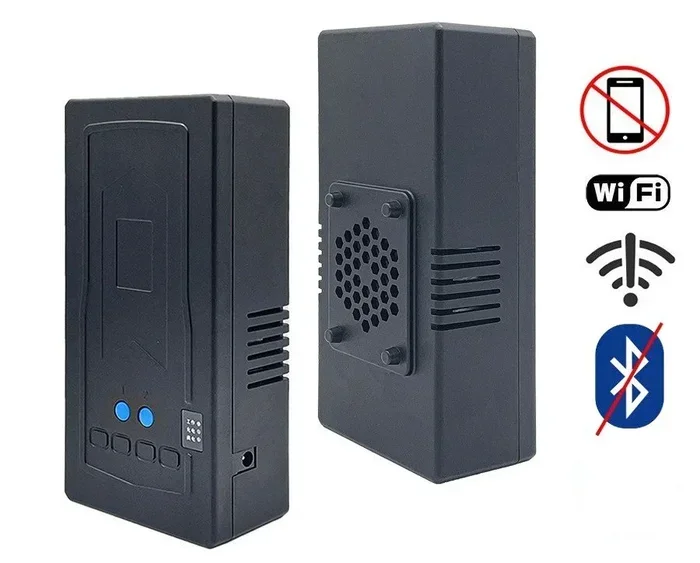
Active WiFi jammers: These devices actively broadcast noise on WiFi frequencies to drown out the signal. However, these come with a big warning. Using a WiFi jammer is illegal in most countries, including the United States. We will cover the legal side in detail in the next section.
Is It Legal to Block WiFi Signals?
This is an important question, and the answer depends on what method you use. Not all signal blocking is treated the same way under the law.
Passive Blocking Is Legal
Passive methods are perfectly legal in most countries. This includes using paint, fabric, foil, Faraday cages, and physical barriers. You are not transmitting any signals. You are simply blocking or absorbing signals that already exist. Since you are not interfering with other people’s networks, you are within your rights.
Think of it this way. Putting a thick curtain on your window blocks light from coming in. Nobody would say that is illegal. The same logic applies to blocking WiFi signals with physical materials.
Active Jamming Is Illegal
Active WiFi jammers broadcast their own signals on the same frequencies as WiFi. They intentionally interfere with wireless communications. In the United States, the Federal Communications Commission (FCC) strictly prohibits the use of signal jammers. The same laws apply in most other countries.
Violating these laws can result in heavy fines and even criminal charges. The FCC has fined individuals thousands of dollars for using jammers. Do not risk it. Stick to passive blocking methods to stay on the right side of the law.
What About Neighbor WiFi?
Some people wonder if they can block their neighbor’s WiFi signal. The answer is no. Even passive blocking that affects your neighbor’s network could be considered interference. You can only block signals on your own network or signals that are already in your property. Keep your blocking efforts focused on your own router and devices.
Common Mistakes When Trying to Block WiFi
Many people try to block WiFi signals and run into frustrating results. Here are the most common mistakes and how to avoid them.
Not Covering All Entry Points
WiFi signals can enter a room through doors, windows, vents, and even small gaps around walls. If you block one wall but leave the window open, the signal will still get through. Make sure you cover every possible entry point for the best results.
Using Too Thin a Material
A single layer of regular plastic or thin fabric will not do much. WiFi signals are designed to penetrate everyday household materials. You need dense, conductive, or thick materials to make a real difference. If you can see through it easily, the WiFi signal probably can too.
Blocking Your Own Devices
Before you start blocking signals, make sure you are not also blocking your own devices. If you place a Faraday cage around your router, your phone in the same room will lose connection. Plan your blocking strategy so that it only affects the rooms you want to target, not the rooms where you actually use your devices.
Expecting 100% Signal Blockage
Even the best methods reduce signal strength. They do not always eliminate it completely. If you need absolute zero signal, you may need to combine multiple methods. For most people, a significant reduction is enough to create a usable WiFi dead zone.
Ignoring the Router’s Antenna Position
Router antennas broadcast signals in specific patterns. Adjusting the antenna angle can change where the signal goes. Pointing antennas downward reduces signal strength in upper floors. This simple trick can help reduce WiFi in rooms above the router without any extra materials.
Expert Tips for Effective WiFi Signal Blocking
Here are some expert-level tips that can help you get the best results from your WiFi blocking efforts.
Combine multiple methods for the best results. Using aluminum foil on the wall plus thick curtains on the window plus a Faraday cage around the router creates a layered defense. Each method blocks signals in a different way, and together they are far more effective than any single method alone.
Test your results with a WiFi analyzer app. These apps measure signal strength in real time. Before you start blocking, measure the signal in the target room. After you apply your methods, measure again. This lets you see exactly how much improvement you have achieved.
Consider your router frequency band. 5 GHz signals are easier to block than 2.4 GHz signals. They have shorter wavelengths and do not penetrate materials as well. If you only need to block the 5 GHz band, your job is easier. But if you want to block both bands, you will need stronger materials.
Think about aesthetics. If you live in a shared space, you do not want your blocking solution to look ugly. Signal-blocking fabric and wallpaper offer a clean, attractive alternative to foil and mesh. Choose a method that fits your living situation.
Keep ventilation in mind. If you fully enclose your router in a Faraday cage or wrap it in metal, you may block airflow. Routers generate heat and need proper ventilation to function. Make sure any enclosure you create allows for air circulation.
Conclusion
So, can you block WiFi in a room? Absolutely. You have many options at your disposal. From simple DIY tricks like aluminum foil and thick curtains to professional products like signal-blocking paint and Faraday cages, the solutions are real and effective. The key is understanding your goal, choosing the right method, and applying it consistently.
Remember that passive blocking is safe, legal, and highly effective. Avoid active jammers, which are illegal and can carry serious penalties. Focus on methods that absorb or reflect signals without transmitting anything yourself.
Whether you want better sleep, stronger privacy, or fewer distractions, blocking WiFi in a room is a practical and achievable goal. Start with one method today, test the results, and adjust as needed. You will be surprised at how much control you can gain over your wireless network with just a few simple changes.
Take action now. Pick the method that fits your budget and your needs. Your WiFi-free room is closer than you think.
Frequently Asked Questions
Can I use aluminum foil to block WiFi signals?
Yes, aluminum foil is one of the cheapest and most effective DIY methods for blocking WiFi signals. The metal reflects radio frequency waves and prevents them from passing through. Simply place sheets of foil on the wall facing the router for an instant signal barrier.
Is WiFi signal blocking paint safe?
Yes, signal-blocking paint is safe for indoor use. It contains metallic particles that block radio frequency waves without emitting anything harmful. It works just like regular paint and can be applied with a brush or roller.
Will blocking WiFi affect my own devices?
It depends on where you place the barrier. If you block the signal in a room where you do not use devices, it will not affect you. But if your devices are on the same side as the router, they will continue to work normally.
How much does WiFi blocking fabric cost?
WiFi blocking fabric typically costs between 30 and 100 dollars per yard, depending on the brand and quality. A single curtain or wall panel usually requires one to two yards of fabric. It is a reasonable investment for a reliable solution.
Can a Faraday cage completely block WiFi?
A proper Faraday cage can block nearly all WiFi signals. These enclosures are made of conductive material that absorbs and redirects electromagnetic waves. Make sure the cage is fully sealed with no gaps for the best results.
Is it illegal to block WiFi signals?
Passive blocking methods like paint, fabric, and foil are completely legal. Active jamming devices that broadcast interference signals are illegal in most countries. Always use passive methods to stay within the law.