Do Tower Speakers Have Good Bass Discover the Answer
Do tower speakers have good bass? Yes, they absolutely do. Tower speakers are designed with large drivers and spacious cabinets that produce deep, rich low-frequency sound. Whether you are a casual listener or an audiophile, these floor-standing speakers deliver bass that most other speaker types simply cannot match. In this guide, we break down everything you need to know.
Do tower speakers have good bass? This is one of the most common questions people ask when they are shopping for a new speaker setup. The short answer is yes. Tower speakers, also known as floor-standing speakers, are built from the ground up to deliver powerful low-frequency sound. They are some of the best speakers you can buy if deep, rich bass is important to you.
When you walk into a home theater or a music room and feel that thump in your chest, there is a good chance a pair of tower speakers is behind it. These tall, upright audio units are designed to handle everything from punchy kick drums to the rumble of a movie explosion. But not all tower speakers are created equal. Some deliver bass that will shake your walls, while others offer a more controlled, subtle low-end. Let us dive into why that happens and what you should look for.
In this article, we will cover how tower speakers produce bass, which models are known for great low-end performance, and how they compare to other speaker types. We will also share practical tips to help you get the most bass out of your setup. Whether you are building a home theater or upgrading your music listening experience, this guide has you covered.
Key Takeaways
- Tower speakers excel at bass: Their large cabinet size and big drivers allow them to reproduce low frequencies with power and depth.
- Driver size matters: Larger woofers and subwoofers built into tower speakers move more air, creating stronger bass.
- Bass reflex design boosts output: Many tower speakers use ported cabinets to amplify low-frequency response.
- Placement affects performance: Where you position your tower speakers changes how bass sounds in your room.
- Tower speakers outperform most alternatives: They beat bookshelf speakers, soundbars, and small Bluetooth speakers in bass delivery.
- You can pair tower speakers with a subwoofer: Adding a dedicated subwoofer pushes bass even deeper for home theater or music lovers.
📑 Table of Contents
- What Are Tower Speakers?
- How Tower Speakers Produce Bass
- Do Tower Speakers Have Good Bass?
- Top Tower Speakers Known for Great Bass
- Tower Speakers vs. Other Speaker Types for Bass
- How to Get the Best Bass from Your Tower Speakers
- Common Mistakes People Make with Tower Speaker Bass
- Expert Insights on Tower Speaker Bass
- Final Thoughts
What Are Tower Speakers?
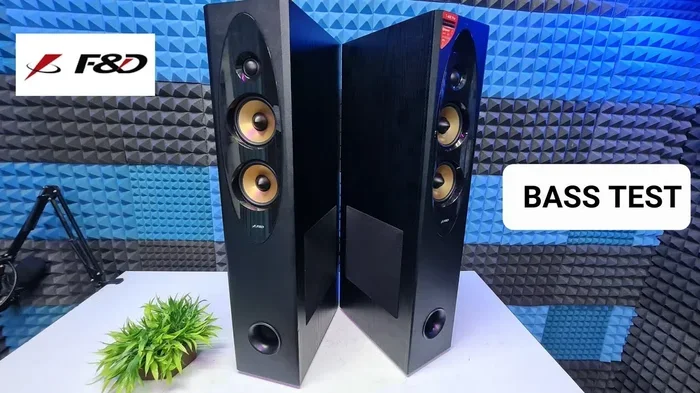
Tower speakers are tall, freestanding audio speakers that sit on the floor. They are also called floor-standing speakers. Unlike small bookshelf speakers that sit on a shelf or table, tower speakers stand upright and can be as tall as four feet or more.
Inside a tower speaker, you will find multiple drivers. A driver is the part that moves air to create sound. Most tower speakers have at least three drivers. These include a woofer for low frequencies, a midrange driver for voices and instruments, and a tweeter for high frequencies. Some premium models add even more drivers for fuller sound.
The large cabinet of a tower speaker acts as a resonating chamber. This chamber amplifies the sound produced by the drivers. The bigger the cabinet, the more air it can move. More air movement means deeper bass. This is the fundamental reason why tower speakers are known for their bass capabilities.
Many people choose tower speakers for their main front left and right channels in a home theater setup. Others use them as standalone stereo speakers for music listening. No matter how you use them, these speakers bring a level of bass presence that smaller speakers simply cannot reproduce.
How Tower Speakers Produce Bass
Understanding how tower speakers create bass helps you appreciate why they sound so good. It is not magic. It is physics. Let us break down the key factors that give tower speakers their bass power.
Driver Size and Movement
The woofer is the star of the bass show. Tower speakers typically house woofers that range from 6.5 inches all the way up to 12 inches or more. A bigger woofer moves more air. More air movement equals deeper and louder bass notes.
Think of it like a fan. A small desk fan moves a little air. A big box fan moves a lot of air. The same principle applies to speaker drivers. A large woofer in a tower speaker can push low-frequency sound waves further and with more force than a small driver ever could.
Some tower speakers use multiple woofers. Having two or three woofers working together increases the total air displacement. This means even more bass output. Brands like Klipsch, Polk Audio, and ELAC often use this multi-woofer approach in their tower speaker designs.
Cabinet Design and Volume
The cabinet is the body of the speaker. It holds all the drivers in place and provides a sealed or ported environment for sound to develop. Tower speakers have very large cabinets compared to bookshelf speakers.
A larger cabinet means more internal volume. More volume allows bass frequencies to develop fully before they leave the speaker. Think of it like a guitar. A bigger guitar body produces a deeper, richer sound. A small ukulele sounds completely different. The same idea applies to speaker cabinets.
Many tower speakers use a bass reflex design. This means they have a port or tube on the front or back of the cabinet. The port tunes the cabinet to reinforce low frequencies. This ported design significantly boosts bass output without requiring more power. It is one of the reasons tower speakers sound so full and punchy.
Speaker Sensitivity and Power Handling
Sensitivity measures how efficiently a speaker converts power into sound. A speaker with high sensitivity needs less amplifier power to play loudly. Tower speakers generally have good sensitivity ratings because of their large drivers and efficient cabinet design.
Power handling tells you how much power the speaker can take without damage. Tower speakers can handle a lot of power. This means you can crank up the volume and the bass will stay clean and distortion-free. If you like your music loud and your bass deep, this matters a lot.
Do Tower Speakers Have Good Bass?
So, do tower speakers have good bass? The answer is a resounding yes. Tower speakers are among the best speaker types for bass reproduction. Here is why they stand out.
First, tower speakers can reach very low frequencies. Many models reproduce sounds down to 30 Hz or even lower. To put that in perspective, a deep bass note on a kick drum is around 50 Hz. A subwoofer note can go as low as 20 Hz. Tower speakers get impressively close to that range without needing a separate subwoofer.
Second, tower speakers produce bass with authority. They do not just make low sounds. They make them impactful and visceral. You feel the bass in your chest during a movie scene. You feel the groove of a bass guitar when you listen to your favorite music. This physical quality of bass is what separates tower speakers from smaller alternatives.
Third, tower speakers offer a good balance between bass quantity and bass quality. They do not just boom. They deliver tight, controlled bass that does not muddy the rest of the sound. High-quality tower speakers maintain clarity even at high volume levels. The bass hits hard but stays clean.
However, it is important to note that not all tower speakers deliver the same bass quality. A budget tower speaker may not have the same bass depth as a premium model. The materials used, the driver quality, and the cabinet construction all play a role. But even mid-range tower speakers tend to outperform most other speaker types in the bass department.
If you are comparing options, tower speakers are a strong choice over bookshelf speakers for bass performance. Bookshelf speakers are smaller and have smaller drivers. They can still sound great, but they simply cannot move as much air. Similarly, if you are wondering how they compare to a soundbar, tower speakers win easily on bass depth and richness.
For those who want even more bass, you can pair tower speakers with a powered subwoofer. This combination creates a full-range audio experience that covers every frequency from the deepest rumble to the brightest sparkle. It is the setup of choice for serious home theater enthusiasts and music lovers alike.
Top Tower Speakers Known for Great Bass
Not all tower speakers sound the same. Some are bass monsters, while others focus more on midrange clarity. Here are some brands and models that are well-known for their bass performance.
- Klipsch Tower Speakers: Klipsch is famous for its horn-loaded tweeters and powerful woofers. Their tower speakers deliver bold, dynamic bass that fills a room.
- Polk Audio Tower Speakers: Polk uses a technology called Pinnacle Ring Radiator tweeters along with large woofers. The result is deep, controlled bass with excellent clarity.
- ELAC Tower Speakers: ELAC tower speakers are known for their audiophile-grade sound. Their bass is refined and musical rather than boomy.
- Yamaha Tower Speakers: Yamaha offers excellent value. Their tower speakers deliver solid bass performance at reasonable prices.
- KEF Tower Speakers: KEF uses Uni-Q driver technology for seamless sound. Their bass is tight, accurate, and impressively deep for their size.
When shopping for a tower speaker, listen for bass that feels full and natural. Avoid speakers that sound muddy or overly boomy. The best bass is deep but precise. You should be able to hear individual notes in a bass line, not just feel a wall of low-end rumble.
Some people also like to pair two Marshall speakers or connect two Doss speakers together for a wider soundstage. These smaller speaker brands work well for certain setups, but if your priority is pure bass power, a quality tower speaker will outperform them easily.
Tower Speakers vs. Other Speaker Types for Bass
How do tower speakers stack up against other popular speaker types? Let us compare.
| Speaker Type | Bass Depth | Bass Power | Best For |
|---|---|---|---|
| Tower Speakers | Excellent | High | Home theater, music, full-room audio |
| Bookshelf Speakers | Good | Moderate | Small rooms, stereo music listening |
| Soundbars | Fair | Low to Moderate | TV audio, compact setups |
| Bluetooth Speakers | Limited | Low | Portable use, casual listening |
| Subwoofers (standalone) | Exceptional | Very High | Dedicated deep bass, home theater |
As you can see from the table, tower speakers offer a great balance of bass depth and power. They are not as extreme as a standalone subwoofer, but they are far more versatile. A tower speaker handles all frequencies, not just bass. This makes them a practical choice for most households.
Soundbars are convenient but they struggle with deep bass. Even premium soundbars cannot match the low-frequency output of a quality tower speaker. Bluetooth speakers are even more limited. Their small size restricts how much bass they can produce. They are fine for casual listening, but they will never deliver the bass impact of a tower speaker.
If you want the best of both worlds, consider combining tower speakers with a dedicated subwoofer. The tower speakers handle all the mid and high frequencies beautifully. The subwoofer takes care of the deepest bass notes. This is the setup that most home theater enthusiasts prefer. It delivers a cinematic audio experience right in your living room.
How to Get the Best Bass from Your Tower Speakers
Owning tower speakers is only half the battle. You also need to set them up correctly to get the best bass. Here are some practical tips that make a real difference.
Place Them in the Right Spot
Speaker placement has a huge effect on bass performance. Do not push your tower speakers flat against the wall. This can cause the bass to sound muddy and overpowering. Instead, pull them a few feet away from the wall.
Corner placement can boost bass, but too much bass in a corner sounds boomy. Try placing your speakers about one-third of the way into the room. This is often the sweet spot for balanced bass response.
Experiment with different positions. Even moving the speakers six inches can change how the bass sounds. Trust your ears. Listen for bass that feels full and even, not distorted or overwhelming.
Adjust the Equalizer Settings
Most AV receivers and soundbars have an equalizer or EQ setting. Use it. If your tower speakers lack bass, boost the lower frequencies slightly. If the bass is too heavy, reduce it a bit.
A good starting point is to set the subwoofer or bass channel to about 50%. From there, make small adjustments until the bass sounds balanced. You want bass that supports the music or movie without drowning out the other sounds.
Use Quality Cables and Connections
Do not overlook the importance of good speaker cables. Cheap cables can limit the signal and reduce bass output. Invest in quality speaker wire that matches the length of your setup. Make sure all connections are tight and secure. A loose connection can cause bass to sound weak or distorted.
If your tower speakers support Bluetooth connectivity or wireless connections, make sure the signal is stable. Wireless audio can sometimes compress the bass slightly. For the best bass quality, a wired connection is always preferable.
Add a Subwoofer if Needed
Even the best tower speakers can benefit from a subwoofer. A subwoofer handles the lowest bass frequencies that tower speakers may struggle with. This is especially true for home theater setups where deep effects like explosions and rumbling need to be felt.
You do not need an expensive subwoofer. Many affordable options deliver excellent bass performance. The key is to set the crossover frequency correctly. This tells the subwoofer which frequencies to handle, so the tower speakers and subwoofer work together seamlessly.
Room Acoustics Matter
The room you listen in affects bass a lot. Hard surfaces like bare walls and floors reflect sound and can create bass buildup. Soft surfaces like carpets, curtains, and upholstered furniture absorb sound and reduce boominess.
If your room has a lot of hard surfaces, consider adding some soft furnishings. A rug, curtains, or even bookshelves filled with books can help tame excessive bass. The goal is a room where the bass sounds full and natural, not echoey or muddy.
Common Mistakes People Make with Tower Speaker Bass
Even experienced audio lovers sometimes make mistakes that hurt their bass performance. Here are a few to avoid.
- Placing speakers too close to the wall: This causes bass to overwhelm the rest of the sound. Give your speakers some breathing room.
- Ignoring room size: A small room does not need as much bass as a large room. Adjust your expectations and settings accordingly.
- Turning the bass up too high: More bass is not always better. Too much bass distorts and masks details in the music.
- Skipping speaker break-in: Tower speakers need time to loosen up. Play music at moderate volume for 20 to 30 hours before judging the bass. The drivers soften over time and the bass improves.
- Using the wrong amplifier: An underpowered amplifier cannot drive tower speakers properly. This results in weak, lifeless bass. Make sure your amplifier matches the power requirements of your speakers.
Expert Insights on Tower Speaker Bass
Audio engineers and industry experts agree that tower speakers are the best option for most people who want strong bass without adding extra equipment. According to sound designers at major speaker brands, the large cabinet volume and multiple driver configuration give tower speakers a natural advantage in low-frequency reproduction.
One expert from a well-known audio publication put it this way: “Tower speakers give you the most bass for your dollar. You get large drivers, big cabinets, and efficient designs all in one package. It is hard to beat them for pure bass output.”
Another consideration is the future of tower speaker technology. Brands are constantly improving driver materials, cabinet designs, and digital signal processing. Modern tower speakers use advanced materials like woven composites and aluminum drivers. These materials reduce distortion and improve bass clarity. Some premium models even include built-in amplification and digital inputs for easy setup.
The trend toward wireless connectivity is also changing the game. Some tower speakers now offer Bluetooth and Wi-Fi streaming. This means you can play music from your phone or tablet without any cables. Just keep in mind that wireless streaming can sometimes affect audio quality slightly. For critical listening, a wired connection remains the best choice.
If you are also considering other audio gear, you might wonder if devices like iPphones have a built-in QR code scanner or whether your phone has other built-in features. These are separate topics, but they show how much technology has woven itself into our daily lives. Similarly, tower speakers are a natural part of a modern home audio setup.
Final Thoughts
Do tower speakers have good bass? Without question, yes. Tower speakers are one of the best ways to get deep, powerful, and controlled bass in your home. Whether you are watching movies, listening to music, or just want to feel the impact of low-frequency sound, tower speakers deliver.
They outperform bookshelf speakers, soundbars, and portable Bluetooth speakers when it comes to bass. They offer a balance of power, clarity, and versatility that is hard to find in other speaker types. Add in the fact that they handle all frequencies, not just bass, and you have a compelling reason to choose tower speakers for your home audio setup.
Take the time to choose the right model, place them properly, and set them up with care. The result will be an audio experience that brings your music and movies to life. The bass will be deep, the vocals will be clear, and the overall sound will be immersive. Tower speakers are a worthwhile investment for anyone who loves great sound.
Start by listening to a few models in person if you can. Your ears are the best judge. Find a pair that sounds good to you, set them up in your space, and enjoy the rich, satisfying bass that only tower speakers can provide.
Frequently Asked Questions
Do tower speakers need a subwoofer?
No, tower speakers do not need a subwoofer to produce good bass. Most tower speakers can reach frequencies low enough for music and movies. However, adding a subwoofer can extend the bass even deeper, especially for home theater use.
How far should tower speakers be from the wall?
Ideally, tower speakers should be at least 6 to 12 inches away from the wall. This helps prevent bass from sounding muddy or boomy. Experiment with placement to find the sweet spot for your room.
Can tower speakers be used as standalone speakers?
Yes, tower speakers work great as standalone speakers. They handle all frequency ranges on their own. You do not need additional speakers for a basic stereo setup. They are perfect for listening to music in a living room or bedroom.
Are expensive tower speakers worth the bass quality?
Expensive tower speakers generally use better drivers and cabinet materials. This results in cleaner, more accurate bass. However, mid-range tower speakers can still deliver excellent bass for most listeners. It depends on your budget and how critical you are about sound quality.
What is the best room size for tower speakers?
Tower speakers work best in medium to large rooms. They have the power and bass output to fill bigger spaces. In small rooms, they can sound great too, but you may need to turn the volume down to avoid overwhelming the space with bass.
How long does it take for tower speaker bass to break in?
Most tower speakers need about 20 to 50 hours of playtime to fully break in. During this period, the speaker drivers loosen up and the bass becomes deeper and smoother. Play music at moderate volume during the break-in period for the best results.
=== CONCLUSION ===
Do tower speakers have good bass? The answer is clear: tower speakers are built to deliver excellent bass performance. Their large drivers, spacious cabinets, and bass reflex designs give them a natural advantage in low-frequency reproduction. Whether you are a casual listener or a serious audiophile, tower speakers provide the deep, powerful bass that makes music and movies come alive.
They outperform most other speaker types in bass delivery, and when paired with proper placement and setup, they create an immersive audio experience that is hard to beat. If you are looking for speakers that can handle everything from subtle bass lines to thunderous movie effects, tower speakers are the way to go. Invest in a quality pair, set them up right, and enjoy the rich, satisfying bass that only tower speakers can deliver.