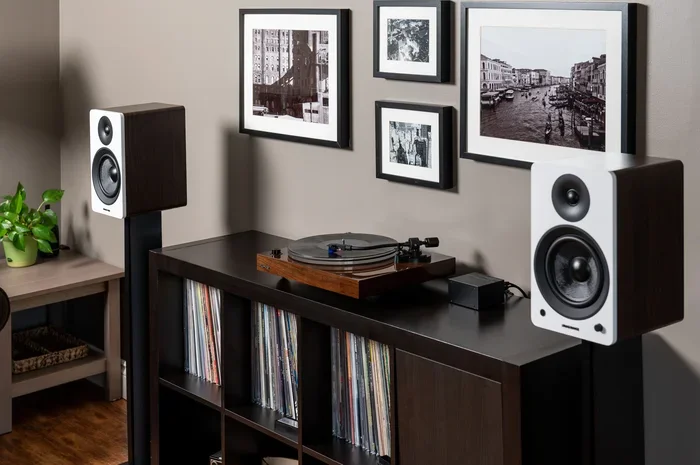
Can You Plug A Turntable Directly Into Speakers Today
Yes, you can plug a turntable directly into speakers, but it depends on your setup. Some turntables have a built-in preamp that makes this possible, while others require a separate phono preamp or amplifier. Understanding your audio connection options ensures you get the best sound quality from your vinyl records.
This is a comprehensive guide about Can You Plug A Turntable Directly Into Speakers.
Key Takeaways
- Direct Plugging Is Possible: Some turntables have built-in preamps that allow direct connection to powered speakers.
- Phono Preamp Matters: Without a phono preamp, the sound will be weak and distorted.
- RCA Cables Are Standard: Most turntable-to-speaker setups use RCA cables for the audio connection.
- Powered vs Passive Speakers: Powered speakers work best for direct turntable connections without extra equipment.
- Ground Wire Is Important: Always connect the ground wire to avoid buzzing and humming noise.
- Bluetooth Options Exist: You can also explore turning regular speakers into Bluetooth options for wireless listening.
[FEATURED_IMAGE_PLACEHOLDER]
Can you plug a turntable directly into speakers? This is one of the most common questions among vinyl lovers who want a simple setup. Maybe you just bought a turntable and want to start spinning records right away. Or perhaps you are tired of complicated audio chains and want a cleaner setup. Either way, the answer is not always a simple yes or no.
The truth is, it depends on your turntable, your speakers, and the cables you have. Some setups let you connect everything with just a single cable. Others need extra gear like a phono preamp or an amplifier. But here is the good news. Once you understand the basics, setting up a turntable with speakers is easier than most people think.
In this guide, we will walk you through everything you need to know. We will cover how turntables connect to speakers, what a phono preamp does, and which setups give you the best sound. By the end, you will know exactly what you need to do. Let us dive in.
Understanding How Turntables Connect to Speakers
Before you grab any cables, it helps to understand what is happening inside your turntable. A turntable reads the grooves on a vinyl record and creates a tiny electrical signal. That signal is very weak. It is also shaped in a special way called the RIAA equalization curve. This means it needs special processing before it can sound right through your speakers.
Most regular speakers are not designed to handle this kind of signal directly. They expect a stronger, line-level audio signal. So when you plug a turntable straight into speakers without any processing, you often get very quiet sound or a flat, dull tone. This is where the type of turntable you own makes a big difference.
Turntables With Built-In Preamps
Many modern turntables come with a built-in phono preamp. This small circuit board inside the turntable does the heavy lifting. It boosts the weak signal from the cartridge and applies the correct equalization. When a turntable has this feature, you can often connect it directly to powered speakers or an amplifier without any extra gear.
To check if your turntable has a built-in preamp, look for a switch on the back or side. It might say “Phono/Line.” When you flip it to “Line,” the turntable outputs a standard audio signal that most speakers can handle. Some popular turntable brands that include this feature are Audio-Technica, Victrola, and Sony.
If you do not see a switch, check the user manual or look up your model online. You can also test it by connecting the turntable to a powered speaker and playing a record. If the sound is clear and full, you likely have a built-in preamp. If it sounds weak or tinny, you probably need an external one.
Turntables Without Built-In Preamps
Older turntables and some high-end models do not have a built-in preamp. These turntables output what is called a phono-level signal. This signal is too weak and incorrectly equalized for most speakers to handle properly. In this case, you cannot plug the turntable directly into speakers and expect good results.
You have a few options here. You can add a standalone phono preamp between the turntable and the speakers. You can also use a receiver or amplifier with a phono input. Some powered speakers also have a phono input built in, which handles the preamp work for you. We will explore these options in more detail below.
One thing to keep in mind is that some people try to bypass the preamp entirely. This almost always leads to poor sound quality. The turntable signal needs that extra amplification and correction. Skipping this step will leave you with a frustrating listening experience.
What You Need to Plug a Turntable Directly Into Speakers
If you want a simple setup with no extra boxes or cables lying around, you need the right combination of equipment. Let us break down exactly what works for direct connections.
Powered Speakers Are Your Best Friend
Powered speakers, also called active speakers, have a built-in amplifier. This means they do not need an external amp to work. You plug them into a wall outlet, and they amplify the audio signal on their own. This makes them ideal for a direct turntable connection.
When your turntable has a built-in preamp, you can connect it straight to powered speakers using RCA cables. Just plug the red and white RCA outputs from the turntable into the matching inputs on the speakers. That is it. No extra equipment needed.
Some powered speakers even have a phono input, which means they include a preamp inside. In that case, you can connect any turntable directly, even one without a built-in preamp. Brands like Edifier, Presonus, and M-Audio make powered speakers that work great with turntables.
Powered Speakers With Phono Inputs
These speakers are a game-changer for vinyl lovers. They combine the amplifier, speaker, and phono preamp into one unit. You simply connect the turntable to the phono input, and the speaker handles everything else.
This is the easiest setup for beginners. You do not need to buy any extra gear. Just plug in and play. If you want a clean, minimalist setup without extra cables or boxes, powered speakers with a phono input are the way to go.
Keep in mind that not all powered speakers have this feature. Check the specs before you buy. Look for “phono input” or “built-in preamp” in the product description. If you are also exploring other audio setups, you might want to check if you can use a projector as a TV for a multi-purpose entertainment setup.
Passive Speakers and When You Need an Amplifier
Passive speakers do not have a built-in amplifier. They need an external amp or receiver to work. In most cases, you cannot plug a turntable directly into passive speakers and get good sound. You need an amplifier with a phono input to boost and correct the signal first.
If you already own passive speakers, do not worry. You can still use them with a turntable. Just add a phono preamp or a receiver that has a phono stage. This adds one more piece of equipment to your chain, but it gives you more flexibility and often better sound quality.
For a simple comparison, here is how the different speaker types stack up for direct turntable use:
| Speaker Type | Built-In Amp | Direct Turntable Connection | Extra Gear Needed |
|---|---|---|---|
| Powered (Active) | Yes | Yes, with built-in preamp turntable | Sometimes |
| Powered with Phono Input | Yes | Yes, with any turntable | None |
| Passive | No | No | Amplifier or preamp |
The Role of the Phono Preamp
The phono preamp is the unsung hero of any vinyl setup. It does two very important jobs. First, it amplifies the tiny signal from the turntable to a level that speakers can use. Second, it applies the correct equalization to the audio signal. Without it, your records will sound thin, tinny, and flat.
Why You Cannot Skip the Preamp
Vinyl records store music in a very specific way. The bass frequencies are reduced during recording, and the treble frequencies are boosted. This is called RIAA equalization. It helps fit more music on the record and reduces noise.
When the turntable reads the record, it reproduces this shaped signal exactly. The phono preamp reverses this process. It boosts the bass and reduces the treble back to the original flat frequency response. Without this correction, your music will sound like it is playing through a tin can.
Some people think they can just turn up the volume to compensate for a weak signal. This does not work. The frequency balance will still be wrong. The bass will be weak, and the treble will be harsh. You need that preamp to fix the signal properly.
Built-In vs External Preamps
A built-in preamp is convenient. It is already inside your turntable, so you do not need to buy or wire anything extra. However, some audiophiles prefer external preamps because they offer better sound quality and more control.
External preamps give you the ability to upgrade your setup over time. You can swap out your turntable and keep the same preamp. You can also choose a preamp that matches your specific cartridge and listening preferences. Popular external preamp brands include Pro-Ject, ART, and Cambridge Audio.
If you are trying to decide between the two, consider your goals. If you want simplicity, go with a built-in preamp. If you want the best possible sound and plan to grow your setup, an external preamp is worth the investment.
Step-by-Step: How to Plug a Turntable Directly Into Speakers
Now that you understand the basics, let us walk through the actual setup process. This guide assumes you have a turntable with a built-in preamp and a pair of powered speakers.
Step 1: Gather Your Cables
You will need a pair of RCA cables. These are the standard red and white cables used for audio connections. Most turntables come with RCA cables in the box. If yours did not, you can pick them up at any electronics store or online. Make sure the cables are long enough to reach from your turntable to your speakers.
Step 2: Position Your Equipment
Place your turntable on a stable, level surface away from speakers. Vibrations from the speakers can cause unwanted noise in your records. Keep the turntable and speakers close enough that the cables reach comfortably without stretching or creating a trip hazard.
Step 3: Connect the RCA Cables
Plug the RCA cables into the output jacks on the back of the turntable. Match the colors: white to white, red to red. Then plug the other ends into the input jacks on your powered speakers. Again, match the colors.
Step 4: Connect the Ground Wire
This step is easy to miss but very important. Most turntables have a thin ground wire with a small spade connector. Attach it to the ground post on your powered speakers or amplifier. This wire prevents buzzing and humming noise in your audio.
Step 5: Power On and Test
Turn on your speakers and set the turntable to “Line” mode if it has a phono/line switch. Place a record on the platter and gently drop the needle. You should hear clear, full sound. If you hear buzzing, check the ground wire connection. If the sound is too quiet, make sure you are in “Line” mode and not “Phono” mode.
Quick tip: If you want to explore wireless options, you might consider turning regular speakers into Bluetooth speakers for a cable-free setup. This gives you more flexibility in where you place your equipment.
Common Mistakes to Avoid When Connecting a Turntable to Speakers
Even with the right equipment, people make mistakes that hurt their sound quality. Here are the most common ones to watch out for.
Forgetting the Ground Wire
This is the number one mistake. Without the ground wire, your setup will produce a loud hum or buzz. It is a small wire, but it makes a huge difference. Always connect it before you start playing music.
Using the Wrong Input on the Speakers
Powered speakers often have multiple inputs. Some are labeled for line-level signals, and some are for turntable or phono signals. If you plug into the wrong input, the sound will be too quiet or distorted. Check your speaker manual to find the correct input.
Ignoring Cable Quality
Cheap RCA cables can introduce static and interference. You do not need to spend a fortune, but avoid the absolute cheapest options. Look for cables with good shielding and solid connectors. A quality pair of RCA cables costs around $10 to $20 and can make a noticeable difference in your audio.
Placing the Turntable Near the Speakers
Speakers create vibrations that can affect your turntable’s performance. Keep at least a few feet of distance between them. This simple step reduces unwanted noise and helps your records play more smoothly.
Skipping the Phono Preamp When Needed
If your turntable does not have a built-in preamp, do not try to skip it. The sound will be weak and wrong. Either buy a standalone preamp or choose speakers with a phono input. This is not a place to cut corners.
Can You Use a Bluetooth Speaker with a Turntable?
Bluetooth speakers are popular for their convenience, but using one with a turntable is not always straightforward. Most Bluetooth speakers do not have a phono input. They expect a line-level signal from a phone or computer. So plugging a turntable directly into a Bluetooth speaker usually does not work well.
However, there are workarounds. You can use a Bluetooth transmitter that plugs into the turntable’s RCA outputs. This sends the audio signal wirelessly to the Bluetooth speaker. You can also explore whether you can turn regular speakers into Bluetooth speakers with a simple adapter. This adds wireless capability to your setup without replacing your equipment.
Keep in mind that Bluetooth compression can affect sound quality. Audiophiles who care about every detail might notice a slight loss in fidelity. For casual listening, though, a Bluetooth setup works fine and adds a lot of convenience.
Expert Tips for the Best Sound Quality
Once you have your turntable connected to your speakers, a few extra steps can take your listening experience to the next level.
- Keep your records clean. Dust and dirt on vinyl cause crackling and popping. Use a carbon fiber brush before every play.
- Replace your stylus regularly. A worn needle damages your records and sounds terrible. Change it every 500 to 1000 hours of playtime.
- Use an isolation platform. A turntable isolation pad absorbs vibrations and improves sound clarity.
- Upgrade your cables over time. Better RCA cables and speaker wire can noticeably improve your audio quality.
- Store records properly. Keep them vertical, away from heat and sunlight, in inner sleeves that protect the grooves.
These small investments add up over time. They protect your equipment and your records while delivering a better listening experience every time you sit down to enjoy your favorite vinyl.
Final Thoughts
So, can you plug a turntable directly into speakers? The answer is yes, but with the right setup. If your turntable has a built-in preamp and your speakers are powered or have a phono input, you can connect them with just RCA cables and a ground wire. It is simple, clean, and sounds great.
If your turntable lacks a built-in preamp, you will need a phono preamp or a receiver with a phono stage. This adds one more step to your setup, but it is still very manageable. The key is understanding what your equipment needs and matching the right components together.
Vinyl listening is a wonderful experience. There is something magical about the warmth and richness of analog sound. With the right connection between your turntable and speakers, you can enjoy that experience every day. Start simple, upgrade over time, and most importantly, enjoy the music.
Whether you are a complete beginner or a seasoned collector, getting your turntable connected to speakers correctly makes all the difference. Follow the steps in this guide, avoid the common mistakes, and you will be spinning records in no time. Happy listening.
FAQs
Do I need a phono preamp to connect a turntable to speakers?
It depends on your turntable. If your turntable has a built-in preamp, you do not need a separate one. Check for a “Phono/Line” switch on the back of your turntable. If there is no such switch, you likely need an external preamp or powered speakers with a phono input.
Can I plug any turntable directly into any speaker?
Not all combinations work. You need a turntable with a built-in preamp and powered speakers, or a turntable with a phono input on the speaker side. Passive speakers alone will not work without an amplifier or external preamp in the signal chain.
What cables do I need to connect a turntable to speakers?
You need a pair of RCA cables, which are the standard red and white audio cables. You will also need a ground wire, which is usually a thin wire with a small spade connector that prevents buzzing noise in your setup.
Why does my turntable sound quiet when connected to speakers?
This usually means you are missing a phono preamp in your setup. The turntable outputs a weak phono-level signal that needs amplification. Either your turntable needs a built-in preamp, or you need to add an external one between the turntable and the speakers.
Can I use powered Bluetooth speakers with a turntable?
You can, but not by plugging directly. Most Bluetooth speakers do not have a phono input. You will need a Bluetooth transmitter that connects to the turntable’s RCA outputs to send the signal wirelessly to the speaker.
Does the length of the RCA cable affect sound quality?
Shorter cables generally preserve better signal quality because there is less opportunity for interference. Keep your RCA cables as short as practical while still allowing comfortable placement of your equipment. Avoid cables longer than you need.
Frequently Asked Questions
What is Can You Plug A Turntable Directly Into Speakers?
Can You Plug A Turntable Directly Into Speakers is an important topic with many practical applications.