The Difference Between A Speaker And Studio Monitor
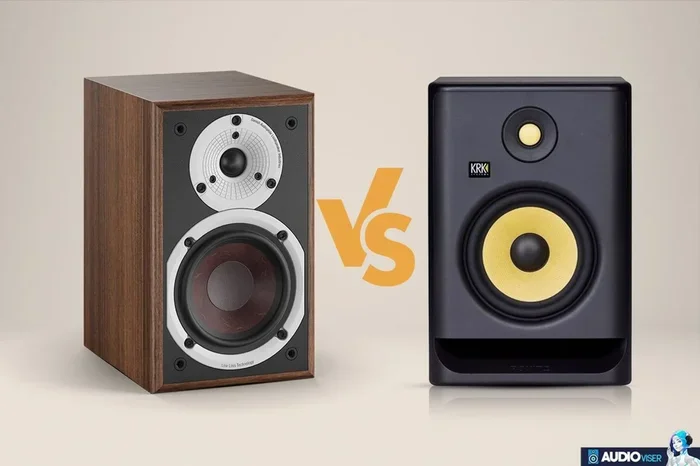
The main difference between a speaker and a studio monitor comes down to accuracy and purpose. A standard speaker is designed to make audio sound good and exciting, while a studio monitor is built to reproduce sound as faithfully and flatly as possible. Studio monitors give producers and engineers a true picture of their audio, which is essential for mixing, mastering, and critical listening. Understanding this distinction helps you choose the right gear for your needs, whether you are a casual listener or a professional audio creator.
You might think all speakers are the same. After all, they both push air and create sound, right? But if you have ever walked into a recording studio or a music production setup, you may have noticed something different about those big boxes on the desk. They look like speakers, but they are not called speakers. They are called studio monitors. And the gap between them is bigger than you might think.
The difference between a speaker and a studio monitor comes down to one core idea: accuracy versus enjoyment. A regular speaker is designed to make audio sound pleasing and exciting. A studio monitor is designed to make audio sound honest and raw. That one distinction changes everything, from the parts inside the box to how you use them in your daily life. Whether you are a music producer, a podcaster, or just someone who loves great sound, understanding this difference matters a lot.
In this article, we will break it all down. You will learn what each device does, how they differ in design and purpose, and which one you should actually buy. We will cover frequency response, sound coloring, active vs passive designs, and much more. By the end, you will have a clear picture of what you need and why.
Key Takeaways
- Studio monitors prioritize accuracy: They deliver a flat frequency response so you hear your audio exactly as it is.
- Regular speakers color the sound: They boost bass and treble to make music sound more enjoyable and lively.
- Active vs passive matters: Most studio monitors are active with built-in amps, while speakers can be either.
- Nearfield monitors are ideal for small rooms: They reduce room acoustic issues and give a focused listening experience.
- Using the wrong type hurts your work: Mixing on regular speakers can lead to poor translation on other playback systems.
- Your use case determines your choice: Casual listening calls for speakers, while audio production demands studio monitors.
📑 Table of Contents
What Is a Regular Speaker?
A regular speaker is a device that converts electrical signals into sound waves. You find them in your phone, your car, your living room, and your home theater system. Their main job is simple: make audio sound good to your ears. Most regular speakers are built with one goal in mind, and that goal is enjoyment.
How Regular Speakers Work
Inside a regular speaker, you will find one or more drivers. A driver is the part that actually moves air to create sound. There are typically two main types. A woofer handles low frequencies, which is your bass and drums. A tweeter handles high frequencies, like the shimmer of a cymbal or the sparkle in a singer’s voice. Some speakers also have a midrange driver that covers the middle frequencies where most vocals and instruments live.
These drivers work together through a component called a crossover. The crossover splits the audio signal into different frequency bands and sends each band to the right driver. This creates a full, rich sound. But here is the key part: regular speakers are not trying to be neutral. They are trying to be fun.
Why Regular Speakers Sound “Good”
Most regular speakers add what is called sound coloring. This means they boost certain frequencies to make the audio feel more exciting. Bass might be deeper than it really is. Treble might be brighter and more sparkly. The midrange might be slightly recessed to make vocals feel more present.
This is not a flaw. It is a design choice. Manufacturers know that most people want their music to sound full and lively. A completely flat speaker can sound boring to casual listeners. That is why your favorite Bluetooth speaker probably sounds richer and more powerful than the actual recording. It is adding its own flavor to the music.
For everyday listening, this works great. You plug in your phone, press play, and enjoy. But if you are trying to mix a song or edit a podcast, that colored sound becomes a problem. You cannot make accurate decisions when the audio you are hearing is not the true audio.
What Is a Studio Monitor?
A studio monitor is a specialized speaker designed for audio professionals. Its sole purpose is accurate sound reproduction. When you play a track on a studio monitor, you should hear exactly what is in the recording. No boosting. No coloring. No surprises.
Studio monitors are the workhorses of music production, sound design, film scoring, and broadcasting. They are built to give engineers and producers a flat frequency response. This means every frequency, from the lowest bass to the highest treble, is reproduced at the same volume level. What you hear is what you get.
The Anatomy of a Studio Monitor
Studio monitors look similar to regular speakers on the outside, but the inside tells a different story. They use high-quality drivers that are precision-engineered for accuracy. The crossover network is designed to be as transparent as possible. Many studio monitors also include room correction technology, which adjusts the output based on the acoustics of your listening environment.
Most studio monitors are active monitors. This means they have a built-in amplifier. You plug them directly into an audio interface or a mixer, and they work right away. You do not need a separate amplifier. Passive speakers, on the other hand, require an external amp. Active design gives studio monitors more control over the sound and ensures a consistent signal path from input to output.
Nearfield vs Farfield Monitors
Studio monitors come in two main types. Nearfield monitors are smaller and designed to be listened to from a close distance, usually about three to five feet away. They are perfect for home studios and small rooms because they minimize the effect of room acoustics. You hear more of the direct sound and less of the reflected sound bouncing off your walls.
Farfield monitors are larger and meant to be listened to from a greater distance. They are common in professional studios with dedicated control rooms and proper acoustic treatment. Farfield monitors give a wider soundstage and more presence, but they require a well-treated room to perform their best.
Key Differences Between Speakers and Studio Monitors
Now that you understand what each device is, let us get into the real meat of the topic. The difference between a speaker and a studio monitor shows up in several important areas. Let us compare them side by side.
Frequency Response
A regular speaker often has a shaped frequency response. The bass might be boosted by a few decibels. The treble might be elevated to add sparkle. This creates a pleasant listening experience, but it is not truthful. A studio monitor aims for a perfectly flat frequency response across the entire audible range, typically from 20 Hz to 20,000 Hz. Every frequency band is represented equally.
Sound Coloring vs. Sound Transparency
This is the biggest difference. Regular speakers add their own personality to the sound. They make everything sound a bit warmer, a bit brighter, or a bit more powerful. Studio monitors strip all of that away. They give you a raw, uncolored signal. This transparency is exactly what audio professionals need when they are making critical decisions about a mix.
Build Quality and Components
Studio monitors use higher-quality components than most regular speakers. The drivers are more precise. The crossover circuits are better designed. The enclosures are built to reduce resonance and unwanted coloration. All of this adds up to a cleaner, more accurate sound. Regular speakers prioritize cost-effectiveness and consumer appeal over precision.
Amplification
As mentioned earlier, most studio monitors are active. They have built-in amplifiers that are specifically matched to the drivers. Regular speakers can be passive, requiring a separate amplifier, or active, but the amplification in regular speakers is often generic and not fine-tuned for accuracy.
Intended Use
This one is pretty straightforward. Regular speakers are for listening. Studio monitors are for working. You use regular speakers when you want to relax and enjoy music. You use studio monitors when you need to analyze audio, make mixing decisions, or ensure your content sounds good across different playback systems.
| Feature | Regular Speaker | Studio Monitor |
|---|---|---|
| Frequency Response | Shaped for enjoyment | Flat and accurate |
| Sound Coloring | Yes, intentionally | Minimal to none |
| Amplification | Varies (active or passive) | Usually active with built-in amp |
| Build Quality | Good for price point | High-precision components |
| Primary Purpose | Enjoyment and entertainment | Critical listening and audio work |
| Price Range | Wide range, often lower | Mid to high range |
| Best For | Casual listening, home theater | Mixing, mastering, production |
Why Accuracy Matters in Audio Production
If you are producing music, mixing podcasts, or editing video audio, accuracy is everything. When you mix a track on regular speakers, you are mixing to that speaker’s coloration. The boosted bass might make your low end sound balanced, but when someone plays your track on a car stereo or Bluetooth speaker, the bass might be overwhelming. The treble might be harsh. Your mix will not translate well.
Studio monitors solve this problem. Because they give you a flat and honest representation of your audio, you can make mixing decisions that will hold up across different playback systems. This is called translation, and it is one of the most important goals in audio production.
Think of it this way. If you are a chef, a regular speaker is like tasting your food with a spoon that adds a little extra salt. You might think your dish is perfectly seasoned, but your guests will find it too salty. A studio monitor is like tasting with a clean spoon. You get the true flavor, and you can adjust accordingly.
Common Mistakes People Make
One of the biggest mistakes beginners make is using regular speakers for mixing. They hear their music on a nice Bluetooth speaker or a home stereo and think it sounds great. But that sound is colored by the speaker’s design. When they switch to studio monitors, the mix often falls apart. The bass is too loud, the vocals are harsh, and the overall balance is off.
Another common mistake is ignoring room acoustics. Even the best nearfield monitors will sound wrong in a room with bad reflections and standing waves. Acoustic treatment, proper speaker placement, and room correction software can all help improve accuracy significantly.
Some people also make the mistake of thinking expensive regular speakers are the same as studio monitors. Price does not equal accuracy. A $1,000 hi-fi speaker might sound amazing, but it is still designed to please your ears, not to give you a truthful representation of your audio.
Can You Use Studio Monitors for Regular Listening?
The short answer is yes. Studio monitors can play music just like any other speaker. But the experience is different. Because studio monitors are designed to be flat and transparent, they do not add that extra excitement to the music. The bass might sound weaker than you are used to. The treble might not sparkle the way it does on your regular speaker.
For some people, this is a revelation. They hear their favorite songs in a completely new way. They notice details they never heard before, a background vocal, a subtle guitar effect, a breath the singer took. For others, it can feel a bit dry and clinical. It is like watching a movie without the dramatic soundtrack. You see everything clearly, but it is not as much fun.
That said, many audio professionals do listen to music on their studio monitors. They enjoy the clarity and the detail. It is a different kind of listening experience, and some people prefer it. If you are curious, give it a try. You might be surprised by what you hear.
Which One Should You Choose?
Your choice depends entirely on what you plan to do. If you are a casual listener who wants to enjoy music at home, a good set of regular speakers is the way to go. They will give you an exciting and engaging sound that makes your favorite tracks come alive.
If you are a music producer, a sound engineer, a podcaster, or anyone who needs to make critical audio decisions, studio monitors are essential. The flat frequency response and sound accuracy will help you create mixes and productions that sound great everywhere, not just on your desk.
If you are on a tight budget, consider starting with a pair of affordable nearfield monitors. There are great options at various price points. You do not need to spend a fortune to get accurate sound. Even budget studio monitors will give you a much more truthful representation of your audio than most regular speakers.
For those who want the best of both worlds, some people own both. They use regular speakers for casual listening and entertainment. They use studio monitors for serious audio work. This setup gives you the most flexibility and the best experience for every situation.
Final Thoughts
The difference between a speaker and a studio monitor comes down to purpose and design. Regular speakers are built to entertain. Studio monitors are built to inform. One adds color and excitement. The other strips it away and shows you the raw truth. Both have their place, and both serve their intended audiences well.
Understanding this distinction will help you make better buying decisions and better audio choices. Whether you are building a home studio, setting up a listening room, or just trying to figure out what gear to buy, knowing what you need is half the battle. Choose based on your goals, and you will be happy with your purchase.
Take what you have learned here and apply it. Listen critically. Trust your ears, but also trust the tools you use to listen with. The right speaker or monitor for you is out there, and now you have the knowledge to find it.
Frequently Asked Questions
Can I use studio monitors as regular speakers?
Yes, you can. Studio monitors will play music just like any other speaker. However, because they are designed to be flat and transparent, the sound may seem less exciting than what you are used to. Bass might feel weaker and the overall sound may feel more clinical. But for critical listening and analysis, they are excellent.
Do studio monitors need an amplifier?
Most studio monitors are active, which means they have a built-in amplifier. You just need to plug them into an audio interface or mixer and they work. Passive studio monitors do exist, but they are less common and require a separate amplifier to function.
Are expensive regular speakers the same as studio monitors?
No, they are not. Price does not equal accuracy. Expensive regular speakers may sound very good, but they are still designed to color the sound and make it more enjoyable. Studio monitors are specifically engineered for flat, accurate reproduction regardless of price.
What is the best studio monitor for beginners?
There are many great options for beginners. Popular choices include the Yamaha HS5, the KRK Rokit 5, and the Audioengine A5. These monitors offer a good balance of accuracy and affordability. Nearfield monitors are ideal for beginners because they work well in small rooms and are easy to set up.
Do I need acoustic treatment if I use studio monitors?
Yes, acoustic treatment is very important. Even the best studio monitors will sound inaccurate in a room with poor acoustics. Reflections, standing waves, and resonances can color the sound significantly. Basic treatment like foam panels, bass traps, and proper speaker placement can make a huge difference in accuracy.
What is the difference between nearfield and farfield studio monitors?
Nearfield monitors are smaller and designed for close listening, typically three to five feet away. They minimize room acoustic issues and are ideal for home studios. Farfield monitors are larger and meant for longer listening distances. They provide a wider soundstage but require a well-treated room to perform at their best.
=== CONCLUSION ===
The difference between a speaker and a studio monitor is clear once you understand what each one is designed to do. Regular speakers prioritize enjoyment and sound coloring. Studio monitors prioritize accuracy and transparency. Both serve their purpose well, but they are not interchangeable. If you are serious about audio production or critical listening, studio monitors are the right choice. If you just want to enjoy your music at home, a good set of regular speakers will serve you well. Know your needs, choose wisely, and always trust your ears.