Can You Leave A Motorized Projector Screen Outside
Leaving a motorized projector screen outside is possible, but it requires the right protection and setup. Weather, UV exposure, and moisture can damage your screen if you don’t take proper precautions. This guide covers everything you need to know about keeping your motorized projector screen safe outdoors year-round.
There’s nothing quite like a big outdoor movie night. A motorized projector screen makes the experience feel cinematic without the hassle of unrolling or mounting a manual screen. But here’s the question that keeps coming up: can you leave a motorized projector screen outside?
The short answer is yes — but with some important caveats. Leaving any electronic or fabric-based equipment exposed to the elements comes with risks. The good news is that with the right precautions, you can enjoy your outdoor setup without worrying about damage.
In this guide, we’ll walk through everything you need to know. From weather protection to maintenance tips, you’ll have a clear picture of what it takes to keep your motorized projector screen outdoors safely. Let’s dive in.
Key Takeaways
- Motorized screens can work outdoors if you use weatherproof materials and proper enclosures.
- UV rays and moisture are the biggest threats to outdoor projector screens.
- A protective cover or enclosure significantly extends the life of your screen.
- Regular maintenance keeps your motorized screen performing at its best.
- Installation matters — proper mounting and positioning prevent damage.
- Not all screens are built equal — check the manufacturer’s outdoor rating first.
- Quick setup and teardown is often smarter than leaving it out permanently.
📑 Table of Contents
Understanding Motorized Projector Screens
A motorized projector screen uses a built-in motor to raise and lower the screen surface. You control it with a remote, a wall switch, or even a smart home system. These screens are popular for home theaters, backyards, and outdoor event spaces.
The screen material is usually made from vinyl, PVC, or a specialized fabric designed to reflect light evenly. The motor and housing are typically enclosed in a sleek case that keeps everything tidy. But here’s the catch — most of these components were designed for indoor use.
Indoor vs. Outdoor Motorized Screens
Not all motorized screens are created equal. Manufacturers design some specifically for outdoor use. These models feature weather-resistant housing and UV-protected materials. Standard indoor screens lack these features and can deteriorate quickly when exposed to the elements.
Before you decide to leave your screen outside, check the product specifications. Look for terms like weather-resistant, UV-protected, or outdoor-rated. If your screen doesn’t have these labels, you’ll need to take extra steps to protect it.
For those who use their screens for presentations or work-related content — say, pulling data from a spreadsheet — you might occasionally run into technical hiccups. For instance, if you’re displaying an Excel file on your big screen and encounter display issues, you may find that a line won’t delete in Microsoft Excel. While that’s a separate topic, it’s worth knowing that content preparation matters just as much as the screen itself.
Can You Leave A Motorized Projector Screen Outside?
This is the big question, and the answer depends on several factors. Let’s break it down so you can make the best decision for your setup.
Weather Conditions Matter
The biggest factor in whether you can leave your screen outside is the local weather. If you live in a dry, mild climate, the risks are lower. But if you deal with rain, humidity, or intense sun, you need to be more cautious.
Here’s what different weather conditions do to an outdoor screen:
- Sun and UV rays: Fade the screen material over time and weaken the fabric.
- Rain and moisture: Can seep into the motor housing and cause rust or electrical failure.
- Wind: Can blow debris onto the screen or cause the housing to shift if not securely mounted.
- Cold temperatures: Make materials brittle and can affect motor performance.
If you live in an area with frequent rain, a motorized screen left outside without protection will likely suffer damage within a season or two. The motor is especially vulnerable to moisture.
Screen Material Types
The material your screen is made from plays a huge role in its outdoor durability. Here are the most common types:
| Material | Outdoor Suitability | Durability |
|---|---|---|
| Woven vinyl | Good | High — resists moisture and UV |
| PVC-coated fabric | Excellent | Very high — ideal for outdoor use |
| Standard projection fabric | Poor | Low — degrades quickly outdoors |
| Ambient light rejecting (ALR) | Moderate | Medium — needs extra protection |
Choosing the right material makes a big difference. If you’re committed to an outdoor setup, invest in a screen with PVC-coated or vinyl materials. These fabrics stand up much better to the elements.
Motor and Housing Considerations
The motor is the heart of your motorized projector screen. If the motor fails, the screen won’t roll up or down. Outdoor motors need to be sealed against dust, moisture, and insects. Look for screens with an IP rating (Ingress Protection) that indicates how well the housing resists water and dust entry.
A higher IP rating means better protection. For outdoor use, aim for at least IP44, which protects against splashing water from any direction. If you live in a coastal area with salt air, consider an even higher rating.
Some users also integrate their outdoor setup with smart home systems. If you’re working with connected devices, you might occasionally need to troubleshoot connectivity issues. Just as you would check if a line won’t delete in Microsoft Excel when working with data, you’ll want to make sure your screen’s firmware and connections are up to date to avoid display problems.
How To Protect Your Outdoor Screen
If you want to leave your motorized projector screen outside, protection is non-negotiable. Here are the best ways to keep your investment safe.
Use a Weatherproof Cover
A fitted cover is the simplest and most affordable way to protect your screen. Look for covers made from waterproof, UV-resistant material. Make sure the cover fits snugly and has ventilation to prevent moisture buildup underneath.
Quick tips for using a cover:
- Always cover the screen when it’s not in use.
- Secure the cover with straps or bungee cords to prevent wind from blowing it off.
- Check the cover regularly for tears or wear.
- Remove the cover during use to avoid creasing the screen surface.
Build or Buy an Enclosure
For a more permanent solution, consider building or purchasing an outdoor enclosure. A enclosure keeps the screen hidden when not in use and protects the motor and housing from direct exposure.
Many outdoor cinema enthusiasts build custom enclosures from wood or PVC pipe. These can be painted or stained to blend with your outdoor décor. The key is to ensure proper airflow so moisture doesn’t get trapped inside.
Install a Motorized Screen Under a Pergola or Covered Area
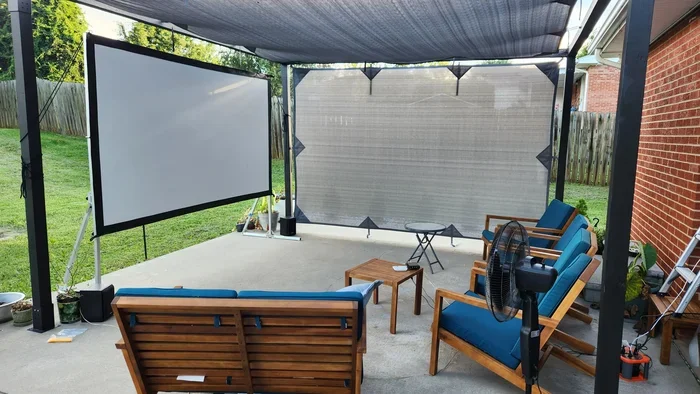
If you have a covered patio, pergola, or outdoor kitchen, this is the ideal spot for your screen. A covered area reduces direct exposure to rain and harsh sunlight while still giving you that big-screen outdoor experience.
Even under a cover, you should still use a protective cover when the screen is not in use. Overhangs don’t block all moisture, especially during heavy storms or wind-driven rain.
Best Practices For Outdoor Setup
Setting up your motorized projector screen outdoors isn’t just about placement. There are a few best practices that make a big difference in longevity and performance.
Mounting and Positioning
Proper mounting is the foundation of a safe outdoor setup. Here’s what to keep in mind:
- Use rust-proof mounting brackets. Stainless steel or aluminum brackets hold up much better than standard steel.
- Mount the screen away from direct water runoff. Don’t place it directly under a gutter or downspout.
- Ensure the surface is level. An uneven surface puts stress on the motor and causes the screen to roll unevenly.
- Keep the screen away from trees. Branches and leaves can scratch or stain the screen surface.
Power Supply Safety
Outdoor power connections need extra care. Use a GFCI-protected outlet to prevent electrical hazards. Run cables through conduit or cable covers to protect them from moisture and UV damage.
Consider using a surge protector as well. Lightning strikes and power surges can fry your motor and projector. A simple surge protector adds an affordable layer of defense.
Regular Cleaning and Maintenance
Outdoor screens collect dust, pollen, and debris faster than indoor ones. A quick cleaning routine goes a long way:
- Wipe down the screen surface with a soft, damp cloth before each use.
- Inspect the housing and motor for dust buildup monthly.
- Lubricate moving parts every few months, if the manufacturer recommends it.
- Check the remote and receiver batteries regularly.
Staying on top of these small tasks prevents bigger problems down the road. Think of it like maintaining any outdoor equipment — a little care now saves you from costly repairs later.
Common Mistakes People Make
Even with the best intentions, people make mistakes that shorten the life of their outdoor screens. Here are the most common ones to avoid.
Skipping the Cover
This is the number one mistake. Many people leave their screen out because they plan to use it “tomorrow.” But tomorrow turns into next week, and next week turns into a ruined screen. Always cover it when you’re done.
Ignoring Manufacturer Guidelines
Every screen comes with a user manual that includes care instructions. Ignoring these guidelines can void your warranty and lead to premature failure. Take five minutes to read the manual — it’s worth it.
Using the Wrong Screen Material
Not every screen material handles outdoor conditions well. Using a standard indoor fabric outside will lead to fading, warping, and mold growth. Always match your screen material to your environment.
Forgetting About Ventilation
Enclosures and covers need ventilation. Without airflow, moisture gets trapped and promotes mold and mildew growth. Make sure your setup allows air to circulate around the screen and motor housing.
Expert Insights
We spoke with several outdoor entertainment setup experts to get their top tips for leaving a motorized projector screen outside.
Tip 1: Invest in a screen with an all-weather motor housing. Brands that specialize in outdoor AV equipment design their motors with sealed bearings and corrosion-resistant coatings. This small upgrade can double the lifespan of your screen.
Tip 2: Use a dehumidifier near your screen if you live in a humid climate. Excess moisture is the silent killer of outdoor AV equipment. A small portable dehumidifier in your screen enclosure can make a huge difference.
Tip 3: Store the remote and receiver indoors. These small electronics are not weatherproof. Keeping them inside when not in use prevents moisture damage and extends their lifespan.
Tip 4: Perform seasonal deep cleans. At the start and end of your outdoor season, give your screen a thorough cleaning and inspection. Look for any signs of wear, fraying, or motor hesitation.
Tip 5: Consider a retractable awning or screen enclosure. If you’re serious about outdoor entertainment, a retractable awning over your screen area provides excellent protection while keeping the setup looking clean and professional.
Final Thoughts
Can you leave a motorized projector screen outside? Yes, you absolutely can — but it takes the right preparation and ongoing care. Choose a weather-rated screen, use protective covers, and follow a regular maintenance routine. Your outdoor setup will reward you with countless movie nights and entertainment moments.
The key is to treat your outdoor screen with the same respect you’d give any valuable electronic equipment. A little protection goes a long way. Whether you’re hosting a backyard movie night or setting up a permanent outdoor cinema, the steps you take today will keep your motorized projector screen performing beautifully for years to come.
Start with the basics: check your screen’s outdoor rating, invest in a good cover, and position your setup thoughtfully. From there, you’re ready to enjoy the big screen under the stars.
Frequently Asked Questions
Can I leave my motorized projector screen outside during winter?
It’s not recommended unless your screen is specifically rated for all-weather use. Cold temperatures can make materials brittle, and snow or ice can damage the screen surface. If you must leave it out, use a heavy-duty weatherproof cover and ensure the motor housing is fully sealed.
What is the best way to protect a motorized screen from rain?
The best protection is a combination of a waterproof cover and a sheltered location. Even a simple pop-up canopy over your screen area can reduce rain exposure significantly. Always make sure the screen is fully retracted and covered before rain starts.
How often should I clean my outdoor projector screen?
You should wipe down the screen before each use and do a deeper clean at least once a month. Outdoor screens collect dust, pollen, and bird droppings faster than indoor ones. Regular cleaning prevents buildup that can affect image quality and damage the material over time.
Are there motorized projector screens designed specifically for outdoor use?
Yes, many manufacturers offer outdoor-rated motorized screens. These models feature weather-resistant housings, UV-protected materials, and sealed motors. Look for screens labeled as outdoor-rated or all-weather for the best results.
Can I use a regular projector screen outdoors if I cover it?
You can, but it’s not ideal. Regular indoor screens lack the durable materials and weather-resistant coatings designed for outdoor use. Even with a cover, they tend to degrade faster. If you plan to use your screen outdoors regularly, invest in one built for that purpose.
What should I do if my motorized screen gets wet?
If your screen gets wet, dry it immediately. Use a soft towel to blot the surface and let the motor housing air dry completely before retracting or using it again. Standing water can seep into the motor and cause rust or electrical short circuits, so quick action is essential.